

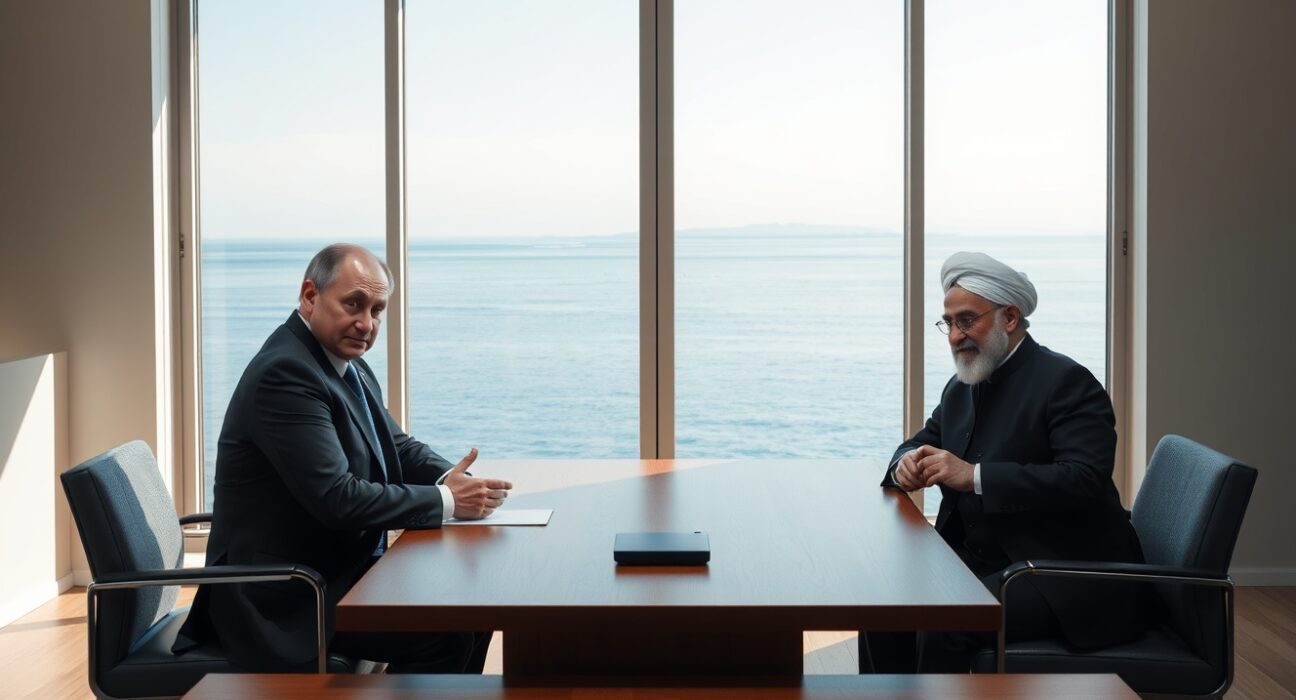
Russia has stepped forward as a potential mediator in the escalating tensions surrounding the Iran conflict. Kremlin spokesperson Dmitry Peskov confirmed on April 27 that Moscow is willing to facilitate peace talks. This offer comes amid rising concerns over stability in the Strait of Hormuz. Russia’s involvement could reshape diplomatic dynamics in the region.
Russia Iran Mediation Offer: Key Details from the Kremlin
Peskov stated that Russia would do its utmost to ensure a final and guaranteed peace. He welcomed the continuation of end-of-war negotiations. The Kremlin also emphasized the importance of maintaining a ceasefire under any circumstances. This statement signals a clear commitment to de-escalation.
According to Peskov, a resumption of the war would not serve the interests of Iran. It would also harm the nations along the Strait of Hormuz. Furthermore, it would negatively impact the global economy. These factors drive Russia’s proactive mediation stance.
Strait of Hormuz: A Critical Chokepoint for Global Energy
The Strait of Hormuz is a narrow waterway between the Persian Gulf and the Gulf of Oman. It handles about 20% of the world’s oil transit. Any conflict in this area directly threatens global energy supplies. Russia’s mediation efforts aim to prevent disruptions to this vital route.
A table of key strait statistics:
| Metric | Value |
|---|---|
| Global oil transit | 20% |
| Width at narrowest point | 33 km |
| Countries bordering | Iran, Oman, UAE |
Historical Context: Russia’s Role as a Mediator
Russia has a long history of mediating in international conflicts. Examples include its role in the Syrian peace process and negotiations with North Korea. This experience gives Moscow credibility as a neutral broker. The Kremlin’s current offer builds on this established diplomatic tradition.
Previous Mediation Successes and Challenges
In Syria, Russia helped broker ceasefire agreements between government forces and opposition groups. In the Nagorno-Karabakh conflict, it facilitated a trilateral ceasefire. However, some critics argue that Russia’s interests sometimes align too closely with one party. This raises questions about its impartiality in the Iran conflict.
Global Reactions to Russia’s Iran Conflict Mediation
The international community has responded with cautious optimism. The United States has not yet issued an official statement. European Union diplomats view Russia’s offer as a potential pathway to de-escalation. China supports any effort that promotes regional stability.
- United States: Awaiting further details before commenting
- European Union: Welcomes any diplomatic initiative
- China: Supports peaceful resolution through dialogue
- Saudi Arabia: Concerned about Iran’s regional influence
Economic Implications of a Potential Iran Conflict
An escalation in the Iran conflict would have severe economic consequences. Oil prices could spike, affecting global inflation. Shipping insurance premiums would rise for vessels passing through the Strait of Hormuz. Russia’s mediation could prevent these outcomes.
Key economic risks include:
- Oil price volatility
- Disruption of supply chains
- Increased military spending by regional powers
- Potential sanctions on Iran
Expert Analysis: What Russia’s Offer Means for the Region
Dr. Elena Petrov, a geopolitical analyst at the Moscow Institute of International Relations, explains that Russia’s move is strategic. ‘Moscow sees an opportunity to position itself as a global peacemaker. This enhances its influence in the Middle East while countering Western dominance.’
However, some experts warn that Russia’s close ties with Iran could complicate its role as a neutral mediator. ‘Russia has supplied weapons to Iran in the past,’ notes Dr. Ahmed al-Rashid of the Gulf Research Center. ‘This could make other parties skeptical of its impartiality.’
Timeline of Key Events Leading to the Mediation Offer
Understanding the timeline helps contextualize Russia’s announcement:
- March 2025: Tensions rise after a drone attack on a Saudi oil facility
- April 10, 2025: Iran conducts naval exercises near the Strait of Hormuz
- April 20, 2025: UN Security Council holds emergency meeting
- April 27, 2025: Kremlin announces willingness to mediate
Potential Outcomes of Russia’s Mediation Efforts
Several scenarios could unfold. A successful mediation would lead to a ceasefire and renewed nuclear talks. A partial success might result in a temporary truce. Failure could escalate the conflict further. The next few weeks will be critical.
Best-Case Scenario: Comprehensive Peace Agreement
If all parties accept Russia’s mediation, negotiations could begin within weeks. Key demands would include a halt to uranium enrichment and a withdrawal of naval forces. This would restore stability to the Strait of Hormuz.
Worst-Case Scenario: Rejection and Escalation
If Iran or other parties reject Russia’s offer, the situation could deteriorate. Military confrontations might occur. Global oil prices could surge by 30% or more. This would trigger a worldwide economic slowdown.
Conclusion
Russia’s offer to mediate in the Iran conflict represents a significant diplomatic development. The Kremlin’s willingness to ensure peace highlights the importance of the Strait of Hormuz for global stability. As negotiations potentially unfold, the world watches closely. A successful Russia Iran mediation could prevent a devastating war and protect the global economy.
FAQs
Q1: Why is Russia offering to mediate in the Iran conflict?
Russia seeks to position itself as a global peacemaker and protect its strategic interests in the Middle East. It also aims to prevent disruptions to the Strait of Hormuz, which affects global energy markets.
Q2: What is the Strait of Hormuz’s significance in this conflict?
The Strait of Hormuz is a critical chokepoint for global oil transit. Any conflict in the area threatens energy supplies and the world economy.
Q3: Has Russia successfully mediated conflicts before?
Yes, Russia has mediated in Syria, Nagorno-Karabakh, and other conflicts. However, its impartiality is sometimes questioned due to its alliances.
Q4: How have other countries reacted to Russia’s offer?
The EU and China have expressed cautious support. The US has not yet responded officially. Saudi Arabia remains concerned about Iran’s influence.
Q5: What are the economic risks if the conflict escalates?
Oil prices could spike, supply chains could be disrupted, and global inflation could rise. Shipping costs would also increase.
Disclaimer: The information provided is not trading advice, Bitcoinworld.co.in holds no liability for any investments made based on the information provided on this page. We strongly recommend independent research and/or consultation with a qualified professional before making any investment decisions.
