

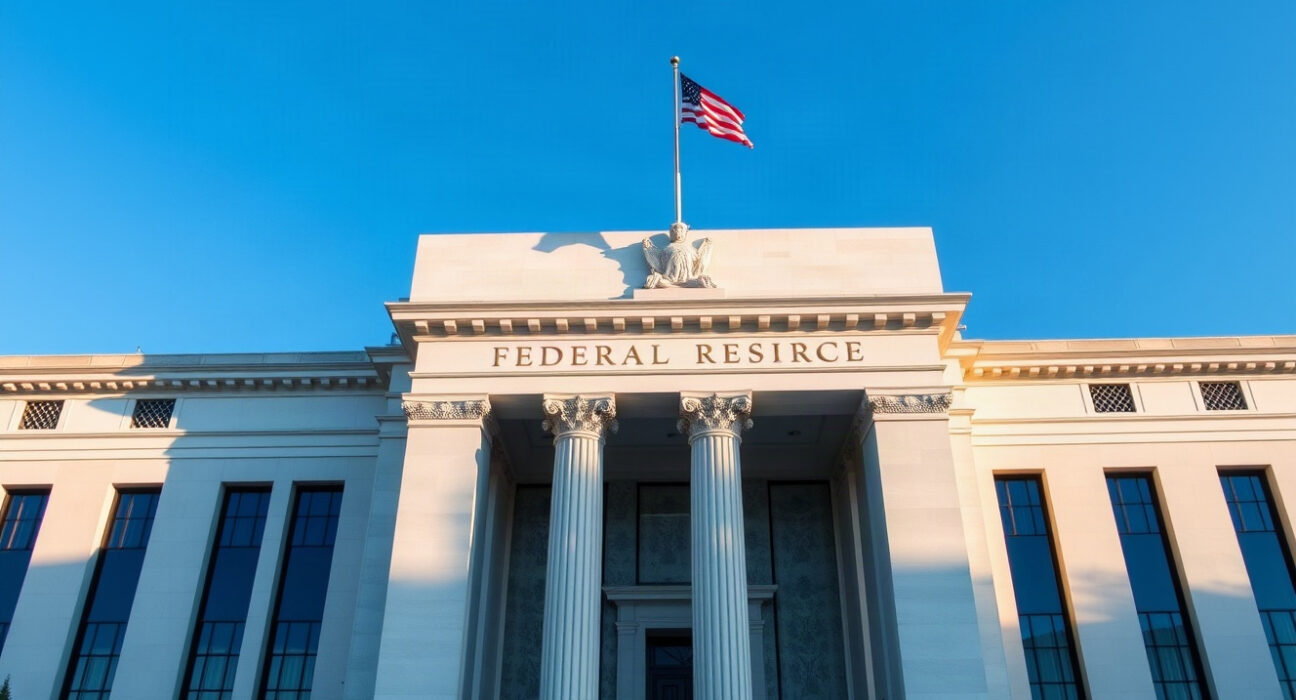
The Federal Reserve’s September policy meeting is shaping up to be a genuine conundrum for markets, as conflicting signals on inflation, employment, and economic resilience leave the rate path uncertain. With the next decision still weeks away, traders and analysts are wrestling with whether the central bank will hold rates steady, deliver a cut, or even signal a hike, given the lack of clear direction in recent data.
Why the September Fed decision is a conundrum
The core of the conundrum lies in the Fed’s dual mandate—price stability and maximum employment—which are currently pulling in opposite directions. On one hand, inflation has cooled from its peaks but remains above the Fed’s 2% target, with recent readings showing stickiness in services and shelter costs. On the other hand, the labor market, while still historically tight, is showing signs of softening, with jobless claims edging higher and wage growth moderating.
This tension creates a policy dilemma: cutting rates too early could reignite inflation, while holding or hiking could tip the economy into a recession. The Fed’s own projections, as of the June meeting, indicated two rate cuts in 2024, but market pricing has fluctuated wildly, reflecting the uncertainty. As of this writing, fed funds futures imply roughly a 50% chance of a cut in September, but that probability shifts with every data release.
Market implications and what to watch
For currency markets, the Fed’s path is a primary driver. A more hawkish-than-expected stance would likely strengthen the U.S. dollar, as higher rates attract foreign capital. Conversely, a dovish surprise could weaken the dollar, providing support for currencies like the euro and yen. The dollar index, which measures the greenback against a basket of major currencies, has been rangebound in recent weeks, reflecting the market’s indecision.
Key data points to monitor include the July Consumer Price Index (CPI) and the August jobs report, both due before the September meeting. A hotter-than-expected CPI could solidify expectations for a hold, while a weak jobs report might push the Fed toward a cut. Additionally, Fed Chair Jerome Powell’s speech at the Jackson Hole symposium in late August will be scrutinized for any forward guidance.
Why this matters to investors
For investors, the September Fed decision has broad implications across asset classes. Equities have rallied on hopes of rate cuts, but a surprise hold could trigger a sell-off. Bond yields are also sensitive, with the 2-year Treasury yield particularly reactive to Fed expectations. In the currency space, companies with international exposure may face headwinds from a stronger dollar if the Fed stays hawkish.
Moreover, the political backdrop adds another layer of complexity. With the U.S. presidential election approaching, the Fed aims to avoid any appearance of political bias, which could make it more cautious in its communication. This political sensitivity could lead to a more neutral stance, further complicating market predictions.
Conclusion
The September Fed conundrum is a genuine test for policymakers and investors alike. With inflation and employment sending mixed signals, the path forward is anything but clear. As data unfolds, markets will remain on edge, and the dollar’s direction will hinge on the Fed’s ability to navigate these crosscurrents. For now, the only certainty is uncertainty.
FAQs
Q1: What is the Federal Reserve’s September meeting date?
The Federal Open Market Committee (FOMC) is scheduled to meet on September 17-18, 2024. The decision will be announced on September 18 at 2:00 PM ET, followed by a press conference from Chair Jerome Powell.
Q2: What factors are contributing to the Fed’s conundrum?
The main factors are persistent inflation above the 2% target, a cooling but still resilient labor market, and broader economic uncertainty. These conflicting signals make it difficult for the Fed to decide between holding rates steady, cutting, or even hiking.
Q3: How might the September Fed decision affect the U.S. dollar?
If the Fed signals a hawkish stance (e.g., holding rates or hinting at future hikes), the dollar is likely to strengthen. Conversely, a dovish signal, such as a rate cut or strong hints of future cuts, could weaken the dollar. Currency markets are highly sensitive to interest rate expectations.
Disclaimer: The information provided is not trading advice, Bitcoinworld.co.in holds no liability for any investments made based on the information provided on this page. We strongly recommend independent research and/or consultation with a qualified professional before making any investment decisions.
