
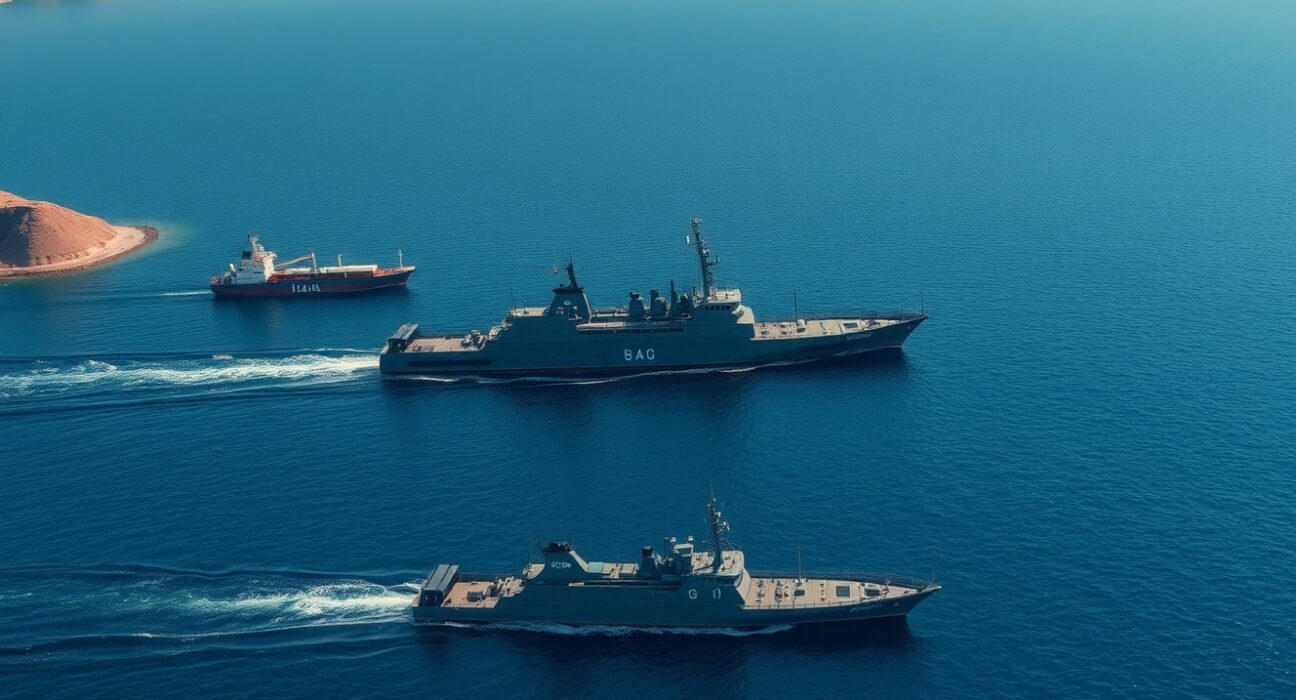
In a dramatic escalation of Middle Eastern tensions, Iran’s Islamic Revolutionary Guard Corps (IRGC) has effectively blocked maritime transit through the Strait of Hormuz, citing violations of the Israel-Lebanon ceasefire agreement. This critical chokepoint, through which approximately 21% of global petroleum liquids consumption passes, now faces an unprecedented closure, sending immediate shockwaves through energy markets and geopolitical calculations worldwide. The move, first reported by CNN, represents a direct and severe response to ongoing hostilities, fundamentally altering the regional security landscape.
Strait of Hormuz Blockade: The Immediate Trigger
The IRGC Navy announced the blockade early Thursday, local time. Officials explicitly linked the action to what they termed “flagrant violations” of the fragile ceasefire between Israel and Lebanese militant group Hezbollah. Consequently, all commercial and military vessels now require explicit permission from Iranian authorities to enter or transit the narrow strait. This permission, according to statements from the IRGC, will not be granted until a full and verified cessation of hostilities is confirmed. The Strait of Hormuz is only 21 nautical miles wide at its narrowest point, with shipping lanes just two miles wide in either direction, making it highly susceptible to control or disruption.
Historically, Iran has threatened to close the strait but has never fully executed a sustained, physical blockade. This action marks a significant departure from previous posturing. The timing is particularly sensitive, coinciding with renewed diplomatic efforts led by the United States and European powers. Furthermore, global oil inventories remain relatively tight, amplifying the potential economic impact. The immediate market reaction saw Brent crude futures surge by over 8% in early trading, reflecting deep-seated fears about energy supply security.
Geopolitical Context and Historical Precedents
To understand the gravity of this blockade, one must examine the strait’s role. It serves as the only sea passage from the Persian Gulf to the open ocean, making it indispensable for major oil exporters like Saudi Arabia, Iraq, the UAE, Kuwait, and Qatar. Any prolonged closure would force a complete rerouting of Gulf energy exports, an operation with immense logistical and financial hurdles. The table below illustrates the strait’s daily throughput:
| Commodity | Estimated Daily Volume (Million Barrels) | Percentage of Global Trade |
|---|---|---|
| Crude Oil | 17-18 | ~20% |
| Liquefied Natural Gas (LNG) | ~3.5 (in oil equivalent) | ~25% |
| Refined Products (e.g., gasoline) | ~2 | Significant portion |
Iran’s relationship with the international community, especially regarding its nuclear program, adds another layer of complexity. The blockade occurs amidst stalled negotiations and increased Western sanctions pressure. Analysts note that Iran is leveraging its most potent geographical asset to gain diplomatic leverage and demonstrate its capacity to respond to regional developments it perceives as threatening. This strategy, however, carries extreme risk, potentially unifying adversaries and inviting a military response.
Expert Analysis on Maritime Law and Escalation Risks
International maritime law experts point to the United Nations Convention on the Law of the Sea (UNCLOS), which guarantees transit passage through straits used for international navigation. Iran, however, is not a party to UNCLOS and has long held a different interpretation of its territorial waters. “This is a clear violation of customary international law principles on freedom of navigation,” stated Dr. Anya Petrova, a maritime security scholar at the King’s College London. “While Iran may cite self-defense under Article 51 of the UN Charter due to the regional conflict, the proportionality and direct link of blocking a global waterway to a land-based ceasefire are highly contentious and likely unsustainable legally.”
The risk of accidental or intentional escalation is high. The U.S. Fifth Fleet, based in Bahrain, has consistently pledged to ensure freedom of navigation. A confrontation between U.S. or allied naval forces and IRGC speedboats could quickly spiral. Additionally, the global economy faces immediate pressure. Key impacts include:
- Soaring Energy Costs: Increased shipping insurance premiums and longer alternative routes will raise prices for consumers globally.
- Supply Chain Disruption: Beyond oil, container shipping and other trade through the Gulf will face severe delays.
- Market Volatility: Energy and financial markets will experience heightened uncertainty, affecting investment and economic planning.
Regional Reactions and Diplomatic Pathways
Reactions from Gulf Cooperation Council (GCC) states have been swift and condemnatory. Saudi Arabia and the UAE called for an emergency OPEC+ meeting to discuss market stabilization measures. Simultaneously, they have reportedly activated contingency plans, which may involve increasing output from Red Sea pipelines like the East-West Petroline, though capacity remains insufficient to fully offset a Strait closure. Oman, which shares guardianship of the strait with Iran, has called for immediate de-escalation and offered to mediate, given its historically neutral diplomatic stance.
The United Nations Security Council is expected to convene an emergency session. The core diplomatic challenge is twofold: addressing the immediate ceasefire violations between Israel and Lebanon that Iran cites as its *casus belli*, and separately negotiating the reopening of the strait. These issues are deeply intertwined in Tehran’s strategic calculus. Successful diplomacy will require back-channel communications and potentially third-party guarantees. The European Union’s foreign policy chief has already embarked on a shuttle diplomacy mission, highlighting the global stakes.
Conclusion
The blockade of the Strait of Hormuz by Iran’s Revolutionary Guard represents a pivotal and dangerous escalation in Middle Eastern geopolitics. By directly linking the closure to the Israel-Lebanon ceasefire, Iran has weaponized global energy security to influence a regional conflict. The immediate consequences are soaring oil prices and heightened military risks. The long-term implications may include a fundamental reassessment of global energy routes and security alliances. Ultimately, resolving this crisis demands urgent, multifaceted diplomacy to address both the proximate cause in Lebanon and the immediate threat to one of the world’s most critical maritime passages. The stability of the global economy now hinges on de-escalation in the Strait of Hormuz.
FAQs
Q1: What is the Strait of Hormuz and why is it so important?
The Strait of Hormuz is a narrow channel between the Persian Gulf and the Gulf of Oman. It is the world’s most important oil transit chokepoint, with about 21% of global petroleum liquids passing through it daily from producers like Saudi Arabia, Iraq, and the UAE.
Q2: What specific ceasefire violation does Iran cite for the blockade?
Iran’s Revolutionary Guard has stated the blockade is a response to Israel’s violation of its ceasefire agreement with Lebanon, though it has not provided public, detailed evidence of specific incidents. The reference is broadly to continued hostilities or actions that Iran interprets as breaking the ceasefire terms.
Q3: How long can Iran realistically maintain a blockade?
Military analysts suggest Iran could disrupt traffic for a significant period using naval assets, mines, and anti-ship missiles. However, sustaining a full blockade against potential international naval intervention is challenging. The primary constraint may be political and economic pressure rather than purely military capability.
Q4: What are the alternative routes for oil if the strait remains closed?
Alternatives are limited. Saudi Arabia can use its East-West Petroline pipeline to the Red Sea, but its capacity is only about 7 million barrels per day. The UAE has a pipeline from Habshan to Fujairah on the Gulf of Oman, bypassing the strait, with a capacity of around 1.5 million barrels per day. These routes cannot fully replace Strait of Hormuz capacity.
Q5: Has the Strait of Hormuz been blocked before?
There have been periods of severe disruption, notably during the 1980-1988 Iran-Iraq “Tanker War,” but never a complete, officially declared blockade by a state actor controlling one side of the strait. Threats of closure have been frequent, but this action represents an unprecedented implementation.
Disclaimer: The information provided is not trading advice, Bitcoinworld.co.in holds no liability for any investments made based on the information provided on this page. We strongly recommend independent research and/or consultation with a qualified professional before making any investment decisions.