

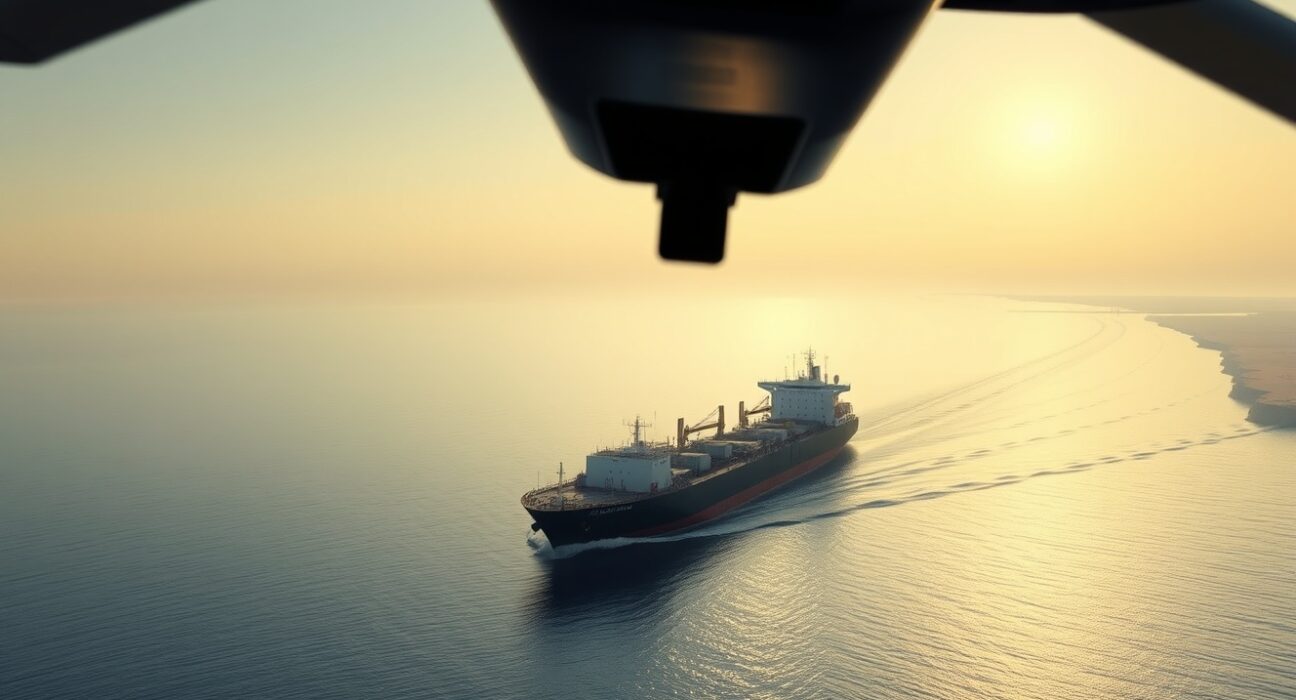
The Strait of Hormuz risk is reshaping the global oil supply outlook, according to a new analysis from MUFG. This narrow waterway remains the world’s most critical energy chokepoint. Any disruption here directly threatens global crude flows. MUFG’s report highlights heightened geopolitical tensions. These tensions now force traders and policymakers to reconsider supply assumptions.
Strait of Hormuz Risk and Global Supply Dynamics
The Strait of Hormuz connects the Persian Gulf to the Gulf of Oman. Approximately 20 million barrels of oil pass through daily. That equals about 20% of global consumption. MUFG analysts emphasize that even a partial blockage would spike prices. The bank’s report examines multiple scenarios. Each scenario shows significant upward pressure on crude benchmarks. Iran’s strategic position complicates the outlook further. Tehran has previously threatened to close the strait in response to sanctions. These threats now appear more credible given recent military posturing.
Historical precedents reinforce the concern. In 2019, attacks on Saudi Aramco facilities temporarily cut production. The strait remained open then. However, the incident revealed vulnerability. Today, the risk environment has deteriorated. The U.S. Navy’s Fifth Fleet maintains a presence. Yet, asymmetric threats from mines, drones, and fast boats remain hard to counter. MUFG’s analysis uses these factors to model supply disruptions. The models suggest a 15-20% probability of a significant event within two years.
MUFG Analysis: Key Findings on Oil Supply Outlook
MUFG’s report provides a detailed breakdown of potential impacts. The bank’s baseline outlook assumes uninterrupted flow. However, the risk premium embedded in oil prices has already risen. Brent crude now trades above $85 per barrel. This reflects market anxiety. The analysis identifies three main risk scenarios. First, a limited disruption lasting one week. This would push Brent to $95. Second, a two-week closure. This could send prices to $110. Third, a prolonged blockage exceeding 30 days. This might trigger a spike above $150.
These projections depend on spare capacity. OPEC+ holds roughly 5 million barrels per day of spare capacity. Most of this sits in Saudi Arabia and the UAE. However, accessing it quickly requires stable logistics. A Hormuz closure would block those exports too. MUFG notes that strategic petroleum reserves offer a buffer. The U.S. Strategic Petroleum Reserve holds about 375 million barrels. Releases could offset short-term losses. But sustained disruptions would deplete these stocks rapidly. The analysis concludes that the global supply outlook now hinges on Hormuz stability.
Geopolitical Context and Escalation Risks
The current geopolitical landscape amplifies the Strait of Hormuz risk. Iran’s nuclear program remains a flashpoint. Negotiations with world powers have stalled. Meanwhile, Israel and Iran engage in shadow warfare. Cyberattacks and sabotage operations target energy infrastructure. Each incident raises the stakes. MUFG points to the 2023 Gaza conflict as a catalyst. It intensified regional rivalries. Houthi rebels in Yemen now threaten Red Sea shipping. This creates a multi-front pressure on global trade routes.
Iran’s leadership views the strait as leverage. Supreme Leader Khamenei has warned of consequences if oil exports face restrictions. The U.S. maintains a policy of maximum pressure through sanctions. This dynamic creates a dangerous feedback loop. Any miscalculation could trigger a closure. MUFG’s report references expert assessments from the Center for Strategic and International Studies. These assessments highlight the difficulty of predicting Iranian decision-making. The bank urges clients to hedge against tail risks. Options strategies and diversification of supply sources remain prudent.
Impact on Energy Markets and Shipping
The energy markets already price in some Strait of Hormuz risk. However, MUFG argues that the current premium underestimates the worst-case scenario. Shipping costs have risen sharply. War risk insurance premiums for vessels transiting the strait have tripled since 2022. Some shipping companies now avoid the route entirely. This redirects tankers around the Cape of Good Hope. That adds two weeks to transit times. It also increases fuel consumption and emissions. The supply outlook must account for these logistical frictions.
Asian buyers face the greatest exposure. Japan, South Korea, India, and China import most of their oil from the Gulf. They lack immediate alternatives. Strategic stockpiles in these countries vary. Japan holds 180 days of reserves. China holds about 80 days. India holds roughly 65 days. A prolonged disruption would strain these buffers. MUFG notes that alternative suppliers like the U.S. and West Africa cannot fully replace Gulf volumes. The supply outlook thus depends on Hormuz remaining open. The bank’s report includes a comparative table of regional vulnerabilities.
| Region | Daily Imports via Hormuz (mb/d) | Strategic Reserves (days) | Alternative Supply Options |
|---|---|---|---|
| Asia-Pacific | 12.5 | 60-180 | Limited |
| Europe | 4.0 | 90-120 | Moderate |
| North America | 1.5 | 30-60 | Strong |
| Africa | 2.0 | 30-90 | Limited |
Expert Perspectives and Risk Mitigation Strategies
Industry experts echo MUFG’s concerns. Helima Croft, head of commodity strategy at RBC Capital Markets, calls the strait the single biggest geopolitical risk for oil markets. She points to Iran’s growing naval capabilities. These include fast-attack craft and anti-ship missiles. The U.S. Navy acknowledges the challenge. Admiral Brad Cooper recently stated that defending the strait requires constant vigilance. MUFG’s analysis incorporates these expert views. The bank recommends several mitigation strategies for investors.
- Diversify supply sources: Reduce reliance on Gulf crude by securing term contracts with U.S., Brazilian, or West African producers.
- Increase storage capacity: Build or lease onshore and floating storage near key consumption centers.
- Hedge with options: Use Brent call spreads to protect against price spikes without paying high premiums.
- Monitor diplomatic signals: Track U.S.-Iran talks and IAEA inspections for early warning signs.
- Invest in alternative routes: Support infrastructure for pipelines bypassing Hormuz, such as the UAE’s Fujairah pipeline.
These strategies reflect a shift in risk management. Previously, traders treated Hormuz disruptions as rare. Now they consider them plausible. MUFG’s report marks a turning point. It forces the market to confront a reality where the supply outlook is permanently fragile. The bank’s analysts stress that this is not a short-term call. It is a structural reassessment. The energy transition adds another layer. As demand for oil peaks, investment in new supply declines. This tightens the market further. Any disruption becomes more impactful.
Timeline of Key Events and Market Reactions
A timeline helps contextualize the Strait of Hormuz risk. In 1984, the Iran-Iraq War led to the Tanker War. Both sides attacked oil tankers. Insurance premiums soared. In 2012, Iran threatened to close the strait in response to EU sanctions. The U.S. deployed additional naval forces. The threat subsided after negotiations. In 2019, the U.S. shot down an Iranian drone near the strait. Iran retaliated by seizing a British tanker. Each event caused a temporary price spike. However, the market quickly reverted. MUFG argues that the current environment differs. The convergence of multiple risks creates a persistent premium.
The market reaction to MUFG’s report has been notable. Brent futures rose 2% on the day of publication. Options volatility increased. Traders now pay higher premiums for out-of-the-money calls. This indicates a shift in sentiment. The supply outlook now incorporates a risk premium of $5-7 per barrel. That is up from $2-3 a year ago. MUFG’s analysis suggests this premium could persist. It may even expand if tensions escalate. The bank’s chief economist, Lee Hardman, stated that the Strait of Hormuz risk is the most underappreciated factor in oil markets today.
Conclusion
The Strait of Hormuz risk is reshaping the global oil supply outlook in ways not seen for decades. MUFG’s analysis provides a sobering assessment. The combination of geopolitical tensions, military posturing, and limited spare capacity creates a fragile equilibrium. Investors and policymakers must prepare for a range of outcomes. The supply outlook now depends on stability in this narrow waterway. Diversification, hedging, and vigilance remain essential strategies. The market has entered a new phase where risk premiums are structural, not cyclical. Understanding the Strait of Hormuz risk is critical for anyone exposed to energy markets.
FAQs
Q1: What is the Strait of Hormuz and why is it important for oil supply?
The Strait of Hormuz is a narrow waterway between Iran and Oman. About 20 million barrels of oil pass through daily, making it the world’s most critical energy chokepoint. Any disruption directly impacts global supply and prices.
Q2: What does MUFG’s analysis say about the Strait of Hormuz risk?
MUFG warns that geopolitical tensions have increased the probability of a significant disruption. The bank models price spikes of 15-50% depending on the duration of any closure.
Q3: How would a Strait of Hormuz closure affect oil prices?
A one-week closure could push Brent to $95 per barrel. A two-week closure might send prices to $110. A prolonged blockage exceeding 30 days could trigger a spike above $150.
Q4: Which countries are most vulnerable to a Strait of Hormuz disruption?
Asian importers like Japan, South Korea, India, and China face the greatest exposure. They lack immediate alternative supply sources and have limited strategic reserves.
Q5: What strategies can investors use to mitigate Strait of Hormuz risk?
Investors can diversify supply sources, increase storage capacity, hedge with options, monitor diplomatic signals, and support alternative pipeline routes.
Disclaimer: The information provided is not trading advice, Bitcoinworld.co.in holds no liability for any investments made based on the information provided on this page. We strongly recommend independent research and/or consultation with a qualified professional before making any investment decisions.
