

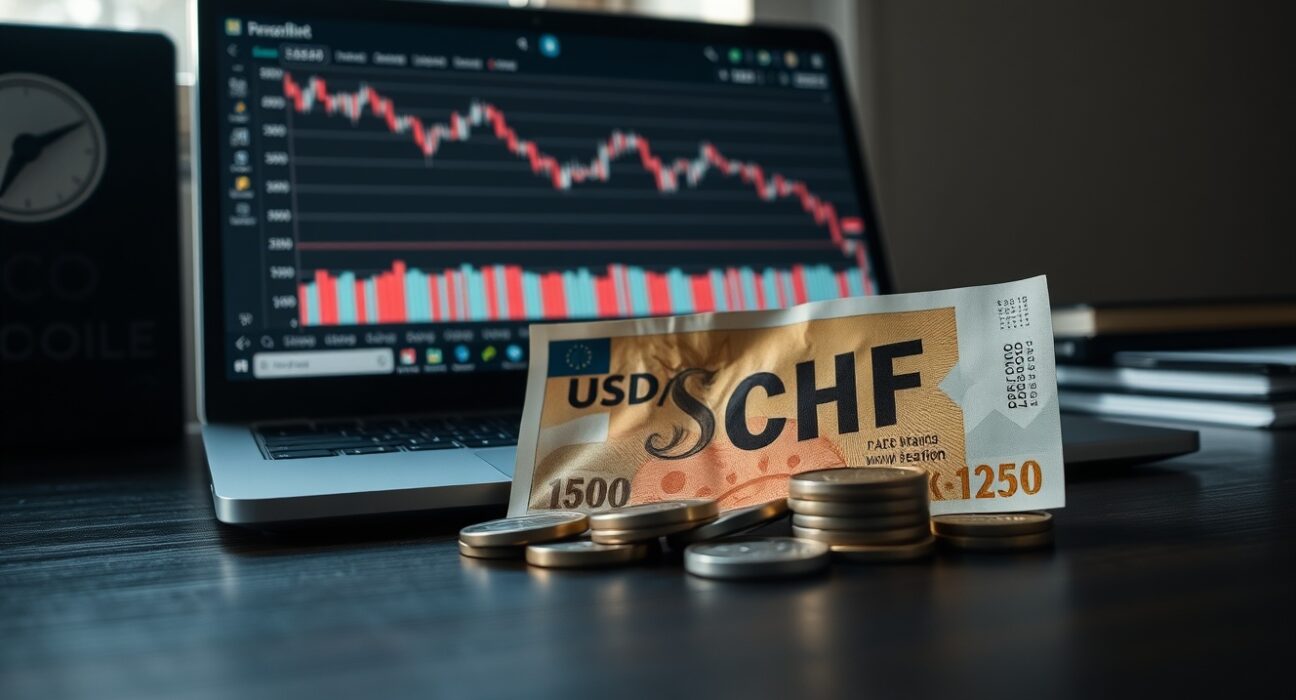
The Swiss Franc’s recent recovery against the US dollar and the euro has shown signs of exhaustion, with market participants reassessing the currency’s trajectory amid shifting monetary policy expectations and global risk appetite. After a brief period of strength, the franc has struggled to maintain upward momentum, raising questions about the durability of its rebound.
Why the Franc’s Rally Is Fading
The franc’s initial rebound was driven by a combination of safe-haven demand and expectations that the Swiss National Bank (SNB) would maintain a relatively hawkish stance compared to other major central banks. However, recent economic data from Switzerland has painted a mixed picture. Industrial production figures have softened, and inflation remains below the SNB’s target range, reducing the urgency for further rate hikes.
At the same time, the US dollar has regained strength following resilient US economic data, including stronger-than-expected employment numbers and persistent services sector inflation. This has pushed the USD/CHF pair higher, effectively capping the franc’s upside. The EUR/CHF cross has also stabilized, as the European Central Bank signals a cautious approach to future rate decisions.
Market Positioning and Sentiment
According to recent positioning data from the Commodity Futures Trading Commission (CFTC), speculative net long positions on the Swiss Franc have declined, indicating that traders are reducing their bullish bets. This shift in sentiment reflects growing uncertainty about the franc’s near-term prospects.
Analysts point to the SNB’s willingness to intervene in currency markets as a key factor limiting the franc’s appreciation. The central bank has historically acted to prevent excessive franc strength, which hurts Swiss exporters. Any sustained rally could trigger verbal or actual intervention, creating a ceiling for the currency.
Implications for Investors and Businesses
For Swiss exporters, a weaker franc provides some relief, as it makes their goods and services more competitive abroad. However, the currency’s renewed weakness also raises import costs, potentially feeding into domestic inflation. For international investors, the franc’s stalled rebound reduces the appeal of Swiss assets as a hedge against global volatility.
The broader context is important: the franc remains one of the most heavily traded safe-haven currencies, and its movements are closely tied to geopolitical developments. Any escalation in global tensions could quickly reverse the current trend, reigniting demand for the franc.
Conclusion
The Swiss Franc’s rebound appears to have run out of steam, as a combination of domestic economic headwinds, a stronger US dollar, and SNB intervention risks weigh on the currency. While the franc retains its safe-haven status, the current environment suggests limited upside in the near term. Investors and businesses should monitor upcoming SNB communications and key economic data releases for further direction.
FAQs
Q1: Why did the Swiss Franc rebound initially?
The franc strengthened due to safe-haven demand amid global uncertainty and expectations that the SNB would maintain a relatively hawkish monetary policy compared to other central banks.
Q2: What is limiting the franc’s further appreciation?
Factors include softer Swiss economic data, a resilient US dollar, reduced speculative bullish positioning, and the SNB’s historical willingness to intervene to prevent excessive franc strength.
Q3: How does a weaker franc affect Swiss exporters?
A weaker franc makes Swiss exports cheaper and more competitive in foreign markets, benefiting exporters. However, it also increases the cost of imported goods, which can contribute to domestic inflation.
Disclaimer: The information provided is not trading advice, Bitcoinworld.co.in holds no liability for any investments made based on the information provided on this page. We strongly recommend independent research and/or consultation with a qualified professional before making any investment decisions.
