

The trends shaping the course of Bitcoin and Blockchain at LABITCONF 2026
In this article
Ahead of their participation in LABITCONF 2026, leading figures in Latin America’s crypto ecosystem share the trends they are noticing, and those they expect to gain strength, across Bitcoin and Blockchain.
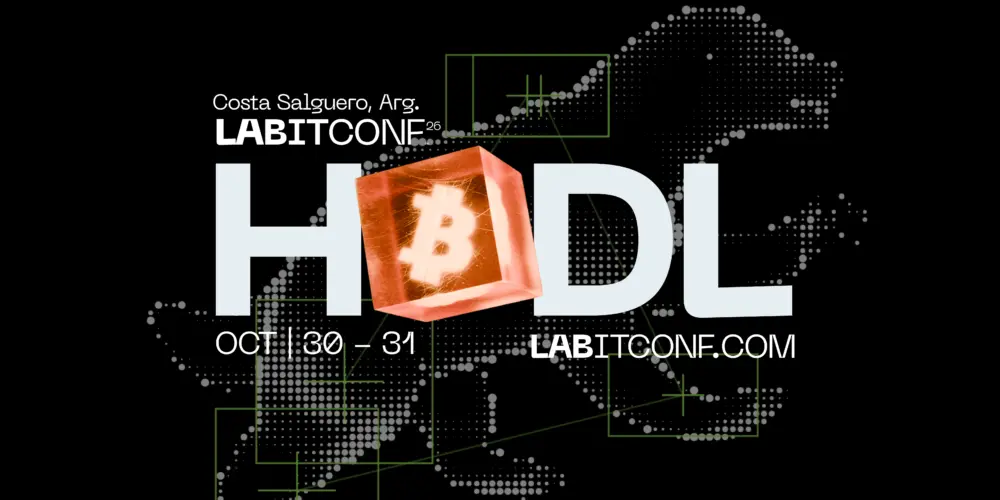
Buenos Aires, October 27, 2026 – The 14th edition of LABITCONF, the oldest Bitcoin and Blockchain conference in the world and the most prestigious in Latin America, will take place on October 30 and 31 in Buenos Aires, underscoring the steady maturation of the ecosystem.
Backed by major industry players such as Exness and Nexo, among other sponsors, the event will feature several simultaneous talk stages: Orange Pill, Vision, ABC, Workshop, B2B by IKIGII (exclusively for Business and Experience ticket holders), BitcoinAR and La Bitcoineta. Together, they will host more than 200 talks and 150 speakers.
“We are seeing a transformation in how Bitcoin is understood and used: far from remaining a hobbyist topic, it is now used as a store of value by individuals and institutions around the world. It is sparking new debates about the importance of an asset’s scarcity, public traceability, accessibility and self-custody”, said Rodolfo Andragnes, founder and organizer of LABITCONF.
Bitcoin’s birth 17 years ago gave rise to numerous financial alternatives that were previously impossible, along with countless other blockchain-based products. Although thousands of crypto assets now exist, the original remains the leader, with more than 50% of market dominance, followed by Ethereum’s Ether at 10% and stablecoins at another 10%.
Institutionalization in the crypto asset market
“Institutional capital is entering the crypto market through two channels with different balance-sheet logics: the pursuit of returns through exposure to Bitcoin and other cryptocurrencies, and the adoption of stablecoins as a vehicle for diversification and lower transaction costs”, explained Ibrahim Martínez, Client Relationship Manager for LATAM at Exness.
Bitcoin is still in a corrective phase after reaching an all-time high above $126,000 a year ago. According to the Exness executive, whether it recovers to $90,000 during the rest of 2026 depends on oil.
“If crude oil gets more expensive, the derivatives market absorbs liquidity to lock in prices through futures, taking flows away from cryptocurrencies. If the conflict drags on and energy costs raise the price of supply chains, inflation would pick up. That would make bonds more attractive and force the Federal Reserve (Fed) to keep interest rates high. A high-rate environment depresses equities, and under those circumstances Bitcoin would lose institutional appeal and could correct toward $58,000 – $60,000.”
As for altcoins, in past cycles “they were novelty, promising alternative markets (DAOs, NFTs, Play to Earn, dApps)”, said Martínez of Exness. “Today they face a mature ecosystem, which makes both institutional and retail investors far more selective. That is why campaigns such as airdrops no longer have the impact they once did, nor do they make it as easy to run fraudulent schemes (rug pulls)”.
“We observe crypto adoption evolve from a tool for preserving value toward broader integration into financial strategies”, said Andrés Ondarra, General Manager of Nexo Argentina. A recent study by the company in the country clearly reflects this shift: 74.3% of Argentine investors hold cryptocurrencies, a higher share than in the United States and the United Kingdom.
“Inflation and the search for alternatives to cash were fundamental drivers of this trend. This shows that Argentina has significant adoption, but there is still an opportunity to integrate digital assets into long-term wealth strategies. We believe that will be the market’s next stage of growth”, the Nexo manager noted.
According to Ondarra, institutionalization is one of the most important structural changes in the industry. “The addition of Bitcoin to corporate treasuries, the expansion of ETFs, and the growth of stablecoin payments reflect an increasingly closer integration between traditional finances and digital assets”.
This behaviour is not seen across the entire crypto market. “In previous cycles, Bitcoin rallies tended to drive broad movements across altcoins. Now we see greater differentiation between projects, especially those with concrete applications and established ecosystems”, stressed the Nexo spokesperson.
Latin America at the center of crypto adoption
Gabriel Campa, Head de Digital Assets at ikigii at Towerbank International Inc., warns: “Institutionalization is no longer something that only happens on Wall Street. In Latin America we see it in companies of all sizes, and for a very concrete reason: in countries like Venezuela, Bolivia, Colombia or Argentina, getting access to the dollar is increasingly difficult”.
“Stablecoins have become a legitimate bridge: they let businesses move from a local currency, such as the bolívar or the Bolivian peso, into fiat dollars and keep operating normally, paying suppliers and conducting foreign trade. Another trend is algo beginning to emerge: companies that see Bitcoin as a safe-haven asset, like gold, and are starting to accumulate it gradually in their treasuries. The impact for the sector is huge. When companies and banks come in, the market gains trust, compliance standards and products that are useful in everyday life”, Campa added.
Borja Martel Seward, Co-Founder and CEO of Roxom, noted: “Argentina has always been one of the countries with the highest crypto adoption in the world, out of necessity: inflation, currency controls and distrust in the system. What has changed in recent years is the purpose. Before, crypto was a refuge, mostly in the form of digital dollars. Today we see a more sophisticated user, who views Bitcoin as long-term savings and wants to do more with it: invest, borrow or generate yield without selling it”. Looking toward 2027, he sees three trends: the convergence of traditional capital markets and Bitcoin; Bitcoin-collateralized lending, which provides liquidity without having to sell; and the tokenization of real-world assets.
According to Martel Seward, tokenization is advancing the fastest: tokenized stocks, bonds and funds are bringing global instruments within reach of Latin American investors who previously had no access. “DeFi remains a niche in the region because of its complexity and risk. We believe mass adoption will come through regulated platforms that use infrastructure behind the scenes and offer a simple experience”.
“What we are seeing is a phase change: we have moved from a stage of curiosity and speculation to a stage of real use. Bitcoin and cryptocurrencies are no longer a niche topic; they have become part of everyday conversation among companies, banks and regulators”, summed up Eduardo Novillo Astrada, CEO and Co-Founder of JusToken.
In Argentina in particular, the shift has been striking: “We came from a context of very high inflation and currency restrictions that pushed many ordinary people to use stablecoins and crypto as a store of value, long before this became a trend in other countries in the region. That adoption born of necessity created a very sophisticated user base, and today that same base is starting to use these tools not only to save, but to produce, finance, and trade. Companies and producers who five years ago didn’t even know what a token was now fully understand the benefits of tokenizing a real asset,” Novillo Astrada emphasized. “For us, institutionalization is the most important sign of the sector’s maturity.”
Amid the outlooks circulating in Latin America’s crypto sector, LABITCONF 2026 arrives to give them a stage, bringing together beginners in the digital asset ecosystem as well as seasoned enthusiasts, companies and government officials. The event, whose theme this year is HODL, takes place at a special moment for the market.
“Bitcoin ended the bear market it had been in since the end of last year in September, and a bull market is beginning”, said financial specialist Norberto Giudice (known as CriptoNorber). The current correction “seems closely tied to the traditional market” and “has to do with the global geopolitical climate”. “Regardless of that volatility, I believe Bitcoin’s moment, thinking long-term, by 2027-2028, should be a bullish one”, he said, basing his view on its historical behaviour around the halving, which cuts its issuance in half every four years and makes price increases easier when demand holds. The halving is one of the conference’s key topics.
ABOUT LABITCONF
LABITCONF (Latin American Bitcoin & Blockchain Conference) is the oldest Bitcoin and Blockchain conference in the world and the most prestigious in Latin America. Since 2013, it has brought together global leaders, developers, companies, communities and users each year to discuss the present and future of money and decentralized technologies. More information: LABITCONF.com
PRESS CONTACT
Gina Giraldo +54 9 11 2469 1507 | Bárbara Distéfano +54 9 11 2394 4543 | prensa@labitconf.com
