

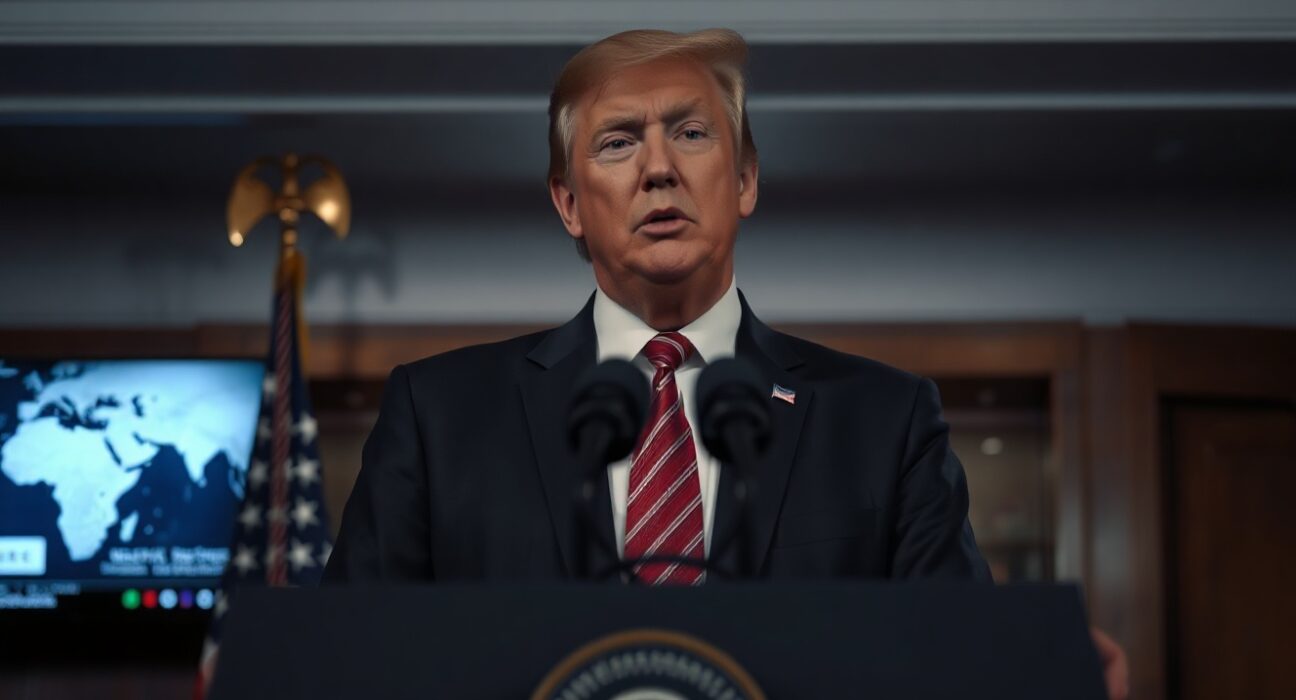
Washington, D.C. — U.S. President Donald Trump announced on Monday that the United States will launch a powerful strike against Iran, stating that his administration possesses the full legal authority to resume military attacks if necessary. The announcement, made from the White House briefing room, marks a significant escalation in the long-running tensions between the two nations.
Background of Escalating Tensions
The relationship between the United States and Iran has been fraught for decades, but recent months have seen a sharp uptick in rhetoric and military posturing. Trump’s statement comes amid reports of increased Iranian nuclear enrichment activity and the deployment of additional U.S. naval assets to the Persian Gulf. The president did not provide specific details on the timing or scope of the planned strike, but emphasized that the U.S. military is prepared to act decisively to protect American interests and allies in the region.
Legal Authority and International Reaction
Trump’s assertion of authority to resume attacks references the 2001 Authorization for Use of Military Force (AUMF), which has been used by successive administrations to justify military action against terrorist groups and state sponsors of terrorism. However, legal experts remain divided on whether the AUMF covers a broad-scale strike against Iran. International reaction has been swift, with European allies calling for restraint and urging diplomatic solutions. Iran’s foreign ministry has condemned the announcement, warning of “severe consequences” for any aggression.
Implications for Global Stability
The announcement has immediate implications for global oil markets, with crude prices rising sharply on fears of supply disruptions in the Strait of Hormuz. For readers, the key concern is the potential for a wider regional conflict involving proxy forces in Iraq, Syria, Yemen, and Lebanon. The situation remains fluid, and further developments are expected in the coming days as the U.S. military reportedly moves assets into position.
Conclusion
President Trump’s declaration of a planned strike against Iran represents a pivotal moment in U.S.-Iran relations, with significant consequences for Middle Eastern stability, global energy markets, and international law. As the situation develops, the focus remains on whether diplomatic channels can reopen or if the region is headed toward another major military confrontation.
FAQs
Q1: What legal basis does President Trump cite for the strike?
The president referenced the 2001 Authorization for Use of Military Force (AUMF), though legal scholars debate its applicability to Iran. The administration argues it covers threats arising from state sponsors of terrorism.
Q2: How have global markets reacted to the announcement?
Oil prices surged by over 4% in early trading due to concerns about potential disruptions in the Strait of Hormuz, a critical chokepoint for global petroleum shipments.
Q3: What are the next steps for the U.S. and Iran?
The U.S. military is reportedly repositioning naval and air assets. Iran has called for an emergency UN Security Council meeting. Diplomatic efforts by European and Gulf mediators are ongoing, but no breakthrough has been reported.
Disclaimer: The information provided is not trading advice, Bitcoinworld.co.in holds no liability for any investments made based on the information provided on this page. We strongly recommend independent research and/or consultation with a qualified professional before making any investment decisions.
