

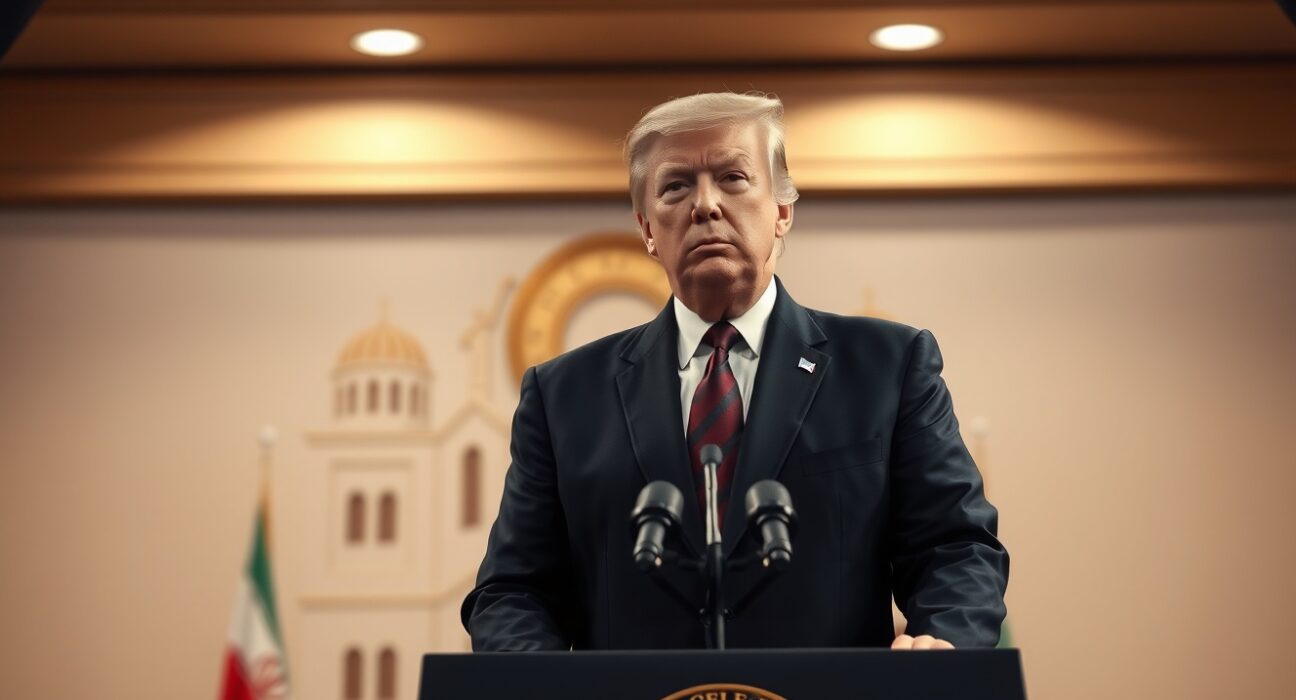
WASHINGTON, D.C. – In a significant development with far-reaching implications for Middle Eastern stability, former U.S. President Donald Trump has publicly accused Iran of committing multiple violations of a critical ceasefire agreement. This explosive allegation, made during a recent policy address, immediately reignited longstanding tensions and cast a shadow over fragile diplomatic efforts in the region. Consequently, analysts and officials are now scrutinizing the specific claims, their historical context, and the potential for renewed conflict.
Analyzing Trump’s Accusations Against Iran
President Trump leveled his charges without providing immediate, granular public evidence. However, he framed the alleged violations as a pattern of bad faith. Furthermore, he suggested these actions fundamentally undermine the agreement’s core purpose. This statement directly challenges narratives of compliance often promoted by other signatories. Typically, such ceasefire pacts involve intricate protocols monitored by international bodies. Therefore, verifying any breach requires access to classified intelligence and on-the-ground reports.
The nature of the alleged violations remains unspecified but likely falls into several categories. These categories often include weapons proliferation, support for proxy militias, or aggressive military posturing. For instance, past U.S. administrations have frequently cited Iran’s ballistic missile program and its backing of groups like Hezbollah as destabilizing acts. Understanding the precise accusations is crucial for assessing their severity.
Historical Context of US-Iran Ceasefire Agreements
The relationship between the United States and Iran has been fraught for decades, marked by deep mutual distrust. Several key agreements and confrontations define this history. The 2015 Joint Comprehensive Plan of Action (JCPOA), commonly called the Iran nuclear deal, serves as the most prominent recent example of a negotiated framework. President Trump withdrew the U.S. from this pact in 2018, reinstating harsh economic sanctions.
Since then, the region has witnessed a series of tense incidents and shadow conflicts. The following timeline outlines key events leading to the current allegations:
| Date | Event | Significance |
|---|---|---|
| 2015 | JCPOA signed | Established limits on Iran’s nuclear program in exchange for sanctions relief. |
| 2018 | U.S. withdraws from JCPOA | Trump administration reimposes sanctions, citing a “defective” deal. |
| 2019-2020 | Series of regional incidents | Attacks on oil tankers, Saudi Aramco facilities, and the killing of Qasem Soleimani. |
| 2021 | Indirect talks resume | Negotiations in Vienna aim to restore the nuclear agreement. |
This volatile backdrop makes any allegation of ceasefire violation particularly sensitive. Moreover, it influences how regional allies and adversaries interpret the charges.
Expert Analysis on Verification and Impact
International relations scholars emphasize the complexity of verifying such claims. “Ceasefire monitoring in the Middle East often relies on a combination of satellite imagery, signals intelligence, and human sources,” explains Dr. Elena Rodriguez, a senior fellow at the Center for Strategic Studies. “Public accusations without disclosed evidence can be a diplomatic tool as much as a factual statement. They serve to pressure Iran and rally domestic and international support for a harder line.”
The immediate impacts of these allegations are multifaceted. Firstly, they could harden the positions of both the U.S. and Iranian governments, making future diplomacy more difficult. Secondly, they may encourage regional actors like Israel or Saudi Arabia to consider more aggressive defensive postures. Finally, they influence global energy markets, as uncertainty in the Persian Gulf threatens oil supply routes.
Potential Geopolitical Consequences and Pathways Forward
The ramifications of these accusations extend beyond bilateral relations. A confirmed, serious violation could trigger a coordinated international response. This response might include:
- Enhanced Sanctions: Additional economic penalties targeting key Iranian sectors.
- Military Posturing: Increased U.S. naval presence in the Gulf region.
- Diplomatic Isolation: Efforts to further isolate Iran in multilateral forums like the UN.
- Empowerment of Rivals: Strengthened security cooperation between the U.S. and Gulf Arab states.
Conversely, if the allegations remain unsubstantiated publicly, they risk being dismissed as political rhetoric. This scenario could erode U.S. credibility on the world stage. Therefore, the administration’s next steps are critical. Providing evidence to allies through intelligence channels or the International Atomic Energy Agency (IAEA) would lend significant weight to the claims.
The path forward requires careful, calibrated statecraft. Ultimately, the goal for all parties should be de-escalation and a return to verifiable compliance. Achieving this demands transparent communication and a commitment to the agreed-upon frameworks.
Conclusion
President Trump’s accusation that Iran has committed multiple ceasefire violations represents a pivotal moment in an already tense geopolitical standoff. While the specific details remain classified, the allegation itself carries substantial weight, influencing diplomatic, military, and economic calculations worldwide. The situation underscores the fragile nature of agreements in the Middle East and the constant need for vigilant, evidence-based monitoring. The international community now watches closely to see whether these claims will lead to renewed confrontation or catalyze a new round of rigorous diplomatic engagement to address the core issues. The resolution of this dispute over the Iran ceasefire will undoubtedly shape regional security for years to come.
FAQs
Q1: What specific ceasefire agreement is President Trump referring to?
The statement likely references broader regional de-escalation understandings or specific clauses within the now-defunct JCPOA framework. The exact agreement has not been explicitly named in public remarks, pointing to a broader set of unwritten rules or expectations between adversarial states.
Q2: How does Iran typically respond to such allegations?
Iranian officials consistently deny violating international agreements, often counter-accusing the United States and its allies of bad faith and of fabricating pretexts for aggression. They frame their military activities as defensive and within their sovereign rights.
Q3: What role do international bodies play in monitoring such agreements?
The International Atomic Energy Agency (IAEA) is the primary body for monitoring nuclear-related commitments under the JCPOA. For broader security issues, the United Nations Security Council can receive reports and assessments, but there is no dedicated, standing ceasefire monitoring mission for U.S.-Iran tensions.
Q4: How could these allegations affect oil prices and global markets?
Any escalation of tension in the Persian Gulf, a critical chokepoint for global oil shipments, typically causes market volatility. Prices often spike on fears of supply disruption, impacting economies worldwide.
Q5: What is the historical success rate of ceasefire agreements in the Middle East?
Success varies widely. Some agreements have led to prolonged periods of reduced violence, while others have collapsed quickly. Long-term success usually depends on continuous engagement, mutual benefit, and addressing the underlying political conflicts, not just the military symptoms.
Disclaimer: The information provided is not trading advice, Bitcoinworld.co.in holds no liability for any investments made based on the information provided on this page. We strongly recommend independent research and/or consultation with a qualified professional before making any investment decisions.
