

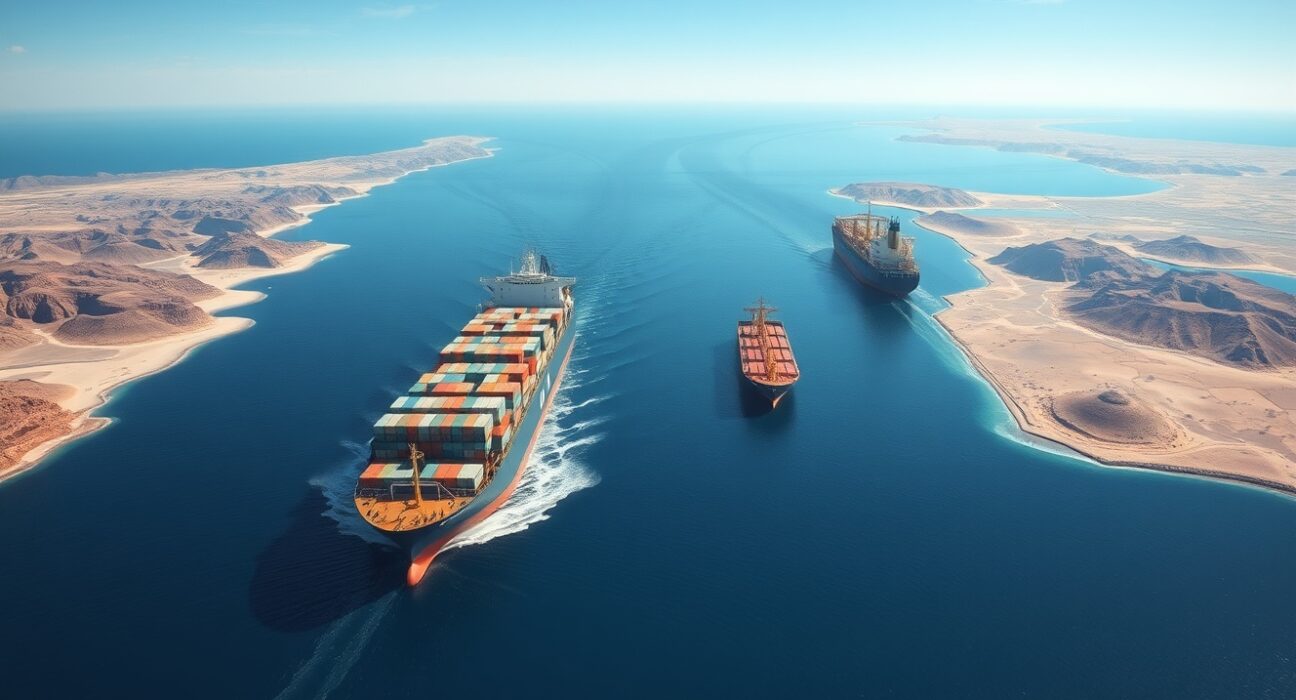
WASHINGTON, D.C. – In a significant development for global energy security and Middle Eastern geopolitics, U.S. President Donald Trump announced that Iran has agreed to end its blockade of the Strait of Hormuz. Consequently, this strategic maritime chokepoint will no longer function as a geopolitical weapon against international commerce, according to the President’s statement from the White House.
Strait of Hormuz Agreement Marks a Geopolitical Shift
President Trump’s announcement directly addresses months of escalating tensions in the Persian Gulf. Furthermore, the Strait of Hormuz serves as the world’s most critical oil transit corridor. Approximately 21 million barrels of oil, representing nearly 21% of global petroleum consumption, pass through this narrow waterway daily. Therefore, any disruption triggers immediate volatility in global oil markets and threatens energy supplies to Asia, Europe, and beyond.
Historically, Iran has repeatedly threatened to close the strait during periods of heightened conflict with the United States and its allies. For instance, Iranian military exercises often simulate strait closures. However, a full-scale, sustained blockade remained an extreme scenario. The recent agreement, therefore, signals a potential de-escalation. Maritime analysts note that global shipping insurance rates, which had spiked during the crisis, may now stabilize.
Background of the Persian Gulf Tensions
The recent crisis originated from the U.S. withdrawal from the 2015 nuclear deal, formally known as the Joint Comprehensive Plan of Action (JCPOA). Subsequently, the U.S. re-imposed severe economic sanctions on Iran, crippling its oil exports and economy. In response, Iran adopted a strategy of “controlled escalation.” This strategy included harassing commercial ships, seizing tankers, and attacking oil infrastructure. Notably, incidents involved mines attached to hulls and drone strikes.
The following timeline outlines key events leading to the agreement:
| Date | Event | Impact |
|---|---|---|
| May 2018 | U.S. withdraws from JCPOA | Sanctions resume, tensions begin |
| June 2019 | Attacks on oil tankers near Fujairah | Insurance premiums surge 10% |
| September 2019 | Drone strike on Saudi Aramco facilities | Global oil price jumps 15% |
| January 2020 | U.S. drone strike kills General Soleimani | Iran vows “hard revenge” |
| Recent Weeks | Increased naval posturing | Direct negotiations hinted |
Expert Analysis on Maritime Security
Security analysts emphasize the strategic importance of the agreement. Dr. Elena Rodriguez, a senior fellow at the Center for Maritime Strategy, stated, “The Strait of Hormuz is not just a shipping lane; it’s a global economic artery. Any closure would have caused immediate, severe supply chain disruptions far beyond oil. Container shipping, LNG carriers, and all regional trade would halt.” She added that naval forces from the U.S., UK, and other nations had been on high alert, conducting freedom of navigation operations to deter Iranian Revolutionary Guard Corps Navy fast boats.
Key factors that likely pressured Iran towards an agreement include:
- Economic Exhaustion: Severe sanctions devastated Iran’s currency and government revenue.
- Military Asymmetry: The U.S. Fifth Fleet’s presence in Bahrain presents overwhelming force.
- Diplomatic Isolation: Regional allies like Saudi Arabia and the UAE supported a firm stance.
- Domestic Unrest: The Iranian public showed growing frustration over economic hardship.
Immediate and Long-Term Global Impacts
The announcement immediately affects several interconnected global systems. Firstly, oil markets typically react to Hormuz tensions. Brent crude futures, the global benchmark, often rise on blockade threats. Secondly, shipping companies reroute vessels around the Cape of Good Hope during crises, adding 10-14 days to Asia-Europe voyages and increasing costs. Thirdly, regional military budgets swell as nations invest in naval patrols and coastal defenses.
In the long term, the agreement may encourage renewed diplomatic dialogue. However, the core issues—Iran’s nuclear program and regional proxy activities—remain unresolved. Energy experts also note that the crisis accelerated investments in alternative routes and energy independence. For example, pipeline networks bypassing the strait, like the Abu Dhabi Crude Oil Pipeline, gained strategic value. Similarly, Saudi Arabia’s east-west pipeline capacity saw expansion.
Regional Stability and Future Prospects
Regional powers cautiously welcomed the development. A spokesperson for the Gulf Cooperation Council (GCC) noted the importance of “secure and free navigation for regional prosperity.” Meanwhile, the International Energy Agency (IEA) had previously warned that a prolonged blockade could trigger a global recession. The IEA’s member countries hold strategic petroleum reserves precisely for such supply shocks.
Looking ahead, verification of the agreement will be crucial. The U.S. Navy and international observers will monitor maritime traffic. Additionally, the deal’s durability depends on the broader U.S.-Iran relationship. Some analysts suggest this could be a tactical pause rather than a strategic reversal. Nevertheless, for global traders, shippers, and energy consumers, the immediate reduction of risk provides significant relief.
Conclusion
President Trump’s announcement regarding the Strait of Hormuz represents a pivotal moment in Middle Eastern geopolitics. The agreement to end the Iranian blockade alleviates immediate threats to global energy supplies and maritime security. However, the underlying tensions between Iran and the United States persist. Consequently, the international community will closely watch for implementation and lasting stability in this critical waterway. The resolution of the Strait of Hormuz crisis underscores the intricate link between regional conflicts and global economic security.
FAQs
Q1: Why is the Strait of Hormuz so important?
The Strait of Hormuz is a narrow chokepoint connecting the Persian Gulf to the open ocean. It is the world’s most important oil transit route, with about one-fifth of global oil supply passing through daily. Its closure would severely disrupt global energy markets.
Q2: What prompted Iran to agree to end the blockade?
Analysts point to a combination of severe economic pressure from U.S. sanctions, overwhelming U.S. military presence in the region, domestic economic hardship within Iran, and potential diplomatic outreach.
Q3: How does this affect global oil prices?
The removal of a blockade threat typically reduces the “risk premium” built into oil prices. This can lead to lower and more stable prices for crude oil and refined products like gasoline, assuming no other disruptions occur.
Q4: Has Iran blocked the strait before?
Iran has never successfully implemented a prolonged, total blockade. However, it has repeatedly threatened to do so and has engaged in harassment of commercial shipping, mining campaigns, and seizures of vessels, creating significant disruption and risk.
Q5: What happens next to ensure the strait remains open?
Verification will be key. The U.S. Navy and allied forces will continue maritime patrols. The international shipping community will monitor transit conditions. Long-term stability likely depends on broader diplomatic progress between the U.S. and Iran on nuclear and regional issues.
Disclaimer: The information provided is not trading advice, Bitcoinworld.co.in holds no liability for any investments made based on the information provided on this page. We strongly recommend independent research and/or consultation with a qualified professional before making any investment decisions.
