

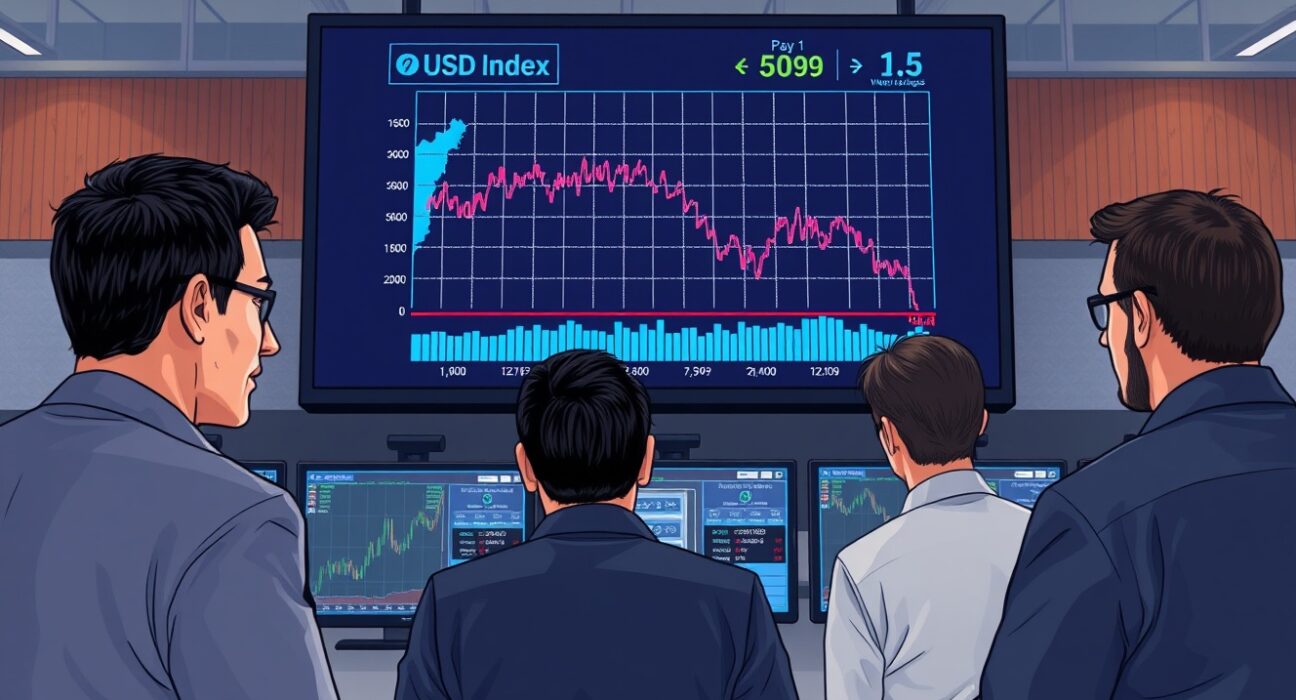
The US Dollar plunged to a six-week low in global Forex trading sessions today, as financial markets digested emerging signals that the recent US-Iran military confrontation may be headed for a rapid diplomatic conclusion. This significant currency movement reflects a sharp recalibration of risk sentiment among institutional investors and major banks. Consequently, analysts are now scrutinizing the interplay between high-stakes geopolitics and core currency valuations. The Dollar Index (DXY), a key benchmark measuring the greenback against a basket of six major peers, fell decisively below a critical technical support level. This drop marks one of the most pronounced single-day declines in the currency since the initial outbreak of regional hostilities.
Forex Today: Analyzing the US Dollar’s Sharp Decline
The immediate catalyst for the US Dollar’s weakness stems from a series of coordinated diplomatic statements from Washington, D.C., and Tehran. Officials from both capitals have, in recent hours, emphasized a shared priority for containment and dialogue. Forex markets, which typically price in geopolitical risk premiums with swift precision, reacted by unwinding safe-haven flows that had buoyed the dollar. Market participants are now pricing in a higher probability of a negotiated settlement rather than a prolonged conflict. This shift has triggered a broad-based sell-off in the dollar across major, minor, and exotic currency pairs.
Technical chart analysis reveals the severity of the move. The Dollar Index broke through its 50-day moving average and the 104.00 psychological level with notable momentum. Key support zones established over the past month and a half failed to hold, indicating strong selling pressure from algorithmic funds and macro hedge funds. Meanwhile, the EUR/USD pair surged past 1.0900, while USD/JPY fell sharply towards the 148.00 handle. These movements underscore a market-wide repricing of dollar exposure.
Geopolitical Context and Market Sentiment Shift
The recent military exchanges between the United States and Iran created immediate volatility across all asset classes. Initially, the US Dollar, along with gold and US Treasury bonds, experienced a classic flight-to-safety rally. However, the market narrative began its pivotal turn following back-channel communications reported by several major news agencies. These reports suggested both sides were actively seeking an off-ramp to avoid further escalation. For currency traders, the calculus shifted from pricing in war risk to pricing in peace prospects.
Historical precedent plays a role in this market reaction. Previous episodes of geopolitical tension in the Middle East have often seen the dollar rally sharply before retracing gains once de-escalation becomes apparent. The current price action suggests traders believe this cycle may be compressing. The speed of the dollar’s decline indicates that many speculative long positions, built during the initial crisis phase, were rapidly liquidated. This created a feedback loop of further selling.
Expert Analysis on Currency and Conflict
Financial institutions are adjusting their quarterly forecasts in response to these developments. “The forex market is acting as a leading indicator for geopolitical sentiment,” noted a senior strategist at a global investment bank. “The dollar’s sell-off isn’t just about interest rate differentials today; it’s a direct bet on a reduction in global political risk. If a ceasefire or formal talks are announced, we could see the DXY test levels not seen since late last year.” This perspective highlights how currency markets often move ahead of official political announcements.
Furthermore, the impact extends beyond the dollar. Commodity-linked currencies like the Canadian and Australian dollars have rallied, buoyed by stabilizing oil prices. The Swiss Franc and Japanese Yen, other traditional havens, have also given back some of their recent gains. This synchronized move across the G10 currency spectrum confirms the shift is fundamentally driven by risk appetite, not isolated dollar dynamics. Central bank watchers also note that the Federal Reserve’s path on interest rates may now face less pressure from energy-price-driven inflation, a factor subtly supporting the bearish dollar view.
Broader Economic Impacts and Forward Outlook
The ripple effects of a weaker US Dollar are manifold. For multinational US corporations, overseas earnings become more valuable when converted back to dollars, potentially boosting equity market sentiment. Conversely, emerging market economies burdened by dollar-denominated debt may find some relief. The price of key global commodities, most of which are dollar-priced, can also become more accessible, affecting global trade flows. This interconnectedness demonstrates the dollar’s central role in the world financial system.
Key factors traders will monitor in the coming sessions include:
- Official Diplomacy: Any formal statements from the UN Security Council or direct talks between US and Iranian officials.
- Oil Price Stability: Continued stabilization in Brent and WTI crude futures will reinforce the de-escalation narrative.
- US Economic Data: Upcoming releases on inflation and employment will refocus attention on domestic monetary policy.
- Federal Reserve Commentary: Speeches from Fed officials will be parsed for any mention of geopolitical risks affecting their economic outlook.
Market volatility, as measured by indices like the J.P. Morgan Global FX Volatility Index, is expected to remain elevated in the near term. However, the direction of the next major move in the US Dollar now hinges more on concrete diplomatic progress than on military headlines. Technical analysts point to the next major support level for the DXY around 102.80, a zone that may attract buyers if tested.
Conclusion
The US Dollar’s drop to a six-week low serves as a powerful testament to the forex market’s role as a real-time barometer of global risk. The move from ‘risk-off’ to ‘risk-on’ sentiment, driven by hopes for a swift end to US-Iran tensions, has been both rapid and significant. While the situation remains fluid, the currency market’s verdict is clear: it is betting on de-escalation. For traders and investors worldwide, monitoring this Forex Today dynamic is crucial, as the dollar’s path will influence everything from global corporate earnings to emerging market stability in the weeks ahead. The interplay between geopolitics and finance has never been more immediate or more vividly displayed than in these currency price movements.
FAQs
Q1: Why does the US Dollar fall when geopolitical tensions ease?
The US Dollar is considered a premier safe-haven asset. In times of crisis, global capital flows into US Treasury bonds and dollar-denominated assets, boosting its value. When tensions ease, that ‘flight to safety’ trade reverses, leading investors to move capital into higher-yielding or riskier assets elsewhere, selling dollars in the process.
Q2: What is the Dollar Index (DXY)?
The US Dollar Index (DXY) is a widely followed measure of the dollar’s value relative to a basket of six major world currencies: the Euro (EUR), Japanese Yen (JPY), British Pound (GBP), Canadian Dollar (CAD), Swedish Krona (SEK), and Swiss Franc (CHF). A falling DXY indicates broad-based dollar weakness.
Q3: How do Forex markets react so quickly to geopolitical news?
Modern forex is a decentralized, 24-hour electronic market with immense liquidity. News is incorporated into prices almost instantly by algorithmic trading systems, high-frequency traders, and global banks that continuously adjust their quotes based on real-time information flows and risk assessments.
Q4: Besides the US Dollar, what other assets are affected by US-Iran tensions?
Global oil prices (Brent, WTI), gold prices, global equity indices (especially energy and defense sectors), and government bond yields (particularly US Treasuries) are all highly sensitive to developments in Middle East geopolitics due to implications for energy supply, inflation, and global growth.
Q5: Could the US Dollar’s decline reverse quickly?
Yes. Forex markets are highly reactive. Any new headline suggesting a breakdown in diplomacy or a renewed military incident could trigger an immediate and sharp reversal, sending the dollar soaring again as safe-haven demand returns. The current trend is contingent on the continuation of the de-escalation narrative.
Disclaimer: The information provided is not trading advice, Bitcoinworld.co.in holds no liability for any investments made based on the information provided on this page. We strongly recommend independent research and/or consultation with a qualified professional before making any investment decisions.
