

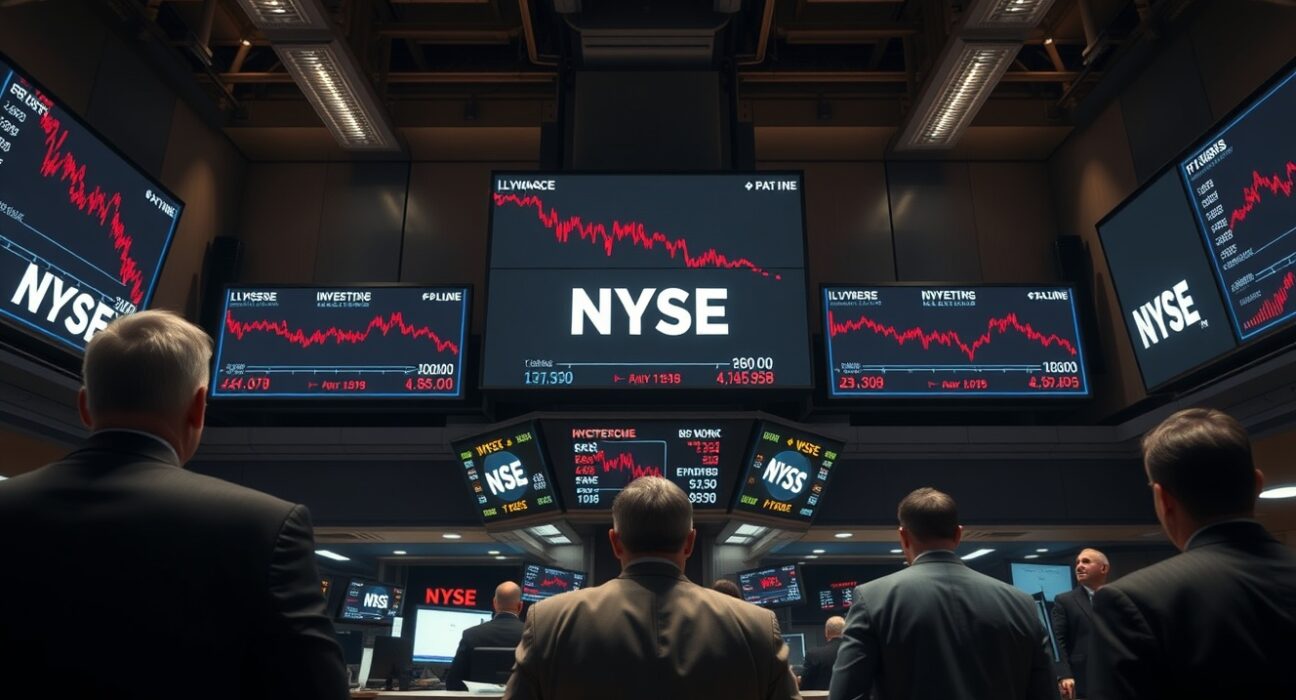
US stocks ended the trading day in negative territory, with the S&P 500 falling 0.69%, the Nasdaq Composite dropping 1.33%, and the Dow Jones Industrial Average slipping 0.22%. The losses were broad-based, but technology shares led the decline, reflecting investor concerns about elevated valuations and rising Treasury yields.
Market Overview
The session began with cautious optimism, but momentum faded as the day progressed. The Nasdaq’s decline was the most pronounced, driven by selling in mega-cap tech names. The S&P 500, which had been hovering near record highs, pulled back as investors locked in gains. The Dow, which has a smaller tech weighting, fared relatively better, though it still ended in the red.
Trading volume was slightly above the 30-day average, indicating active participation. The CBOE Volatility Index (VIX), often referred to as Wall Street’s fear gauge, rose 4% to 15.8, suggesting a modest uptick in market anxiety.
Sector Performance
Technology and consumer discretionary sectors were the worst performers, each falling more than 1%. Communication services also lagged. In contrast, utilities and consumer staples—traditional defensive sectors—managed to stay near the flatline, reflecting a rotation into safer assets. Energy stocks were mixed, with oil prices holding steady amid ongoing supply concerns.
Why It Matters
This pullback comes after a strong run for equities, particularly in the tech-heavy Nasdaq, which had gained nearly 10% over the past three months. Investors are now weighing the impact of persistent inflation and the possibility of the Federal Reserve maintaining higher interest rates for longer than previously anticipated. The bond market reflected this, with the 10-year Treasury yield rising to 4.28%.
For everyday investors, the decline serves as a reminder that markets do not move in a straight line. While the overall trend remains positive, volatility is likely to persist as economic data and corporate earnings continue to shape sentiment.
Conclusion
Today’s decline underscores the fragility of the current market rally. With the Fed’s next policy meeting on the horizon, investors will be closely monitoring economic indicators for clues about future rate moves. For now, the path of least resistance appears to be sideways with a downward bias, as the market digests recent gains and recalibrates expectations.
FAQs
Q1: Why did tech stocks fall more than the broader market?
Tech stocks are more sensitive to interest rate expectations. When yields rise, the present value of future earnings for high-growth companies decreases, making them less attractive. This dynamic was amplified by recent profit-taking after a strong rally.
Q2: Should I be worried about my investments?
Market pullbacks are a normal part of investing. The key is to focus on long-term goals and maintain a diversified portfolio. If you have a well-balanced allocation, short-term fluctuations are less likely to derail your financial plan.
Q3: What should investors watch in the coming days?
Investors should monitor upcoming economic data releases, particularly inflation reports and jobless claims, as well as any comments from Federal Reserve officials. These will provide clues about the central bank’s next policy move.
Disclaimer: The information provided is not trading advice, Bitcoinworld.co.in holds no liability for any investments made based on the information provided on this page. We strongly recommend independent research and/or consultation with a qualified professional before making any investment decisions.
