

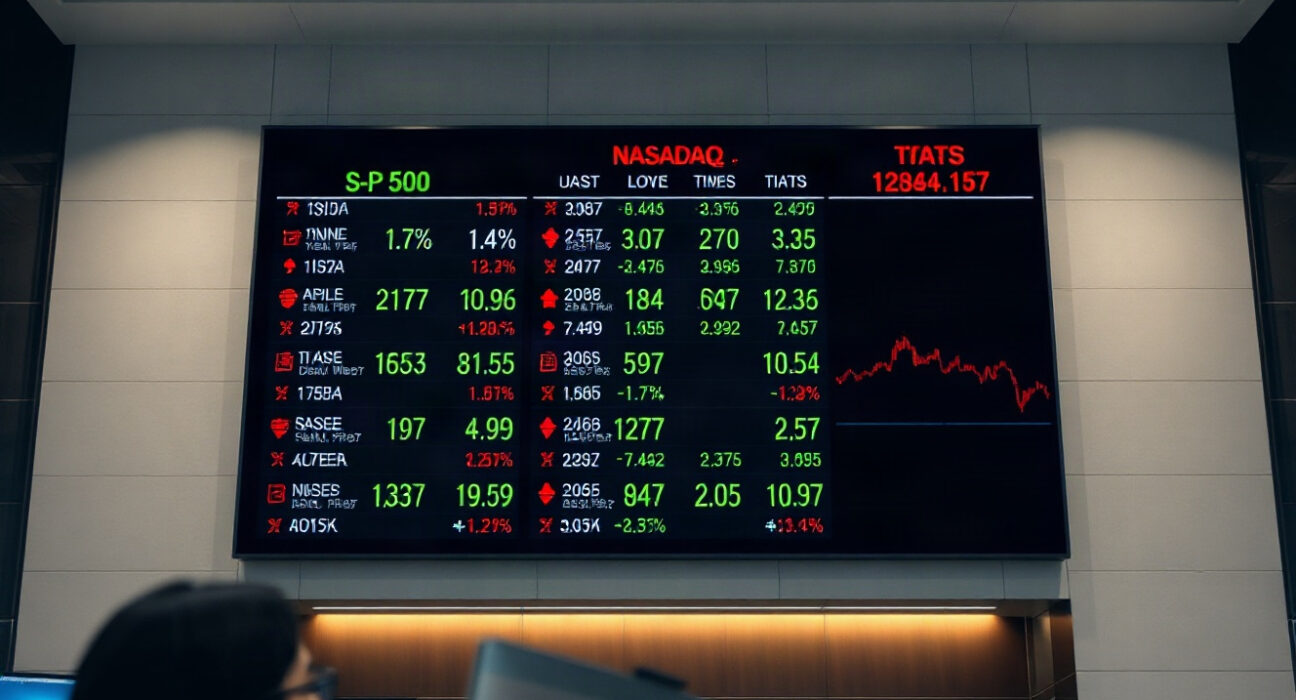
U.S. stock markets opened with a mixed tone on [Day, Month Date, Year], as the S&P 500 and Nasdaq Composite slipped while the Dow Jones Industrial Average posted a modest gain. The divergence reflects a cautious start to the trading session, with investors weighing fresh economic data and corporate earnings against ongoing concerns about inflation and interest rates.
Market Performance at the Open
Shortly after the opening bell, the S&P 500 was down 0.23%, while the tech-heavy Nasdaq fell 0.48%. In contrast, the Dow Jones Industrial Average managed a gain of 0.13%, supported by strength in select industrial and financial stocks. The mixed performance suggests that investors are rotating among sectors rather than making broad directional bets.
Factors Influencing Today’s Trading
The market’s mixed open comes amid a busy week for economic releases, including updates on consumer confidence and manufacturing activity. Additionally, traders are parsing the latest batch of corporate earnings, with results from major retailers and technology firms providing sector-specific cues. While some companies have beaten expectations, others have offered cautious guidance, adding to the uneven sentiment.
Why This Matters to Investors
For everyday investors, the mixed open highlights the importance of diversification. While the Dow’s gain may signal resilience in traditional sectors, the Nasdaq’s decline points to ongoing volatility in growth and technology stocks. Understanding these dynamics can help investors make more informed decisions about portfolio allocation and risk management.
Conclusion
As the trading day progresses, market participants will closely monitor economic data and corporate news for further direction. The early mixed performance underscores a market in transition, with no single narrative dominating. Staying informed about these daily movements is essential for anyone tracking their investments or planning future trades.
FAQs
Q1: What does it mean when the stock market opens mixed?
A mixed open means some major indices are rising while others are falling at the start of the trading session. This often reflects divergent investor sentiment across different sectors of the economy.
Q2: Why did the Nasdaq drop more than the S&P 500?
The Nasdaq is heavily weighted toward technology and growth stocks, which tend to be more sensitive to interest rate expectations and economic uncertainty. A larger decline in the Nasdaq often indicates weaker sentiment in these higher-risk sectors.
Q3: Should I be concerned about a mixed market open?
Not necessarily. A mixed open is common and does not predict the market’s direction for the rest of the day or longer-term trends. It’s more important to focus on your investment goals and time horizon rather than short-term fluctuations.
Disclaimer: The information provided is not trading advice, Bitcoinworld.co.in holds no liability for any investments made based on the information provided on this page. We strongly recommend independent research and/or consultation with a qualified professional before making any investment decisions.
