

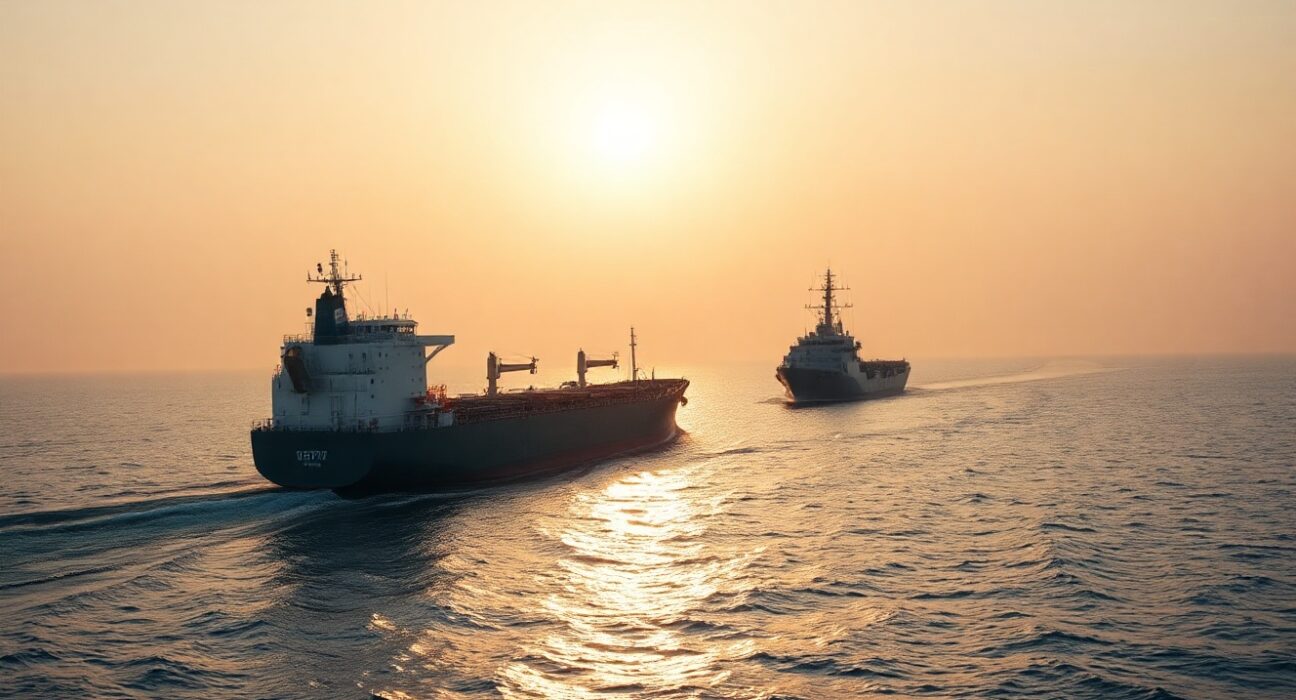
United States Vice President JD Vance has proposed the establishment of a formal mechanism to ensure the Strait of Hormuz remains open for international maritime traffic, a move that underscores Washington’s growing concerns over regional stability and global energy security. The statement, delivered during a security forum, comes amid heightened tensions in the Middle East, where Iran has previously threatened to disrupt shipping through the strategic chokepoint.
Strategic Importance of the Strait of Hormuz
The Strait of Hormuz, a narrow waterway connecting the Persian Gulf to the Gulf of Oman, is one of the world’s most critical maritime passages. Approximately 20% of global oil consumption passes through its waters daily, making it a vital artery for energy markets. Any disruption — whether from military conflict, sabotage, or geopolitical maneuvering — could trigger severe price volatility and supply shortages worldwide. Vance’s proposal signals that the U.S. views the security of this route as a non-negotiable priority, requiring a multilateral framework to deter potential blockades or attacks.
Implications for Global Markets and Security
Analysts note that a formal mechanism could involve coordinated naval patrols, real-time intelligence sharing, and diplomatic guarantees from regional powers. Such an arrangement would build upon existing frameworks like the International Maritime Security Construct (IMSC), but with stronger enforcement provisions. For traders and energy companies, the announcement adds a layer of policy certainty, though implementation challenges remain. Iran’s history of leveraging the Strait as a bargaining chip — including the 2019 seizure of tankers — means any new mechanism must navigate complex geopolitical fault lines. The proposal also reflects a broader U.S. strategy to maintain freedom of navigation in contested waters, a principle that has long underpinned global trade.
What This Means for Readers
For consumers, the immediate impact is limited, but the long-term implications are significant. A secure Strait of Hormuz helps stabilize oil prices, which in turn affects everything from gasoline costs to inflation. For investors, the proposal reinforces the importance of geopolitical risk in energy portfolios. For policymakers, it highlights the need for resilient supply chains and alternative energy sources. The success of any mechanism will depend on buy-in from both regional allies and adversaries, as well as the U.S. administration’s ability to follow through with credible deterrent measures.
Conclusion
Vice President Vance’s call for a formal mechanism to keep the Strait of Hormuz open represents a proactive step in safeguarding a critical global chokepoint. While details remain to be negotiated, the proposal underscores the enduring link between maritime security and economic stability. As geopolitical tensions evolve, the world will watch closely how the U.S. and its partners translate this policy vision into actionable measures.
FAQs
Q1: Why is the Strait of Hormuz so important?
The Strait of Hormuz is a narrow waterway through which about 20% of the world’s oil passes. Any disruption can cause major oil price spikes and supply shortages globally.
Q2: What kind of mechanism is Vice President Vance proposing?
He proposes a formal framework — likely involving naval patrols, intelligence sharing, and diplomatic agreements — to ensure the Strait remains open and secure against threats like blockades or attacks.
Q3: How would this affect oil prices and consumers?
A secure Strait helps maintain stable oil prices, which benefits consumers by keeping fuel and energy costs predictable. The proposal aims to prevent price shocks from geopolitical disruptions.
Disclaimer: The information provided is not trading advice, Bitcoinworld.co.in holds no liability for any investments made based on the information provided on this page. We strongly recommend independent research and/or consultation with a qualified professional before making any investment decisions.
