
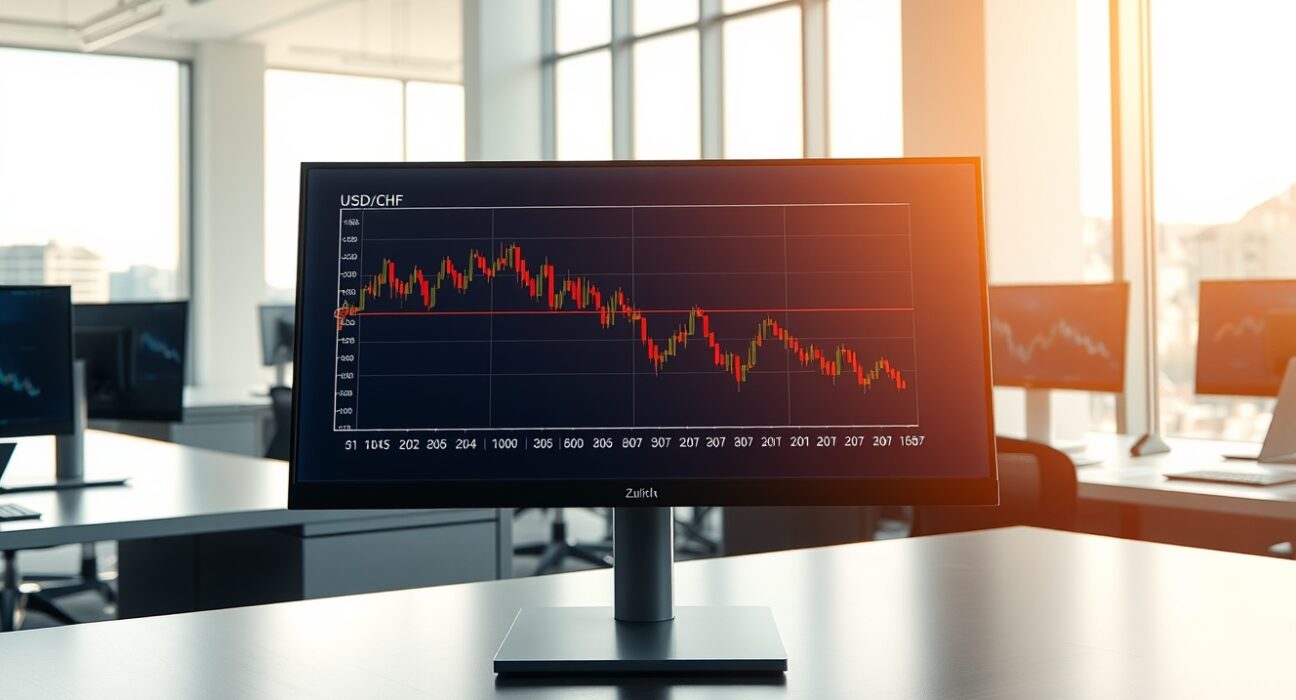
The USD/CHF currency pair experienced significant downward pressure this week, retreating from recent highs as diplomatic progress in the Middle East reduced immediate geopolitical risks. Consequently, market participants shifted away from traditional safe-haven assets, triggering a broad-based US Dollar sell-off. This movement highlights the intricate relationship between global political stability and forex market valuations, particularly for currency pairs involving major reserve currencies and traditional havens like the Swiss Franc.
USD/CHF Retreats Amid Shifting Geopolitical Winds
The recent decline in the USD/CHF pair directly correlates with de-escalating tensions in key Middle Eastern conflict zones. For months, the US Dollar benefited from its status as a primary safe-haven asset during periods of global uncertainty. However, confirmed ceasefire talks and reduced military posturing have altered the market’s risk calculus. Traders now perceive a lower immediate probability of a broader regional conflict disrupting oil supplies and global trade routes. This reassessment has prompted capital to flow out of the Dollar and into higher-yielding or growth-sensitive assets.
Forex analysts note that the Swiss Franc often exhibits inverse sensitivity to the US Dollar during such shifts. While both currencies are considered havens, their drivers differ. The Dollar’s haven status is deeply tied to global liquidity and US Treasury demand, whereas the Franc’s strength stems from Switzerland’s political neutrality, substantial current account surplus, and the Swiss National Bank’s historical stance. Therefore, when global risk appetite improves, the Dollar frequently weakens more pronouncedly against the Franc than against other majors.
Analyzing the Fundamental Drivers Behind the Move
Beyond geopolitics, several concurrent fundamental factors amplified the USD/CHF sell-off. Firstly, market expectations for the Federal Reserve’s monetary policy path have moderated. Recent US inflation data showed modest cooling, reducing the perceived urgency for additional aggressive rate hikes. Conversely, the Swiss National Bank has maintained a consistently hawkish tone, concerned with persistent domestic inflationary pressures. This policy divergence outlook places upward pressure on the Franc relative to the Dollar.
Secondly, technical factors played a crucial role. The pair had approached a major multi-year resistance level, prompting profit-taking from long positions. The subsequent break below key moving averages triggered algorithmic selling and stop-loss orders, accelerating the decline. The following table summarizes the key weekly performance metrics for related assets:
| Asset | Weekly Change | Primary Driver |
|---|---|---|
| USD/CHF | -1.8% | Geopolitical de-escalation, policy divergence |
| DXY (US Dollar Index) | -1.2% | Reduced safe-haven demand, yield adjustments |
| EUR/CHF | -0.5% | Franc broad strength, Eurozone fragility |
| Brent Crude Oil | -3.5% | Lower war premium, demand concerns |
Furthermore, seasonal liquidity patterns contributed to the volatility. The period often sees repositioning by institutional funds, which can exaggerate moves driven by fundamental news.
Expert Perspective on Market Structure and Flows
According to senior analysts at major international banks, the flow dynamics were unmistakable. “We observed consistent selling of USD/CHF by real money accounts and hedge funds,” noted a lead currency strategist. “The order books showed offers being pulled as the geopolitical news hit, creating a vacuum that pushed the pair lower. Importantly, the move was not isolated to spot markets; options markets also saw a sharp repricing, with volatility skew shifting to favor Franc appreciation.” This expert insight underscores the depth and conviction behind the price action, suggesting it was more than a short-term correction.
Historical context is also vital. The USD/CHF pair has served as a reliable barometer for global risk sentiment for decades. Periods of sustained decline often coincide with phases of synchronized global economic growth or successful diplomatic resolutions. Therefore, market participants monitor this pair not just for forex exposure, but as a gauge for broader macro trends. The current retreat, if sustained, could signal a market expectation for a more stable geopolitical environment in the coming quarters, which would have implications for equity and commodity markets globally.
Broader Implications for Global Currency Markets
The retreat of USD/CHF has ripple effects across the financial landscape. Primarily, it alleviates some pressure on the Swiss National Bank (SNB), which has intermittently intervened to prevent excessive Franc strength from harming Swiss exports. A weaker Dollar-Franc rate reduces the immediate need for intervention, allowing the SNB to focus more squarely on its inflation mandate. Additionally, the move impacts currency hedging costs for multinational corporations with exposure to European markets, potentially making Swiss assets relatively more expensive for Dollar-based investors.
Key considerations for traders and investors now include:
- Persistence of the Trend: Whether the geopolitical calm is durable or a temporary lull.
- Central Bank Signaling: Upcoming communications from the Fed and SNB will be scrutinized for hints on future policy.
- Technical Levels: The pair is approaching major support zones; a break could open the path for further significant declines.
- Cross-Market Correlation: Watch for confirming signals in equity volatility (VIX) and gold prices, other traditional safe havens.
Market structure analysis reveals that positioning was heavily skewed towards long USD positions before the retreat. This overhang suggests the unwind could have further to run if new catalysts emerge. However, any resurgence of geopolitical tension or unexpectedly hot US inflation data could swiftly reverse the flow, demonstrating the fragile equilibrium in current markets.
Conclusion
The USD/CHF retreat serves as a powerful case study in how geopolitical developments transmit directly into currency valuations. The easing of Middle East tensions acted as the primary catalyst, reducing the safe-haven premium embedded in the US Dollar and allowing fundamental factors like monetary policy divergence to come to the fore. This movement underscores the Swiss Franc’s enduring role as a stable currency during shifts in global risk sentiment. For market participants, monitoring the dialogue between diplomacy and central bank policy remains essential for navigating the USD/CHF pair and broader forex market dynamics in the coming months.
FAQs
Q1: Why does the USD/CHF pair fall when geopolitical tensions ease?
The US Dollar often gains a “safe-haven premium” during global crises. When tensions ease, this premium unwinds as investors move capital into riskier, higher-yielding assets, weakening the Dollar against stable currencies like the Swiss Franc.
Q2: Is the Swiss Franc a better safe haven than the US Dollar?
They serve different purposes. The Dollar is a liquidity safe haven in acute market stress, while the Franc is a long-term stability haven due to Switzerland’s political neutrality and strong balance sheet. Their performance can diverge based on the crisis type.
Q3: How does the Swiss National Bank typically respond to a strengthening Franc?
The SNB has historically intervened in forex markets to curb excessive Franc appreciation, as it hurts Swiss exports. It may also use interest rate policy or verbal intervention to influence the currency’s value.
Q4: What other factors, besides geopolitics, influence the USD/CHF exchange rate?
Key factors include interest rate differentials (set by the Fed and SNB), relative economic growth in the US versus Switzerland, trade flow data, and broader global risk sentiment measured by equity and commodity markets.
Q5: Could this USD/CHF retreat reverse quickly?
Yes. Forex markets are highly sensitive to new information. A resurgence of conflict, unexpectedly strong US economic data, or a hawkish shift from the Federal Reserve could rapidly restore strength to the Dollar, causing the pair to rebound.
Disclaimer: The information provided is not trading advice, Bitcoinworld.co.in holds no liability for any investments made based on the information provided on this page. We strongly recommend independent research and/or consultation with a qualified professional before making any investment decisions.