

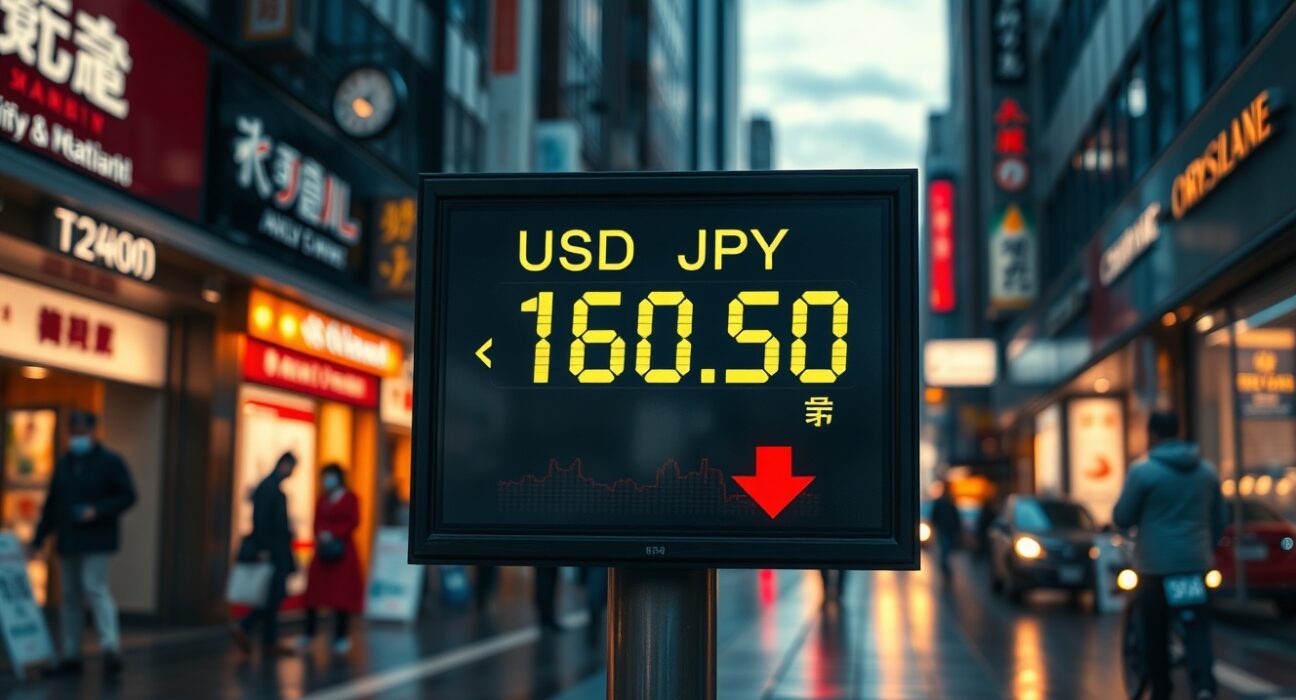
The USD/JPY pair continued its upward trajectory on Wednesday, climbing further beyond the psychologically significant 160.00 level. The move was primarily driven by heightened safe-haven demand for the US dollar, fueled by escalating geopolitical tensions in the Middle East. This dynamic has continued to undermine the Japanese yen, which has faced persistent selling pressure.
Geopolitical Risk and Safe-Haven Flows
Renewed hostilities and the potential for a broader regional conflict in the Middle East have prompted investors to rotate capital into perceived safe-haven assets. The US dollar, alongside gold and US Treasuries, has been a primary beneficiary of this risk-off sentiment. Conversely, the Japanese yen, despite its own historical safe-haven status, has struggled to attract bids. Market participants appear to be focusing on the yen’s vulnerabilities, including Japan’s persistent trade deficits and the Bank of Japan’s (BoJ) relatively dovish monetary policy stance compared to the Federal Reserve.
The divergence in interest rate expectations remains a key fundamental driver. While the BoJ has made modest adjustments to its yield curve control policy, the Fed’s commitment to maintaining higher interest rates for longer continues to support the dollar-yen yield differential. This differential incentivizes carry trades, where investors borrow yen at low rates to invest in higher-yielding dollar-denominated assets, further pressuring the yen.
Technical Analysis and Key Levels
From a technical perspective, the sustained break above the 160.00 handle is a bullish signal for the pair. The next major resistance zone is located near the multi-decade high of 161.95, reached in late June. A decisive break above that level could open the door for a test of the 163.00 area.
Support and Resistance Levels
- Resistance: 161.95 (multi-decade high), 163.00 (psychological round number).
- Support: 160.00 (psychological level), 159.50 (previous resistance-turned-support), 158.00 (20-day moving average).
Traders should remain cautious, however. The pair is technically overbought on the daily Relative Strength Index (RSI), suggesting a potential short-term pullback or consolidation before the next leg higher. Any unexpected de-escalation in Middle East tensions could trigger a sharp unwinding of safe-haven positions, leading to a rapid decline in USD/JPY.
What This Means for Traders and the Broader Market
The continued strength in USD/JPY has significant implications. For Japanese importers, a weaker yen increases the cost of imported energy and raw materials, adding to inflationary pressures within Japan. For global markets, the pair’s movement is a key barometer of risk sentiment. A sustained move higher often correlates with a risk-off environment, while a sharp reversal could signal a return to risk appetite.
Market participants will be closely watching for any verbal intervention from Japanese officials. The Ministry of Finance has repeatedly warned against speculative moves, and the risk of direct market intervention increases as the pair approaches the 162.00 level.
Conclusion
The USD/JPY pair is firmly in bullish territory, supported by a potent mix of geopolitical risk and monetary policy divergence. While the technical setup favors further gains, the elevated risk of intervention and the overbought condition warrant caution. The near-term direction will likely be dictated by headlines from the Middle East and any fresh signals from the Bank of Japan or the Federal Reserve.
FAQs
Q1: Why is the Japanese yen weakening despite being a safe-haven currency?
The yen’s safe-haven appeal has been diminished by Japan’s structural economic issues, including large trade deficits and a central bank that is still pursuing ultra-loose monetary policy relative to the Fed. The wide interest rate differential makes the dollar more attractive for yield-seeking investors.
Q2: What level would trigger Japanese intervention in the forex market?
Japanese authorities have not specified a specific trigger level, but history suggests they become more active as the pair approaches or breaks above the 162.00 mark. Verbal warnings often precede actual intervention.
Q3: How does the Middle East conflict specifically affect USD/JPY?
Geopolitical crises typically drive investors toward the US dollar as the world’s primary reserve currency. This safe-haven demand strengthens the dollar against the yen, which is currently viewed as a less reliable safe haven due to Japan’s economic fundamentals.
Disclaimer: The information provided is not trading advice, Bitcoinworld.co.in holds no liability for any investments made based on the information provided on this page. We strongly recommend independent research and/or consultation with a qualified professional before making any investment decisions.
