
World ID Moves Into Robotics as Machines Gain a Way to Verify Humans Without Knowing Who They Are
In this article
The integration with peaqOS gives autonomous machines access to zero-knowledge proof-of-human checks, pointing to a new identity layer for an increasingly automated internet.
Robots and autonomous machines can now verify that a person is actually a real human being without collecting their name, face, or any other identifying information. This breakthrough comes through a brand new integration between World ID and peaqOS. PeaqOS functions as the primary operating system for machine-based applications developed by the peaq network.
This integration is currently available directly through robotic.sh. It allows machines running peaqOS to seamlessly request and verify a World ID proof. The entire system relies heavily on zero-knowledge technology. In simple terms, the machine receives concrete cryptographic evidence that a person meets a particular condition. It gets this proof without ever receiving the underlying personal identity data of the user.
This specific distinction is about to become incredibly important. Autonomous machines are rapidly moving out of highly controlled industrial settings. They are entering public spaces and interacting directly with everyday consumers.
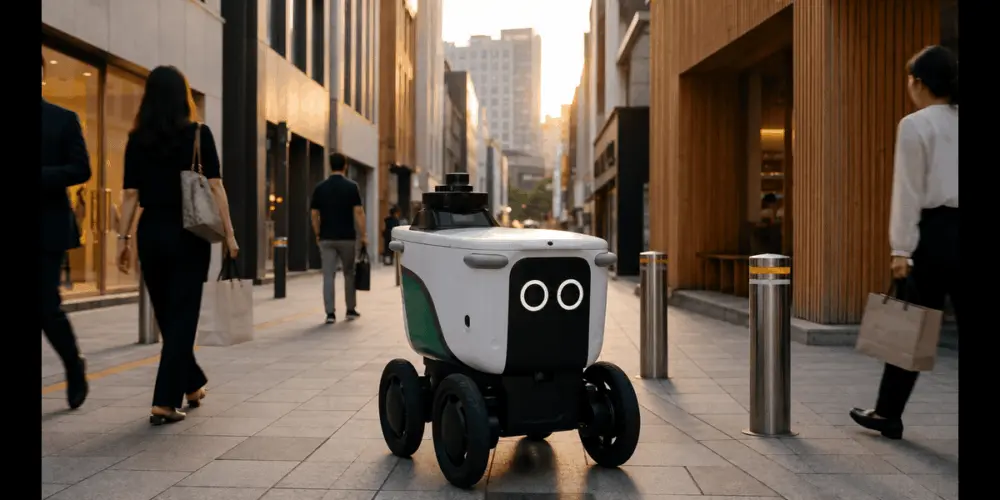
Take a neighborhood delivery robot as a prime example. The machine needs to establish that a recipient is a genuine person before handing over a valuable item. Right now, these systems rely on clunky workarounds. They use pickup codes, mobile accounts, PINs, or physical identity documents. However, those legacy methods create dangerous vulnerabilities. PIN codes can be easily transferred, leaked, or stolen.
Conventional identity verification forces companies to collect highly sensitive information that they then have to store, manage, and protect from hackers.
World ID takes a completely different approach to this problem. The user simply verifies themselves through the World App. Meanwhile, the machine receives a quick cryptographic proof rather than the person’s actual identity.
In a recent demonstration of the integration, the teams showed how a patient can verify themselves before a pharmacy loads sensitive medication into an autonomous delivery robot. The recipient then verifies again the moment the machine arrives at their door. The system instantly establishes that the person receiving the medication corresponds directly to the person associated with the original order. It does all of this without giving the robot any access to the patient’s real name.
This technology shines wherever sheer uniqueness matters significantly more than a specific identity.
Imagine a company distributing a highly limited promotional product through an autonomous kiosk. They could easily enforce a strict one-per-person rule without maintaining a massive, vulnerable database of customer names. Shared community machines could similarly verify that a user is a unique human without forcing that user to create an account packed with personal information.
This puts World ID right in the middle of a rapidly developing market for machine-to-human authentication. AI-powered robots and autonomous systems are becoming wildly capable. They desperately need reliable ways to distinguish legitimate human interactions from automated abuse, duplicated identities, and potentially AI-generated users.
This integration also gives the machines a robust identity and coordination layer. Through peaqOS, machines can actively use decentralized identifiers. They can discover services through the Machine Market and smoothly coordinate World ID verification from the initial request straight through to final confirmation.
According to World, the system does not require an API key or a per-verification fee.
The move comes right as blockchain developers actively explore decentralized identity systems for an internet where humans, AI agents, and autonomous machines operate side by side. Most digital identity systems were historically built for people browsing websites. Robotics introduces a completely different problem. Machines need to verify people in the physical world, often without needing to know who those people actually are.
World ID’s sudden expansion into robotics points to a much broader use for proof-of-human systems. It shifts the concept of online humanity from a simple digital identity tool toward foundational infrastructure that machines can actively use.