
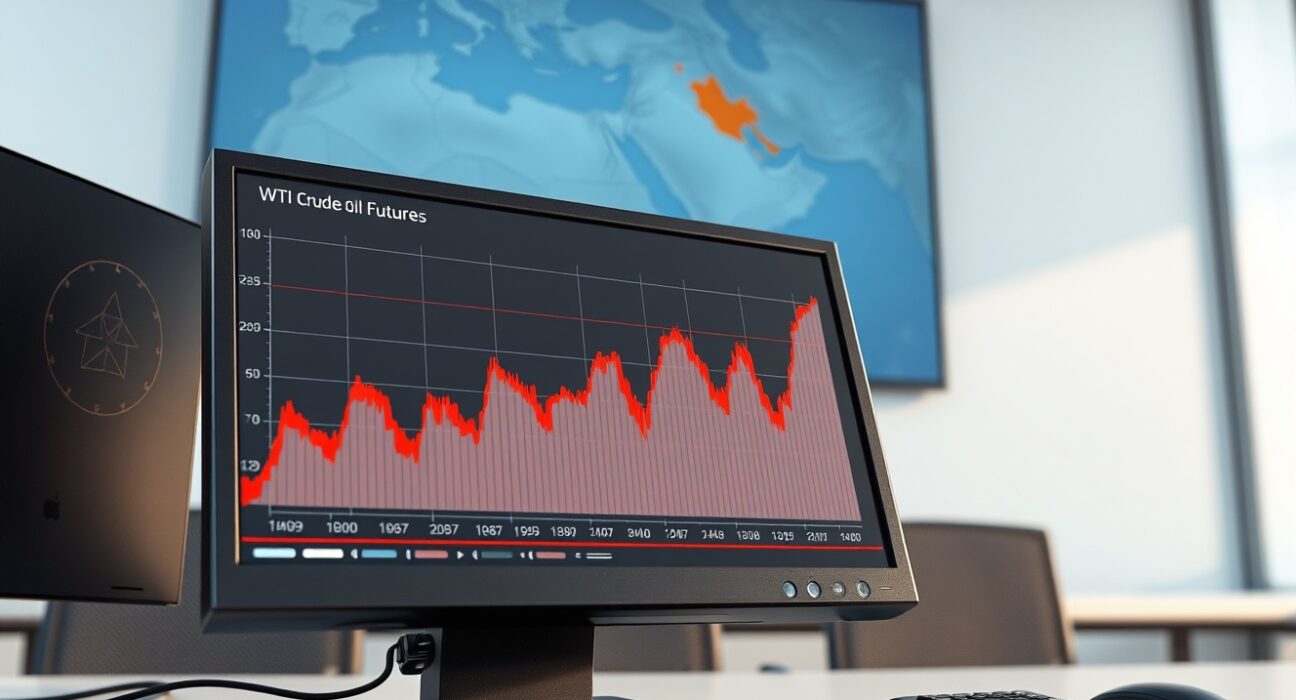
Global oil markets experienced significant volatility this week as West Texas Intermediate (WTI) crude futures gained sharply, driven by escalating geopolitical tensions in the Middle East. Consequently, the G7 nations and the International Energy Agency (IEA) initiated urgent consultations regarding potential coordinated releases from strategic petroleum reserves. This development underscores the fragile balance between geopolitical risk and global energy security in 2025.
WTI Oil Price Dynamics Amid Regional Conflict
Benchmark WTI crude oil futures rallied by over 4% in early trading sessions. Market analysts immediately attributed this surge to renewed military engagements in key Middle Eastern transit corridors. Specifically, disruptions to maritime shipping routes through the Strait of Hormuz triggered supply concerns. Furthermore, production uncertainties in several OPEC+ member nations added upward pressure on prices.
The price movement reflects a classic risk premium being priced into the market. Historical data shows similar patterns during periods of regional instability. For instance, the 2019 attacks on Saudi Aramco facilities caused a comparable price spike. However, current inventory levels present a different fundamental backdrop. The U.S. Energy Information Administration (EIA) recently reported commercial crude stocks sitting slightly above the five-year seasonal average.
G7 and IEA Weigh Strategic Reserve Measures
In response to the price spike and supply fears, finance and energy ministers from the G7 coalition convened an emergency virtual meeting. The primary agenda item involved assessing the viability of a coordinated strategic petroleum reserve (SPR) release. The IEA, which coordinates such releases among its 31 member countries, presented several contingency plans. These plans reportedly consider both volume and timing to maximize market calming effects.
A coordinated SPR release serves as a powerful tool to signal market stability. The IEA last authorized a collective release in March 2022, following Russia’s invasion of Ukraine. That action involved a commitment of 60 million barrels. The current discussions, however, focus on a more targeted response. Officials aim to prevent panic buying while addressing specific logistical disruptions rather than a broad supply deficit.
Expert Analysis on Market Interventions
Dr. Elena Vance, a senior fellow at the Center for Global Energy Policy, provided context on the mechanism. “Strategic reserve releases function as a psychological and physical market buffer,” Vance explained. “Their effectiveness depends heavily on the nature of the supply shock. They can bridge short-term logistical gaps brilliantly, but they cannot replace lost production over the long term.”
Market data supports this nuanced view. Following the 2022 release, prices initially fell but later recovered as underlying structural issues remained. The current situation involves different variables, including higher global inventory buffers and slower demand growth projections for 2025. These factors may enhance the potential impact of any intervention.
Geopolitical Context and Energy Security
The immediate trigger for the market anxiety stems from a significant escalation in conflict between state and non-state actors in the Levant. This conflict now threatens critical energy infrastructure beyond the immediate region. Key oil transit chokepoints, including the Bab el-Mandeb Strait, have seen increased military activity. Insurance premiums for tankers traversing these routes have jumped accordingly, adding a tangible cost to physical barrels.
Energy security has consequently returned to the top of the diplomatic agenda. The G7 discussions extend beyond mere stockpile releases. They encompass plans for enhancing supply chain resilience and accelerating investments in alternative energy sources. This holistic approach recognizes that strategic reserves are a temporary solution within a broader energy policy framework.
Comparative Table: Recent Strategic Petroleum Reserve Actions
| Year | Trigger Event | Coordinating Body | Volume Released | Price Impact (30-Day) |
|---|---|---|---|---|
| 2011 | Libyan Civil War | IEA | 60 million barrels | -6.5% |
| 2022 | Russia-Ukraine War | IEA | 60 million barrels | -8.2% (initial) |
| 2022 | Inflation Reduction Act | U.S. (Unilateral) | 180 million barrels | -12.0% |
| 2025 | Middle East Turmoil | G7 / IEA (Proposed) | Under Discussion | Market Expectation: -4% to -7% |
Fundamental Market Factors at Play
Beyond geopolitics, several fundamental factors influence the WTI price trajectory. Firstly, U.S. shale production growth has moderated in recent quarters. Capital discipline among producers and higher service costs have capped output increases. Secondly, global demand forecasts remain muted. The IEA’s latest monthly report revised 2025 demand growth downward by 200,000 barrels per day, citing economic headwinds.
These competing forces create a complex price environment. The geopolitical premium currently outweighs softer demand signals. However, analysts note that sustained high prices could themselves dampen demand, creating a self-correcting mechanism. The potential G7 and IEA action seeks to manage this volatility without distorting longer-term market signals for investment.
The Role of Financial Markets and Speculation
Futures markets have seen a notable increase in trading volume and open interest. Managed money positions, according to CFTC Commitments of Traders reports, shifted to a more bullish stance in the week preceding the escalation. This positioning can amplify price moves in both directions. Regulatory bodies are monitoring trading activity for signs of disorderly markets, though no abnormalities have been officially reported.
Conclusion
The recent gain in WTI oil prices highlights the enduring sensitivity of global energy markets to Middle East turmoil. The proactive consideration of strategic reserve measures by the G7 and IEA demonstrates a learned institutional response to supply shocks. While releases can provide temporary relief, long-term stability hinges on diversified supply, resilient infrastructure, and transparent markets. The coming weeks will test the international community’s ability to separate transient risk premiums from lasting structural changes in the oil market.
FAQs
Q1: What is the Strategic Petroleum Reserve (SPR)?
The Strategic Petroleum Reserve is a stockpile of crude oil maintained by the United States and other countries for emergency use during severe supply disruptions. The U.S. SPR, managed by the Department of Energy, is the world’s largest, with a capacity of over 700 million barrels stored in underground salt caverns.
Q2: How does the IEA coordinate a joint oil stock release?
The International Energy Agency (IEA) can activate its collective action mechanism if a member country experiences a supply shortfall of 7% or more. All 31 IEA member countries are required to hold oil stocks equivalent to at least 90 days of net imports. A coordinated release requires agreement among members on the volume and timing of stock drawdowns.
Q3: Why is the Strait of Hormuz so critical for oil markets?
The Strait of Hormuz is a narrow maritime chokepoint between Oman and Iran. It is the world’s most important oil transit lane, with about 21 million barrels per day—roughly one-fifth of global oil consumption—passing through it. Any disruption here immediately impacts global supply logistics and prices.
Q4: What is the difference between WTI and Brent crude oil?
West Texas Intermediate (WTI) and Brent are the two primary global oil benchmarks. WTI is a lighter, sweeter crude extracted primarily in the U.S., priced in Cushing, Oklahoma. Brent is a blend from North Sea fields, serving as the benchmark for much of the world’s oil. Their prices differ based on quality, location, and regional supply-demand dynamics.
Q5: Can strategic reserve releases lower gasoline prices for consumers?
Yes, but with a lag and depending on other factors. A significant, coordinated reserve release increases immediate crude supply, which can lower crude prices. Refineries then pay less for feedstock, which can translate to lower wholesale gasoline prices and, eventually, retail pump prices. However, the effect is tempered by refining margins, taxes, distribution costs, and ongoing market fundamentals.
Disclaimer: The information provided is not trading advice, Bitcoinworld.co.in holds no liability for any investments made based on the information provided on this page. We strongly recommend independent research and/or consultation with a qualified professional before making any investment decisions.