

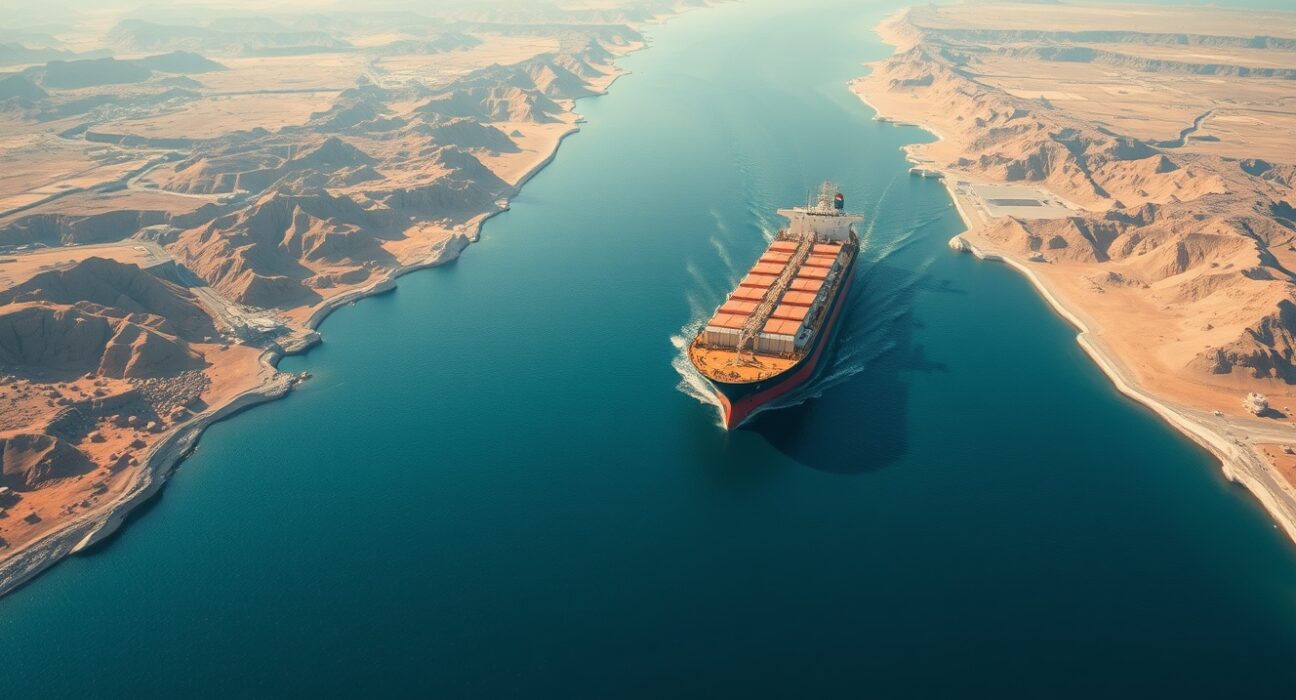
Global oil markets entered a state of cautious equilibrium on Thursday, with West Texas Intermediate (WTI) crude futures consolidating near the $88.00 per barrel mark. This hesitation reflects a powerful clash between escalating physical supply risks in the world’s most critical oil transit corridor and nascent hopes for diplomatic de-escalation with a major regional power. The Strait of Hormuz, a narrow maritime passageway, once again sits at the center of global energy security concerns, directly influencing the trajectory of WTI prices.
WTI Price Action and the $88 Pivot Point
WTI crude oil, the U.S. benchmark, has demonstrated notable resilience above its 50-day moving average in recent sessions. However, bullish momentum has clearly stalled as prices approach the psychologically significant $90 level. Market participants, often referred to as ‘bears’ when anticipating lower prices, appear reluctant to initiate aggressive selling at current levels. This creates a technical stalemate. Consequently, trading volumes have moderated, and price volatility, as measured by the CBOE Crude Oil Volatility Index, has compressed. This behavior indicates that traders are awaiting a clearer fundamental signal before committing to a sustained directional move.
Key technical levels to watch include:
- Immediate Resistance: $89.50 – $90.50 zone (previous swing high and psychological barrier)
- Immediate Support: $86.00 – $87.00 zone (confluence of 50-day MA and recent consolidation low)
- Primary Bullish Target: $92.00 (2024 high)
- Primary Bearish Target: $82.00 (200-day moving average)
The Strait of Hormuz: A Persistent Geopolitical Flashpoint
The current market tension is fundamentally rooted in geography. The Strait of Hormuz, located between Oman and Iran, is arguably the most important oil transit chokepoint on Earth. According to data from the U.S. Energy Information Administration (EIA), an average of 21 million barrels of oil per day flowed through it in 2023. This volume represents about 21% of global petroleum liquid consumption. Furthermore, the EIA notes that over 85% of the crude oil and condensates that moved through the strait went to Asian markets, including China, India, Japan, and South Korea. Any significant disruption here would have immediate and severe consequences for global oil supply chains and WTI pricing.
Historical Context and Modern Tensions
Risks in the strait are not theoretical. The region has a long history of incidents, from the ‘Tanker War’ of the 1980s to more recent seizures of commercial vessels and attacks on shipping. The strategic calculus involves multiple state and non-state actors. For instance, Iran’s Islamic Revolutionary Guard Corps (IRGC) maintains a significant naval presence and has repeatedly demonstrated its capability to harass or intercept shipping. In parallel, a multinational naval coalition, often led by the United States Fifth Fleet based in Bahrain, conducts patrols to ensure freedom of navigation. This creates a persistent, low-level standoff that can quickly escalate.
The table below outlines recent major incidents affecting Hormuz transit:
| Year | Incident Type | Reported Impact |
|---|---|---|
| 2023 | Seizure of Oil Tankers | Multiple vessels detained by Iranian forces |
| 2022 | Drone & Missile Attacks | Targeted strikes near UAE and Saudi Arabian ports |
| 2021 | Cyber Attack on Port | Disruption to logistics at a major Iranian oil terminal |
The Diplomatic Counterweight: Renewed Iran Negotiations
Offsetting the physical risk premium is a fragile but tangible hope for diplomatic progress. Indirect talks between the United States and Iran, mediated by regional powers like Oman, have reportedly resumed in recent weeks. The core agenda items, according to analysts at the International Crisis Group, include discussions on regional de-escalation and the potential for reciprocal steps regarding sanctions and nuclear activities. While a return to the 2015 Joint Comprehensive Plan of Action (JCPOA) appears unlikely in the short term, even modest confidence-building measures could reduce the probability of a miscalculation in the Gulf.
Market analysts view this diplomacy through a pragmatic lens. “The market is pricing in a low-probability, high-impact scenario for Hormuz,” noted Dr. Leila Hosseini, a senior fellow at the Center for Global Energy Policy. “Simultaneously, it is assigning a moderate-probability, low-to-medium-impact value to successful diplomacy. The net effect is a stalemate around $88, where the risk premium is palpable but not panic-driven.” This expert perspective underscores how WTI prices are acting as a real-time barometer for complex geopolitical probabilities.
Fundamental Market Impacts and Global Repercussions
The standoff has tangible effects beyond futures prices. Firstly, insurance premiums for vessels transiting the Strait of Hormuz, known as war risk insurance, have increased by approximately 15% over the past month. Secondly, some Asian refiners have begun quietly diversifying their crude sourcing, increasing intake from Atlantic Basin producers like the United States, Brazil, and West Africa. This provides a subtle, structural bid under WTI prices relative to other benchmarks like Brent. Finally, the U.S. Strategic Petroleum Reserve (SPR), which currently holds over 360 million barrels, remains a potential tool for administration officials to manage any price spike stemming from a supply shock.
The global economic impact is also significant. Sustained oil prices above $85 per barrel act as a tax on consumers and complicate central banks’ efforts to manage inflation. The Federal Reserve, European Central Bank, and others closely monitor energy-driven inflation components. Therefore, the stability of WTI has direct implications for monetary policy and global economic growth forecasts for 2025.
Conclusion
In conclusion, the current hesitation in WTI crude oil prices near $88.00 perfectly encapsulates a market in waiting. The formidable and ever-present risks associated with the Strait of Hormuz provide a solid floor under prices, injecting a persistent geopolitical risk premium. Conversely, the slender thread of ongoing diplomacy with Iran acts as a ceiling, preventing fears from spiraling into a full-blown panic rally. For traders and observers, the path of WTI will be dictated by which of these two forces—tangible physical risk or fragile diplomatic hope—gains the upper hand in the coming weeks. The market’s neutral stance is a testament to the high-stakes balance currently defining global energy security.
FAQs
Q1: Why is the Strait of Hormuz so important for oil prices?
The Strait of Hormuz is the world’s most critical oil transit chokepoint, handling about 21% of global petroleum consumption. A disruption would immediately restrict physical supply, forcing buyers to compete for remaining barrels and driving prices like WTI sharply higher.
Q2: How does Iran diplomacy affect WTI crude oil markets?
Successful diplomacy reduces the perceived risk of a conflict or intentional disruption in the Strait of Hormuz. This leads traders to remove the ‘geopolitical risk premium’ baked into the price, typically putting downward pressure on WTI futures.
Q3: What is a ‘geopolitical risk premium’ in oil pricing?
It is the additional amount buyers are willing to pay for a barrel of oil due to the perceived risk of supply disruption from conflict, sanctions, or instability. For WTI, a significant portion of its current price includes a premium for Hormuz risks.
Q4: Can other sources of oil replace supplies from the Hormuz region?
Partially, but not immediately. Global spare production capacity is limited, primarily held by Saudi Arabia and a few other producers. While U.S. shale and other Atlantic Basin oil can redirect to Asia, the logistics take weeks and come at a higher cost, which would still elevate global price benchmarks.
Q5: What should traders watch to gauge the direction of WTI from here?
Traders should monitor: 1) Reports of maritime incidents in or near the Strait of Hormuz, 2) Official statements from U.S. and Iranian diplomats regarding talks, 3) Weekly U.S. inventory data from the EIA for demand signals, and 4) The positioning of large speculators in the CFTC Commitments of Traders report.
Disclaimer: The information provided is not trading advice, Bitcoinworld.co.in holds no liability for any investments made based on the information provided on this page. We strongly recommend independent research and/or consultation with a qualified professional before making any investment decisions.
