

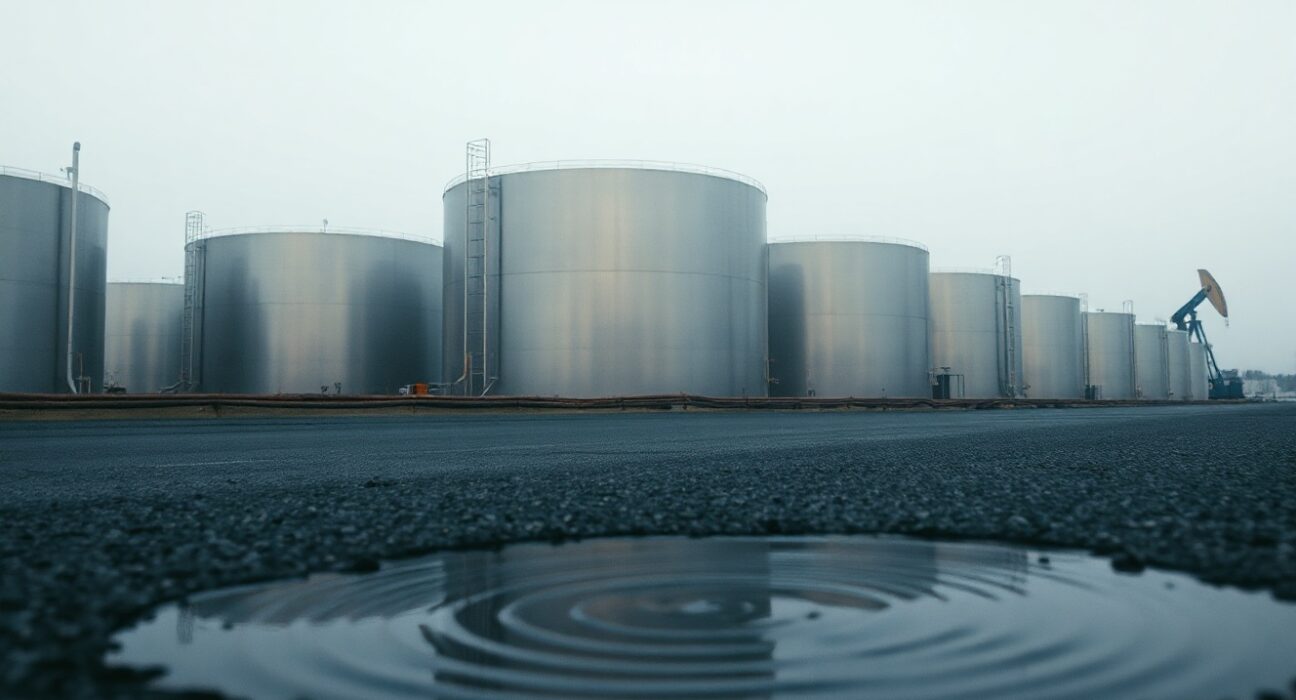
West Texas Intermediate (WTI) crude oil futures remained pinned near seven-week lows on Tuesday, trading below $87 per barrel, as persistent demand concerns offset the latest geopolitical risk premium from rising US-Iran tensions. The market appears to be in a holding pattern, with traders weighing the potential for supply disruptions against a deteriorating global economic outlook.
Geopolitical Friction Meets Demand Headwinds
Reports of increased US naval presence in the Persian Gulf and renewed diplomatic friction with Iran have historically been bullish catalysts for oil prices. However, the current price action suggests that traders are more focused on softening demand signals from major economies, particularly China and Europe. Manufacturing data from China has continued to show contraction, while European industrial output remains under pressure from high energy costs and monetary tightening.
“The market is effectively ignoring the geopolitical noise because the demand picture is so clearly weakening,” said one senior energy analyst. “Without a tangible supply disruption, there is little incentive for buyers to step in aggressively at these levels.”
The inability of WTI to rally above $87 despite headline-grabbing tensions underscores a fundamental shift in market sentiment. Open interest data shows a steady decline in speculative long positions over the past two weeks, indicating that hedge funds and institutional traders are reducing their exposure to crude.
Technical Resistance and Support Levels
From a technical perspective, WTI has established a support floor near $85.50, a level that has held twice in the past five trading sessions. Resistance is clustered around $88.50, where the 50-day moving average currently resides. A break below $85 could open the door to a test of the August lows near $82, while a move above $88.50 would signal renewed buying interest.
Volume has been below the 20-day average, suggesting that many participants are waiting for a clearer catalyst before committing capital. The weekly chart shows a bearish engulfing pattern from two weeks ago, which still weighs on sentiment.
What This Means for Consumers and Traders
For consumers, the subdued oil price provides some relief at the pump, with gasoline prices in the US trending lower for the third consecutive week. For traders, the current environment favors a cautious approach: range-bound strategies and careful monitoring of weekly inventory data from the Energy Information Administration (EIA) are likely to dominate near-term action.
The broader implication is that the oil market is recalibrating its risk assessment. The premium once assigned to geopolitical instability is being discounted unless a direct supply outage occurs. This represents a significant shift from the first half of the year, when any hint of conflict sent prices sharply higher.
Conclusion
WTI crude oil remains stuck below $87, caught between fading geopolitical fear and growing economic reality. Until either a clear supply disruption materializes or demand data improves, the market is likely to drift within a narrow range. Traders should watch for the next EIA inventory report and any unexpected diplomatic developments as potential triggers for the next directional move.
FAQs
Q1: Why is WTI oil not rallying despite US-Iran tensions?
The market is currently more focused on weakening global demand, particularly from China and Europe, than on geopolitical risks. Without an actual supply disruption, traders see limited upside.
Q2: What are the key support and resistance levels for WTI?
Immediate support is near $85.50, with stronger support at $82. Resistance is at $88.50, aligned with the 50-day moving average.
Q3: How does this affect gasoline prices?
Lower WTI prices generally translate to lower gasoline prices at the pump, though the pass-through can take one to two weeks. US retail gasoline prices have already declined for three consecutive weeks.
Disclaimer: The information provided is not trading advice, Bitcoinworld.co.in holds no liability for any investments made based on the information provided on this page. We strongly recommend independent research and/or consultation with a qualified professional before making any investment decisions.
