

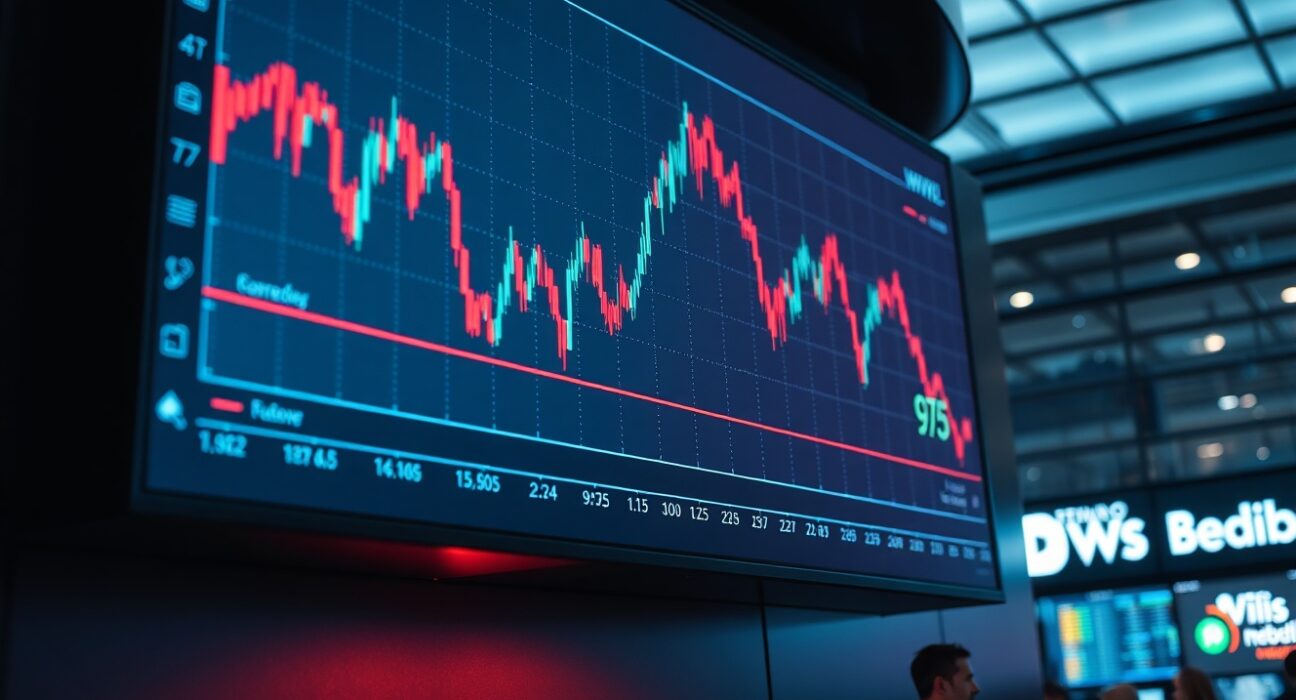
West Texas Intermediate (WTI) crude oil prices remain under pressure, trading within a defined bearish channel that has kept the $75 per barrel support level in focus for traders and analysts. The commodity’s inability to break above key resistance levels in recent sessions has reinforced a cautious outlook, with market participants closely watching for a potential breakdown or a reversal signal.
Technical Setup: Bearish Channel Intact
Since mid-2024, WTI has been moving within a descending channel pattern, characterized by lower highs and lower lows. The upper boundary of this channel has consistently capped rallies, while the lower boundary has provided temporary support. Currently, the price is hovering near the lower end of this channel, with the psychologically important $75 level acting as a critical floor. A sustained break below this level could open the door for a move toward the $72 or even $70 area, which represent the next technical support zones.
Momentum indicators, including the Relative Strength Index (RSI), are hovering near oversold territory, suggesting that selling pressure may be exhausting. However, the RSI has not yet confirmed a bullish divergence, meaning a reversal is not yet technically confirmed. Volume analysis shows increasing participation on down days, a bearish signal that suggests sellers remain in control.
Fundamental Drivers Weighing on Prices
The bearish technical picture is supported by several fundamental headwinds. Global demand concerns, particularly from China—the world’s largest crude importer—have weighed on sentiment. Chinese economic data has shown slower-than-expected industrial activity and a continued property sector slump, reducing the outlook for oil demand growth.
On the supply side, expectations that OPEC+ may begin unwinding voluntary production cuts later in 2025 have added downward pressure. While the group has maintained discipline so far, any signal of increased output could accelerate the bearish trend. Additionally, U.S. crude production remains near record highs above 13 million barrels per day, further contributing to supply abundance.
Geopolitical risk premiums have also faded in recent weeks. While tensions in the Middle East remain, the market has largely priced out the likelihood of significant supply disruptions, reducing the support that had previously buoyed prices.
What the $75 Level Means for Traders
The $75 level is more than just a round number; it represents a key technical and psychological support that has held multiple times since late 2023. A break below this level would likely trigger stop-loss orders from long positions, accelerating the decline. Conversely, a bounce from this level, especially if accompanied by higher volume, could signal the start of a short-term recovery toward the $78–$80 resistance zone.
For energy companies and investors, the direction of WTI prices has broader implications. Lower crude prices can reduce input costs for airlines and transportation firms, but they also pressure energy sector earnings and capital expenditure plans. The upcoming U.S. inventory data from the Energy Information Administration (EIA) will be closely watched for confirmation of demand trends.
Conclusion
WTI crude oil remains in a bearish technical structure, with the $75 support level under increasing pressure. While oversold conditions could lead to a short-term bounce, the fundamental backdrop of demand uncertainty and ample supply suggests the path of least resistance is lower. Traders should monitor the $75 level closely, as a decisive break could accelerate selling, while a defended support may offer a tactical buying opportunity within the broader downtrend.
FAQs
Q1: What is a bearish channel in technical analysis?
A bearish channel is a chart pattern formed by connecting a series of lower highs and lower lows with parallel trendlines. It indicates that the asset is in a downtrend, with sellers consistently pushing prices lower over time.
Q2: Why is the $75 level important for WTI crude oil?
The $75 level is a key psychological and technical support zone that has held multiple times over the past year. A break below it could signal further downside, while a bounce from this level may indicate temporary buying interest.
Q3: What factors could reverse the bearish trend in WTI?
A reversal could be triggered by stronger-than-expected global demand data, a significant supply disruption (e.g., geopolitical event), a surprise OPEC+ production cut decision, or a weaker U.S. dollar. Confirmation would require a break above the bearish channel’s upper boundary.
Disclaimer: The information provided is not trading advice, Bitcoinworld.co.in holds no liability for any investments made based on the information provided on this page. We strongly recommend independent research and/or consultation with a qualified professional before making any investment decisions.
