

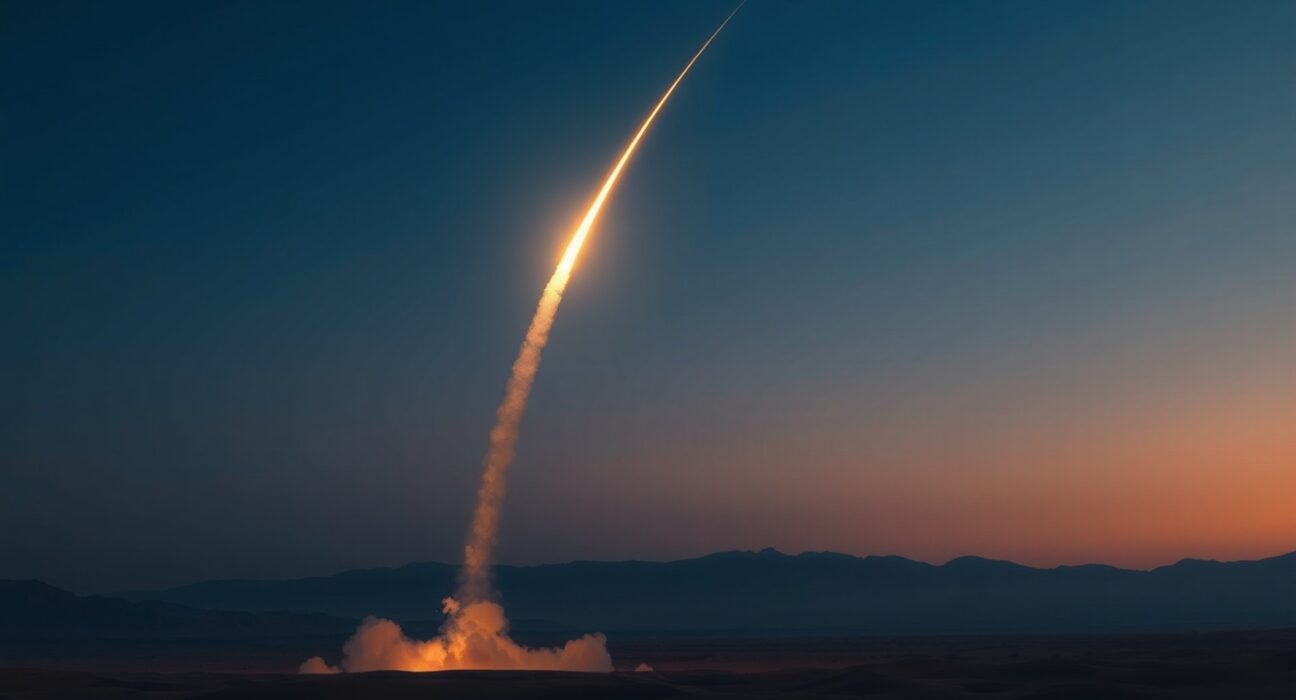
In a severe escalation of long-simmering tensions, Iran has reportedly launched ballistic missiles toward Israel, according to official statements confirmed on April 13, 2025. This direct attack marks a pivotal and dangerous shift in the regional conflict paradigm, moving from proxy warfare to overt state-on-state military action. Consequently, global capitals are now on high alert, assessing the immediate fallout and potential for a wider conflagration.
Iran Ballistic Missiles Trigger Regional Red Alert
Initial reports indicate multiple ballistic missiles were fired from Iranian territory. The Israeli Defense Forces (IDF) subsequently activated their multi-layered air defense systems, including the Arrow, David’s Sling, and Iron Dome. Moreover, regional allies reportedly shared early warning data. This event represents the first direct Iranian ballistic missile strike on Israeli soil from Iranian territory, fundamentally altering the rules of engagement. Previously, hostilities were conducted through allied militias or cyber operations.
The immediate context stems from a significant attack on an Iranian diplomatic facility in Damascus earlier this month. Iran attributed that strike to Israel and vowed a decisive response. Therefore, today’s launch fulfills that promise but in a dramatically escalated fashion. Military analysts note the launch demonstrates Iran’s willingness to employ its strategic arsenal.
Military Capabilities and Defense Systems Analyzed
Iran’s ballistic missile arsenal is among the largest in the Middle East. Key systems potentially involved include the Sejjil, Ghadr, and Emad medium-range ballistic missiles (MRBMs). These weapons can carry substantial conventional or other warheads over distances covering the entire region. For instance, the estimated range of these systems exceeds 1,500 kilometers, easily reaching Israeli territory.
Conversely, Israel’s missile defense network is one of the most advanced globally. The following table outlines the primary systems likely engaged:
| System | Layer | Target Type |
|---|---|---|
| Arrow 3 | Exo-atmospheric | Long-range ballistic missiles |
| Arrow 2 | Endo-atmospheric | Medium-range ballistic missiles |
| David’s Sling | Mid-tier | MRBMs & cruise missiles |
| Iron Dome | Short-range | UAVs, rockets, artillery |
The interception success rate will be a critical metric. It will determine the level of physical damage and the psychological impact on the population. Furthermore, the cost-exchange ratio—comparing expensive interceptors to cheaper offensive missiles—remains a persistent strategic challenge.
Expert Analysis on Strategic Implications
Security experts emphasize the crossing of a major threshold. “A direct ballistic missile attack from Iran to Israel is a game-changer,” states Dr. Elena Petrova, a senior fellow at the Global Security Institute. “It moves the conflict from the shadows into the open, significantly increasing the risk of miscalculation and rapid escalation. The established deterrence equation has been fundamentally disrupted.”
Additionally, the attack tests international diplomatic frameworks. The United Nations Charter’s Article 2(4) prohibits the threat or use of force against the territorial integrity of any state. This launch presents a clear case for the UN Security Council, though geopolitical divisions may hinder a unified response. Simultaneously, global energy markets are reacting with volatility over potential disruptions to Strait of Hormuz shipping lanes.
Historical Context and Escalating Timeline
The Iran-Israel shadow war has evolved over decades. Key phases include:
- 2000s-2010s: Covert operations and cyber warfare, focusing on nuclear facilities.
- 2010s-Present: Proxy conflict via Hezbollah in Lebanon and Shia militias in Syria.
- 2023-2024: Increased direct strikes on Iranian assets in Syria attributed to Israel.
- April 2025: Strike on Iranian diplomatic compound in Damascus.
- April 13, 2025: Direct Iranian ballistic missile launch on Israel.
This timeline shows a consistent pattern of escalation. Each action has generated a more forceful reaction, eroding previous red lines. The latest move represents the most significant leap, effectively bypassing proxy forces entirely.
Potential Global Impacts and Diplomatic Fallout
The international response will be crucial in containing the crisis. The United States, a key Israeli ally, maintains significant military assets in the region. Its stance and potential involvement could either deter further strikes or deepen the conflict. Meanwhile, European nations are likely to call for immediate de-escalation and restraint from all parties.
Regional actors are also recalculating their positions. Gulf Arab states, which have recently pursued détente with Iran, now face complex dilemmas. They must balance their security relationships with Washington against the imperative of avoiding a regional war. Furthermore, global economic impacts are immediate:
- Oil Prices: Sharp increases due to perceived supply risk.
- Shipping Insurance: Premiums for Persian Gulf routes will surge.
- Market Volatility: Global stock indices are experiencing sell-offs.
Diplomatic channels are now operating at the highest levels. The goal is to prevent a second wave of strikes and an Israeli counter-strike that could trigger a full-scale war. The principle of proportionality in response will be intensely debated in Israeli security cabinets and allied capitals.
Conclusion
The reported launch of Iranian ballistic missiles at Israel marks a severe and unprecedented escalation in Middle Eastern conflicts. This event transitions a long-running shadow war into a direct military confrontation with high stakes for regional and global security. The effectiveness of missile defenses, the scale of damage, and the nature of the political and military response will shape the immediate future. Ultimately, the international community faces a critical test in preventing a localized exchange from spiraling into a broader regional war. The coming hours and days will be pivotal for diplomacy, deterrence, and stability.
FAQs
Q1: What type of missiles did Iran reportedly use?
Reports indicate the use of medium-range ballistic missiles (MRBMs), likely from Iran’s Sejjil or Ghadr families, capable of reaching Israeli territory with significant payloads.
Q2: How does Israel defend against ballistic missiles?
Israel employs a multi-layered defense system including the long-range Arrow 3 (for exo-atmospheric intercepts), Arrow 2, mid-range David’s Sling, and the short-range Iron Dome for rockets and UAVs.
Q3: What was the immediate trigger for this attack?
The attack is widely seen as a direct response to an airstrike on an Iranian diplomatic facility in Damascus earlier in April, which Iran blamed on Israel.
Q4: Has Iran directly attacked Israel like this before?
No. While Iran has supported proxy attacks and conducted cyber operations, this represents the first direct ballistic missile strike launched from Iranian territory at Israel, marking a major escalation.
Q5: What are the global implications of this strike?
Implications include potential for wider regional war, volatility in global oil markets, heightened security alerts worldwide, and a severe test of international diplomatic crisis management mechanisms.
Disclaimer: The information provided is not trading advice, Bitcoinworld.co.in holds no liability for any investments made based on the information provided on this page. We strongly recommend independent research and/or consultation with a qualified professional before making any investment decisions.
