

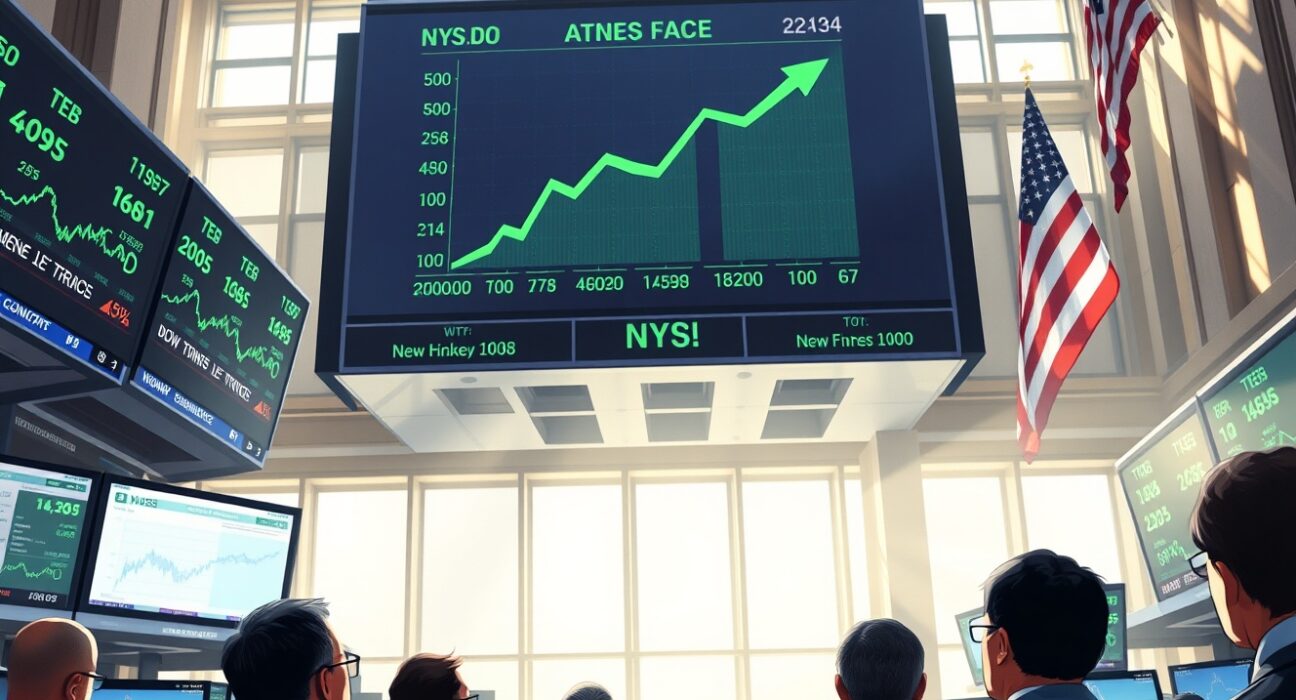
NEW YORK, March 15, 2025 – The Dow Jones Industrial Average climbed significantly today, marking one of its strongest sessions this quarter. This notable rally followed the release of softer-than-expected Producer Price Index data. Concurrently, emerging diplomatic signals regarding a potential ceasefire in Iran provided a substantial boost to global market sentiment. Investors responded positively to this dual catalyst of moderating inflation pressures and reduced geopolitical risk.
Dow Jones Industrial Average Responds to Key Economic Data
The Producer Price Index for final demand increased by just 0.1% month-over-month. This figure came in below the consensus forecast of 0.3%. Consequently, the annual PPI rate moderated to 2.2%. This data point suggests easing pipeline inflation pressures. Market analysts immediately noted the implications for Federal Reserve policy. Specifically, the softer data reduces immediate pressure for aggressive interest rate hikes. Historically, such environments have supported equity valuations. The Dow Jones, comprising 30 blue-chip stocks, is particularly sensitive to interest rate expectations. Therefore, today’s movement reflects a recalibration of monetary policy expectations.
Furthermore, the core PPI, which excludes food and energy, also showed moderation. This detail is crucial for understanding underlying inflation trends. Energy prices actually declined during the reporting period. This decline contributed significantly to the overall soft reading. Manufacturing sectors showed mixed results, however. Some industries continue to face input cost pressures. Despite these pockets of inflation, the broader trend appears favorable. The bond market reacted in tandem with equities. Treasury yields edged lower across the curve. This movement further supported the equity rally, particularly for rate-sensitive sectors.
Geopolitical Developments Lift Market Sentiment
Simultaneously, diplomatic channels reported progress toward a potential ceasefire in Iran. Regional mediators have intensified negotiations in recent weeks. These developments could significantly de-escalate tensions in the Middle East. For global markets, reduced geopolitical risk translates to lower oil price volatility. Brent crude futures declined by approximately 3% on the news. Energy-sensitive industries and transportation stocks led the Dow Jones higher. The aerospace and defense sector showed more muted gains, reflecting the shifting risk assessment.
International observers note several confidence-building measures have been implemented. These measures include humanitarian pauses and prisoner exchanges. While a formal agreement remains pending, the direction appears positive. Market participants are clearly pricing in a higher probability of stability. The VIX volatility index, often called the “fear gauge,” dropped sharply. This decline indicates rising investor confidence and reduced demand for protection. Historically, such geopolitical de-escalation events have provided sustained tailwinds for equities. The current situation appears to follow this pattern.
Expert Analysis on the Dual Catalyst Effect
Financial analysts emphasize the powerful combination of these two factors. “When disinflationary data aligns with geopolitical progress, markets typically respond forcefully,” noted Dr. Anya Sharma, Chief Economist at Global Markets Institute. “The Dow Jones components, especially multinational industrials and financials, benefit disproportionately from this environment.” Sharma referenced historical parallels, including similar rallies in 2019 and 2021. Her research indicates that such rallies often have staying power when supported by fundamental data.
Portfolio managers are adjusting their allocations accordingly. Many are increasing exposure to cyclical sectors within the Dow. These sectors include industrials, materials, and consumer discretionary. Technology stocks within the index also performed well. Lower interest rate expectations boost the present value of future earnings. This mathematical relationship particularly benefits growth-oriented companies. However, analysts caution against over-optimism. The Federal Reserve has not formally signaled a policy pivot. Similarly, Middle East diplomacy remains fragile and subject to reversal.
Sector Performance Within the Dow Jones Rally
The rally was broad-based but exhibited clear sector leadership. The following table illustrates the top-performing Dow Jones sectors during the session:
| Sector | Approximate Gain | Key Driver |
|---|---|---|
| Industrials | +2.8% | Lower input costs, global growth optimism |
| Financials | +2.5% | Steeper yield curve, reduced credit risk |
| Consumer Discretionary | +2.3% | Strong consumer confidence data |
| Technology | +2.1% | Lower discount rates for future earnings |
Only the utilities sector lagged, posting a minor loss. This performance is typical in a “risk-on” market environment. Defensive sectors often underperform when investors seek growth. The equal-weighted Dow index also rose significantly. This rise confirms the rally’s breadth beyond just the largest components. Market internals were overwhelmingly positive. Advancing issues outnumbered decliners by a ratio of more than 5-to-1. Trading volume was approximately 15% above the 30-day average. This elevated volume suggests strong conviction behind the move.
Broader Market Context and Historical Precedents
Today’s advance occurs within a specific macroeconomic context. The U.S. economy continues to show resilience despite previous tightening. Labor market data remains robust, supporting consumer spending. Corporate earnings for the fourth quarter of 2024 generally exceeded expectations. However, guidance for 2025 has been cautious, reflecting uncertainty. Today’s developments directly address two major sources of that uncertainty: inflation and geopolitics. As a result, the market reassessed the probability of a “soft landing” scenario upward.
Historical analysis provides useful perspective. Since 1950, the Dow Jones has experienced 27 distinct rallies exceeding 2% in a single session. These rallies were driven by similar dual catalysts. On average, these rallies were followed by positive returns over the subsequent month. Of course, past performance does not guarantee future results. The current monetary policy backdrop is unique. The Federal Reserve’s balance sheet remains large by historical standards. Global debt levels are also elevated. These factors could amplify both rallies and corrections.
Technical Analysis and Market Structure
From a technical perspective, the Dow Jones broke above its 50-day moving average. This breakout is a bullish signal for many chart-based traders. The index also approached a key resistance level around 39,500 points. A sustained break above this level could trigger further algorithmic buying. Market breadth indicators improved markedly. The McClellan Oscillator, a measure of market breadth, turned positive. This shift suggests underlying strength beyond the headline index movement.
Options market activity showed a notable shift as well. The put/call ratio declined, indicating reduced hedging demand. Meanwhile, demand for call options on index ETFs increased. This pattern reflects growing bullish sentiment among active traders. Institutional flow data will be crucial to monitor in coming days. Sustained buying from pension funds and insurers would confirm the rally’s foundation. Early indications suggest moderate institutional participation today.
Global Market Reaction and Currency Movements
The positive sentiment extended beyond U.S. borders. Major European indices closed higher, led by the DAX and CAC 40. Asian markets also rallied in their subsequent trading sessions. The MSCI All-Country World Index rose by 1.7%. This synchronized global advance underscores the interconnected nature of modern markets. Currency markets reflected the shifting landscape. The U.S. Dollar Index (DXY) weakened slightly. A softer dollar typically benefits multinational corporations within the Dow Jones. Emerging market currencies generally strengthened against the dollar.
Commodity markets presented a mixed picture. While oil prices fell, industrial metals like copper gained. Copper is often viewed as a barometer of global economic health. Its rise today suggests growing optimism about industrial demand. Gold prices retreated modestly. This retreat aligns with reduced safe-haven demand. The cryptocurrency market also showed positive correlation. Bitcoin and major altcoins traded higher. This correlation further confirms the broad-based “risk-on” mood.
Conclusion
The Dow Jones Industrial Average delivered a robust performance driven by two clear catalysts. Softer PPI data alleviated concerns about persistent inflation. Progress toward an Iran ceasefire reduced a major geopolitical overhang. Together, these developments improved the outlook for corporate earnings and economic stability. While challenges remain, today’s rally demonstrates market responsiveness to positive fundamental shifts. Investors will now watch for confirmation in upcoming data, including the Consumer Price Index and retail sales figures. The sustainability of this Dow Jones advance will depend on continued progress on both economic and geopolitical fronts.
FAQs
Q1: What exactly is the Producer Price Index (PPI) and why does it move markets?
The Producer Price Index measures the average change over time in selling prices received by domestic producers. It is a leading indicator of consumer inflation. When PPI is softer than expected, it suggests future consumer price pressures may ease, potentially allowing central banks to be less aggressive with interest rate hikes, which is positive for stock valuations.
Q2: How does geopolitical news like an Iran ceasefire directly affect the Dow Jones?
Geopolitical stability reduces uncertainty and risk premiums. For the Dow Jones, which includes many multinational companies, stability lowers the cost of operations and supply chain risks. It also reduces volatility in crucial commodity prices like oil, improving earnings visibility for industrial, transportation, and consumer companies within the index.
Q3: Were all 30 Dow Jones stocks up today?
While the rally was broad-based, not all 30 components finished higher. Typically, in such macro-driven moves, a strong majority advance. Sectors most sensitive to interest rates (like financials and technology) and global trade (like industrials) often lead, while defensive sectors like utilities or consumer staples may lag.
Q4: Does a single-day rally in the Dow Jones indicate a longer-term trend?
Not necessarily. While a strong rally can mark a turning point, its sustainability depends on follow-through. Analysts look for confirming evidence in subsequent trading sessions, supporting economic data, and continued positive developments on the initial catalysts (like further disinflation or a finalized ceasefire agreement).
Q5: What should investors watch next after this Dow Jones move?
Key items to monitor include: the next Consumer Price Index (CPI) report for confirmation of disinflation, Federal Reserve meeting minutes and official statements, concrete developments toward a formal Iran ceasefire agreement, and upcoming corporate earnings reports for Q1 2025 to gauge the fundamental health of Dow components.
Disclaimer: The information provided is not trading advice, Bitcoinworld.co.in holds no liability for any investments made based on the information provided on this page. We strongly recommend independent research and/or consultation with a qualified professional before making any investment decisions.
