

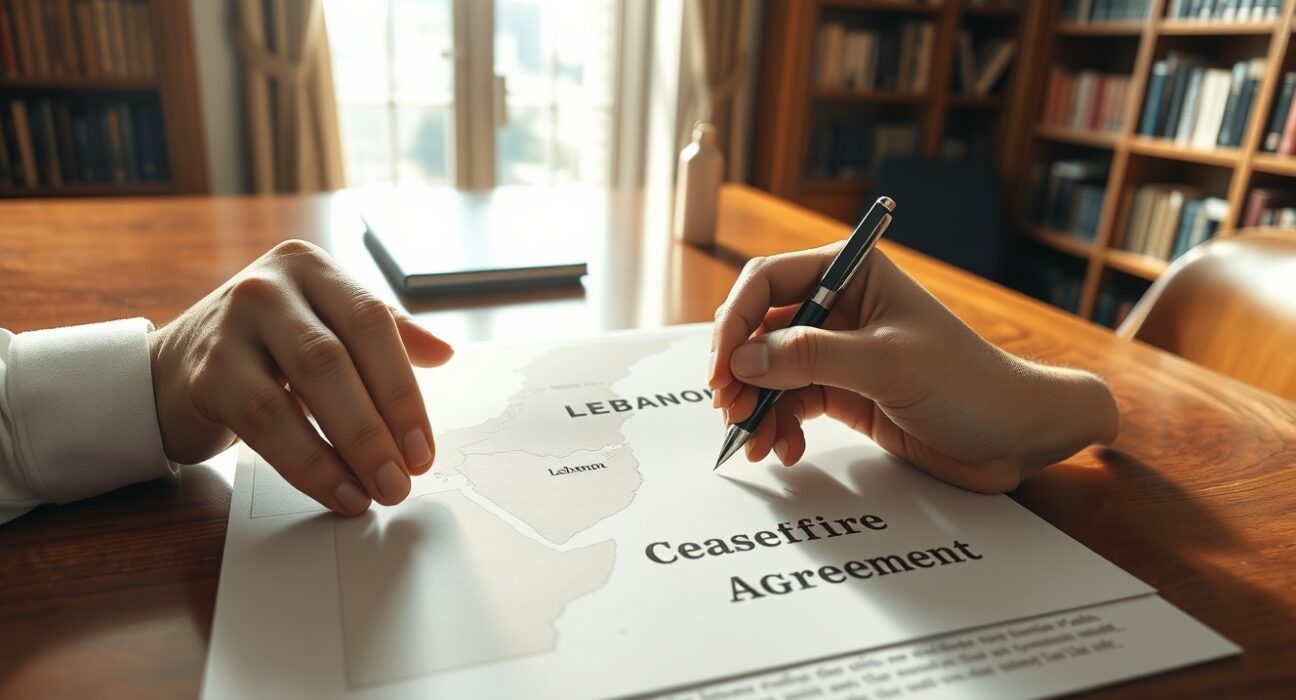
In a significant diplomatic development, U.S. President Donald Trump announced a vital 10-day ceasefire agreement between Lebanon and Israel on April 16, potentially averting a broader regional crisis. The truce, brokered following direct conversations with Lebanese President Michel Aoun and Israeli Prime Minister Benjamin Netanyahu, is set to take effect at 9:00 p.m. UTC. This announcement marks a critical de-escalation in long-standing tensions along the shared border.
Analyzing the Trump-Brokered Lebanon-Israel Ceasefire
President Trump revealed the agreement from the White House, framing it as a product of sustained diplomatic engagement. Consequently, this temporary halt in hostilities provides immediate relief for border communities. The agreement follows a period of escalated cross-border fire, primarily involving Hezbollah forces in southern Lebanon and the Israel Defense Forces (IDF). Historically, the Blue Line—the UN-drawn demarcation between the two countries—has been a frequent flashpoint.
Furthermore, the 10-day timeframe offers a crucial window for back-channel negotiations. Analysts suggest this period will be used to address underlying grievances. The United Nations Interim Force in Lebanon (UNIFIL) will likely play a key monitoring role during the truce. This development comes amid broader U.S. efforts to reshape regional alliances, often referred to as the “Abraham Accords” framework.
Historical Context of the Border Conflict
The Lebanon-Israel border has remained technically in a state of conflict since Israel’s withdrawal from southern Lebanon in 2000. Hezbollah, a Lebanese Shiite political and military organization, maintains significant influence in the border region. The group’s arsenal and stated commitment to Israel’s destruction have been a persistent source of tension. Periodic clashes have erupted, often linked to broader regional events or conflicts in Syria and Gaza.
Several key incidents have brought the two nations to the brink of wider war:
- 2006 Lebanon War: A 34-day conflict triggered by a Hezbollah cross-border raid.
- Ongoing Skirmishes: Regular exchanges of fire, often targeting military outposts.
- Strategic Calculations: Both sides have engaged in a long-term deterrence strategy, sometimes called “the rules of the game.”
Therefore, this ceasefire represents a deliberate pause in a protracted, low-intensity conflict. It temporarily halts a cycle of retaliation that risks uncontrollable escalation.
Expert Analysis on the Truce’s Significance
Regional security experts point to the specific 10-day duration as strategically significant. “A short-term truce is often more achievable than an open-ended one,” notes Dr. Elena Petrova, a senior fellow at the Center for Strategic Studies. “It creates a defined timeline for diplomacy and reduces the pressure for immediate, permanent concessions from either side.”
Moreover, the direct involvement of the U.S. President underscores the agreement’s high stakes. American diplomacy has historically been a linchpin in Israeli-Lebanese dealings, though success has been mixed. The table below outlines recent major ceasefire attempts in the region:
| Year | Conflict | Broker | Duration/Outcome |
|---|---|---|---|
| 2006 | Lebanon War | UN Security Council | UNSC Resolution 1701; fragile long-term cessation. |
| 2014 | Gaza War | Egypt | Multiple short-term truces before a longer ceasefire. |
| 2021 | Gaza Conflict | Egypt, Qatar, UN | 11-day ceasefire followed by a tenuous calm. |
| 2025 | Lebanon-Israel Border | United States | 10-day ceasefire (current agreement). |
This pattern shows that short-term truces can serve as building blocks, though they rarely resolve core disputes without further negotiation.
Potential Impacts and Regional Repercussions
The immediate impact will be felt most acutely by civilians living in border towns in northern Israel and southern Lebanon. Schools and businesses that closed due to shelling threats may reopen. Additionally, humanitarian organizations may gain safer access to deliver aid if needed. The ceasefire also reduces immediate risks to international shipping and air traffic in the Eastern Mediterranean.
Regionally, the deal influences other conflict zones. For instance, it may affect dynamics in Syria, where both Iran and Israel operate. It could also impact internal Lebanese politics, where Hezbollah’s role is a constant source of debate. A successful truce might create momentum for other diplomatic initiatives. Conversely, a collapse could lead to a more intense confrontation than the one paused.
Finally, the agreement tests the current U.S. administration’s capacity for crisis diplomacy. A positive outcome would bolster its credibility. However, a failure could diminish its influence in future negotiations. The world will watch closely to see if this pause becomes a pathway to a more durable understanding.
Conclusion
The 10-day ceasefire between Lebanon and Israel, announced by President Trump, provides a vital respite from conflict and a test case for diplomacy. While the core issues dividing the nations remain deeply entrenched, this truce creates a necessary window for dialogue. Its success or failure will have significant implications for regional stability and the future of U.S.-led mediation efforts in the Middle East. The coming days will determine whether this pause is merely an interlude or the first step toward a more lasting calm.
FAQs
Q1: What exactly did President Trump announce?
President Trump announced that the leaders of Lebanon and Israel agreed to a temporary 10-day cessation of hostilities, effective at 9:00 p.m. UTC on April 16, following his discussions with both parties.
Q2: Why is a ceasefire between Lebanon and Israel significant?
It is significant because the border has been a persistent flashpoint for conflict involving Hezbollah and the Israeli military. A sustained truce reduces the immediate risk of a wider regional war and allows humanitarian and diplomatic space.
Q3: Who is Hezbollah and what is its role in this?
Hezbollah is a powerful Lebanese Shiite political and military organization that controls much of southern Lebanon. It is a designated terrorist group by several countries and is a primary adversary of Israel along the border, making its adherence to the ceasefire crucial.
Q4: What happens after the 10-day ceasefire ends?
The outcome is uncertain. The period is intended for lower-level talks to solidify the calm or negotiate extensions. The situation could return to conflict, continue under an extended truce, or evolve into more formal negotiations.
Q5: How does this relate to other conflicts in the Middle East?
The Lebanon-Israel border is interconnected with other regional tensions, particularly involving Iran and Syria. A successful ceasefire here could reduce broader regional volatility, while a failure could exacerbate conflicts elsewhere.
Disclaimer: The information provided is not trading advice, Bitcoinworld.co.in holds no liability for any investments made based on the information provided on this page. We strongly recommend independent research and/or consultation with a qualified professional before making any investment decisions.
