

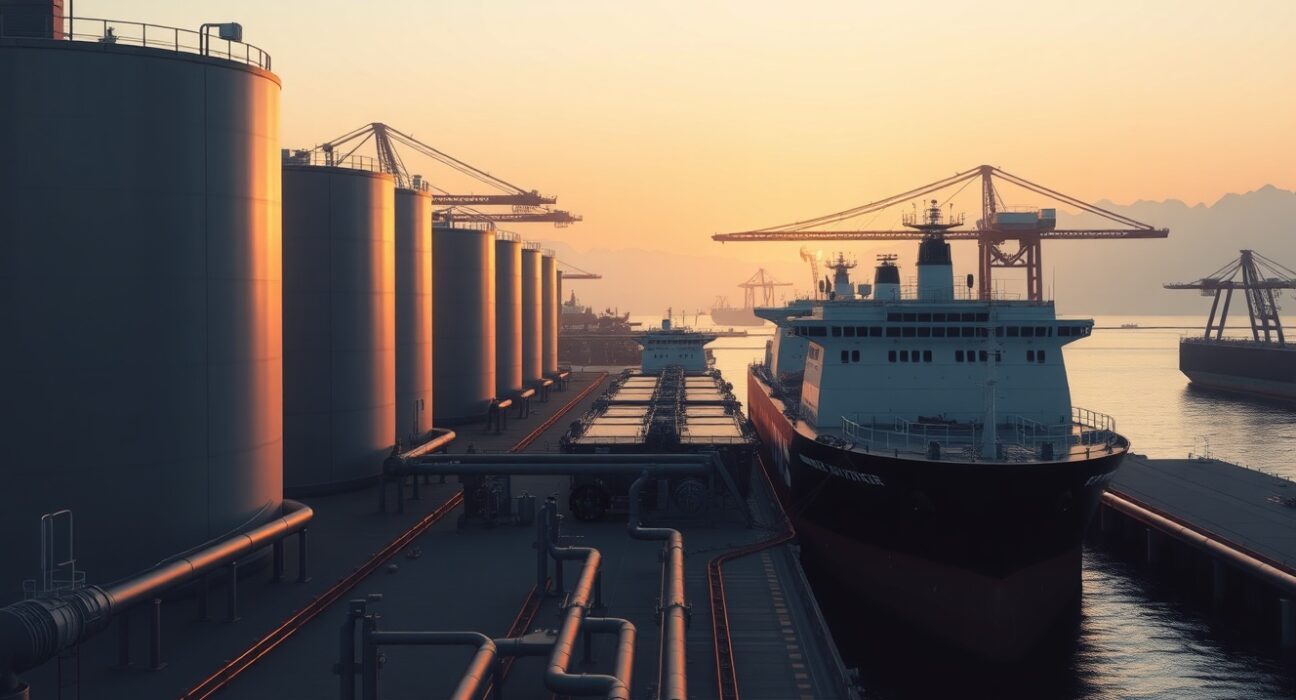
BEIJING, March 2025 – Global energy markets face renewed volatility as geopolitical tensions threaten the strategic Hormuz Strait, prompting Commerzbank analysts to examine China’s preparedness for potential supply disruptions. The world’s largest energy importer demonstrates remarkable resilience through diversified strategies and strategic investments. This comprehensive analysis explores China’s multi-layered approach to energy security amid mounting regional uncertainties.
China’s Energy Resilience Framework
China imports approximately 70% of its crude oil through maritime routes, with the Hormuz Strait serving as a critical chokepoint for Middle Eastern supplies. Commerzbank’s latest research highlights China’s systematic approach to mitigating this vulnerability. The nation has developed a sophisticated framework combining strategic reserves, alternative routes, and supplier diversification. Furthermore, China maintains the world’s largest emergency petroleum reserve system, capable of covering 90 days of net imports according to International Energy Agency standards.
Recent infrastructure developments significantly enhance China’s position. The country completed expansion of its strategic petroleum reserve facilities in 2024, adding 50 million barrels of storage capacity. Simultaneously, pipeline networks from Russia and Central Asia provide crucial overland alternatives to maritime shipments. These pipelines now deliver approximately 1.5 million barrels per day, reducing dependence on vulnerable sea lanes.
Commerzbank’s Hormuz Shock Analysis
Commerzbank economists project various disruption scenarios and their potential impacts on China’s economy. Their models suggest that a 30-day Hormuz closure would increase China’s oil import costs by 15-20%, potentially reducing GDP growth by 0.3-0.5 percentage points. However, China’s response mechanisms would likely mitigate more severe consequences. The analysis identifies three primary mitigation factors:
- Strategic Petroleum Reserve Deployment: Immediate release of 1-2 million barrels daily
- Supplier Diversification: Increased imports from Russia, Africa, and Latin America
- Demand Management: Temporary industrial consumption adjustments
Commerzbank’s energy team notes that China has systematically reduced its Middle Eastern oil dependency from 52% in 2020 to 44% in 2024. This strategic shift reflects long-term planning rather than reactive measures. Additionally, China’s refining sector maintains flexibility to process various crude grades, enabling rapid supplier switching when necessary.
Infrastructure and Logistics Advantages
China’s port infrastructure provides significant advantages during supply disruptions. The country operates seven of the world’s ten busiest container ports, with specialized facilities for energy imports. Shanghai, Ningbo-Zhoushan, and Qingdao ports feature dedicated crude oil terminals with deep-water berths capable of handling VLCC (Very Large Crude Carriers). These facilities enable efficient redistribution during emergencies.
Pipeline networks represent another critical component. The China-Russia Eastern Route pipeline, operational since 2019, delivers 38 billion cubic meters of natural gas annually. Similarly, the China-Central Asia gas pipeline system provides additional security. These infrastructure investments create multiple energy corridors, reducing single-point failure risks.
Comparative Energy Security Metrics
International comparisons reveal China’s relative preparedness. The table below shows key energy security indicators for major economies:
| Country | Strategic Reserve Days | Supplier Diversity Index | Alternative Route Capacity |
|---|---|---|---|
| China | 90+ days | High | Moderate-High |
| United States | 140+ days | Very High | High |
| Japan | 150+ days | Moderate | Low |
| Germany | 90 days | Moderate-High | Moderate |
China’s position reflects balanced investments across multiple security dimensions. While trailing the United States in absolute reserve capacity, China excels in infrastructure development and supplier relationships. The nation maintains long-term contracts with over 15 major oil-producing countries, ensuring supply stability during disruptions.
Renewable Energy Integration
China’s renewable energy expansion contributes significantly to overall energy resilience. The country leads global renewable installation, adding 200 GW of solar and wind capacity in 2024 alone. This diversification reduces oil dependency for power generation, particularly during supply emergencies. Renewable sources now provide 35% of China’s electricity generation, up from 28% in 2020.
Electric vehicle adoption further enhances energy security. China’s EV fleet surpassed 40 million vehicles in 2024, reducing transportation sector oil demand by approximately 1.5 million barrels daily. This transition creates flexibility during oil supply disruptions, as electricity generation utilizes diverse domestic resources including coal, hydro, nuclear, and renewables.
Policy Responses and Market Mechanisms
Chinese authorities maintain multiple policy tools for managing energy shocks. The National Development and Reform Commission can implement temporary price controls, inventory mandates, and consumption restrictions. During previous supply disruptions, China successfully utilized these mechanisms to stabilize domestic markets. Market-based approaches include futures trading on the Shanghai International Energy Exchange, which provides price discovery and hedging opportunities.
International cooperation forms another pillar of China’s strategy. The country participates actively in IEA emergency response systems and maintains bilateral agreements with key suppliers. These relationships facilitate coordinated responses during global supply emergencies. China also contributes to regional stability through diplomatic engagement in the Middle East, reducing conflict risks.
Conclusion
China’s energy resilience framework demonstrates sophisticated preparation for potential Hormuz Strait disruptions. Strategic petroleum reserves, infrastructure diversification, and renewable energy integration create multiple layers of protection. Commerzbank’s analysis confirms China’s capacity to manage moderate supply shocks effectively, though prolonged disruptions would test system limits. The nation’s continued investments in alternative routes and supplier relationships further strengthen its position. As global energy markets evolve, China’s approach offers insights for other import-dependent economies seeking enhanced energy security.
FAQs
Q1: What percentage of China’s oil imports pass through the Hormuz Strait?
Approximately 40-45% of China’s crude oil imports transit the Hormuz Strait, primarily from Saudi Arabia, Iraq, and the United Arab Emirates. This represents about 30% of China’s total oil consumption.
Q2: How long could China’s strategic petroleum reserves last during a complete supply cutoff?
China’s strategic and commercial petroleum reserves could cover approximately 90 days of net imports at current consumption rates. This exceeds International Energy Agency requirements for member countries.
Q3: What alternative routes does China use to reduce Hormuz dependence?
China utilizes multiple alternative routes including the China-Russia pipelines, China-Central Asia pipelines, Myanmar-China pipeline, and increased shipments from African and Latin American suppliers via alternative sea routes.
Q4: How does renewable energy contribute to China’s energy resilience?
Renewable energy reduces oil demand for power generation, provides domestic energy sources, and diversifies the overall energy mix. China’s massive renewable expansion has decreased oil’s share in primary energy consumption from 20% to 17% since 2020.
Q5: What economic impacts would a Hormuz disruption have on China according to Commerzbank?
Commerzbank estimates a 30-day closure could reduce China’s GDP growth by 0.3-0.5 percentage points and increase oil import costs by 15-20%, though strategic reserves and demand management would mitigate more severe consequences.
Disclaimer: The information provided is not trading advice, Bitcoinworld.co.in holds no liability for any investments made based on the information provided on this page. We strongly recommend independent research and/or consultation with a qualified professional before making any investment decisions.
