

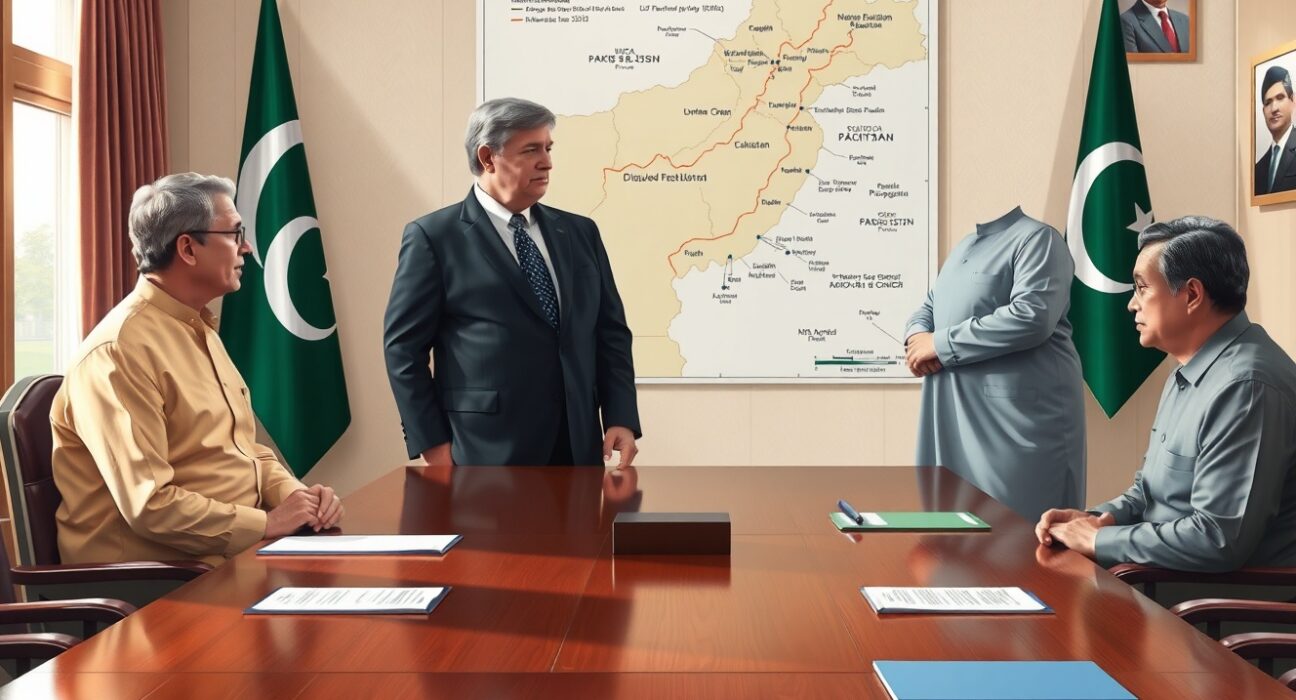
WASHINGTON, D.C. — March 15, 2025: US Vice President JD Vance embarks today on a crucial diplomatic mission to Pakistan for high-level ceasefire talks, marking a significant escalation of American diplomatic engagement in South Asian regional tensions. This unexpected development follows months of escalating border clashes and represents the Biden administration’s most direct intervention in the conflict to date.
JD Vance’s Diplomatic Mission to Pakistan
The White House confirmed the Vice President’s travel plans early this morning. Officials described the mission as “a good faith effort to facilitate dialogue and prevent further escalation.” Vance will meet with Pakistani Prime Minister Shehbaz Sharif and military leadership in Islamabad. Subsequently, he plans to engage with regional stakeholders throughout his three-day visit.
This diplomatic initiative comes after six consecutive weeks of reported skirmishes along the contested border regions. The State Department has documented over forty separate incidents since January. Consequently, civilian displacement has reached concerning levels, with humanitarian organizations reporting thousands affected.
Historical Context of Regional Tensions
The current crisis represents the latest chapter in a decades-long territorial dispute. Historical records show periodic escalations in 1999, 2008, and most recently in 2019. Each previous crisis followed similar patterns of military posturing and diplomatic stalemates. However, the 2025 situation presents unique challenges due to evolving regional alliances and global power dynamics.
Experts point to several key factors differentiating the current tensions:
- Economic pressures affecting both nations’ stability
- Changing global alliances and strategic partnerships
- Domestic political considerations in all involved nations
- Humanitarian concerns reaching critical levels in border areas
Expert Analysis of Diplomatic Strategy
Dr. Anjali Patel, Senior Fellow at the Center for Strategic and International Studies, explains the administration’s approach. “The decision to send the Vice President, rather than the Secretary of State, carries significant symbolic weight,” she notes. “It signals both the seriousness of American concern and the personal commitment of the administration’s leadership.”
Historical precedent supports this analysis. Previous administrations have deployed vice presidents for breakthrough diplomatic initiatives. Notably, Vice President Walter Mondale traveled to China in 1979. Similarly, Vice President Mike Pence visited the Korean Peninsula in 2018 during denuclearization talks.
Potential Impacts and Regional Implications
The success or failure of these ceasefire talks will have far-reaching consequences. Regional stability hangs in the balance, with neighboring countries closely monitoring developments. Economic analysts predict market volatility depending on the talks’ outcomes. Furthermore, global energy supplies could face disruption if tensions escalate further.
A comparative analysis of potential outcomes reveals starkly different futures:
| Scenario | Regional Impact | Global Implications |
|---|---|---|
| Successful Ceasefire | De-escalation, economic cooperation | Strengthened US diplomatic credibility |
| Partial Agreement | Reduced hostilities, ongoing negotiations | Continued international mediation efforts |
| Failed Talks | Military escalation, humanitarian crisis | Market instability, refugee pressures |
Timeline of Recent Developments
The path to these high-stakes negotiations follows a carefully documented sequence. January 2025 witnessed the first major border incident. February brought failed backchannel communications. Early March saw the United Nations Security Council emergency session. Now, March 15 marks the Vance mission’s commencement.
Each development has increased international pressure for resolution. The European Union issued a joint statement last week. China and Russia have both offered to facilitate dialogue. Meanwhile, regional organizations have called for immediate de-escalation.
Military and Humanitarian Considerations
Beyond diplomatic maneuvering, real-world consequences continue to mount. Verified reports indicate civilian casualties in recent weeks. Humanitarian access remains severely restricted in conflict zones. Medical supplies are reportedly dwindling in border region hospitals.
The International Committee of the Red Cross has issued urgent appeals. Their representatives seek guaranteed safe passage for aid convoys. Additionally, they request protection for medical personnel working in dangerous areas.
Conclusion
US Vice President JD Vance’s ceasefire talks in Pakistan represent a critical juncture in regional diplomacy. The mission’s outcome will likely shape South Asian stability for years. Successful negotiations could establish new conflict resolution frameworks. Conversely, failure might trigger unpredictable escalations. The international community now watches Islamabad closely, hoping diplomacy can prevail where military posturing has failed.
FAQs
Q1: What is the main objective of Vice President Vance’s trip to Pakistan?
The primary objective is to facilitate and broker a sustainable ceasefire agreement between conflicting parties, while reinforcing US diplomatic engagement in regional stability efforts.
Q2: How does this mission differ from previous US diplomatic efforts in the region?
This represents higher-level executive branch involvement, with the Vice President personally leading negotiations rather than diplomatic corps or special envoys typically handling such matters.
Q3: What historical precedents exist for vice presidential diplomatic missions?
Historical examples include Vice President Richard Nixon’s 1959 visit to the Soviet Union, Vice President Walter Mondale’s 1979 China mission, and Vice President Mike Pence’s 2018 Korean Peninsula diplomacy.
Q4: What are the potential consequences if these ceasefire talks fail?
Failure could lead to military escalation, increased civilian casualties, humanitarian crises, regional destabilization, and significant global economic impacts including energy market volatility.
Q5: How are other nations responding to these diplomatic developments?
Major powers including China, Russia, and European Union members are monitoring closely, with several offering to support mediation efforts while preparing contingency responses for various outcomes.
Disclaimer: The information provided is not trading advice, Bitcoinworld.co.in holds no liability for any investments made based on the information provided on this page. We strongly recommend independent research and/or consultation with a qualified professional before making any investment decisions.
