

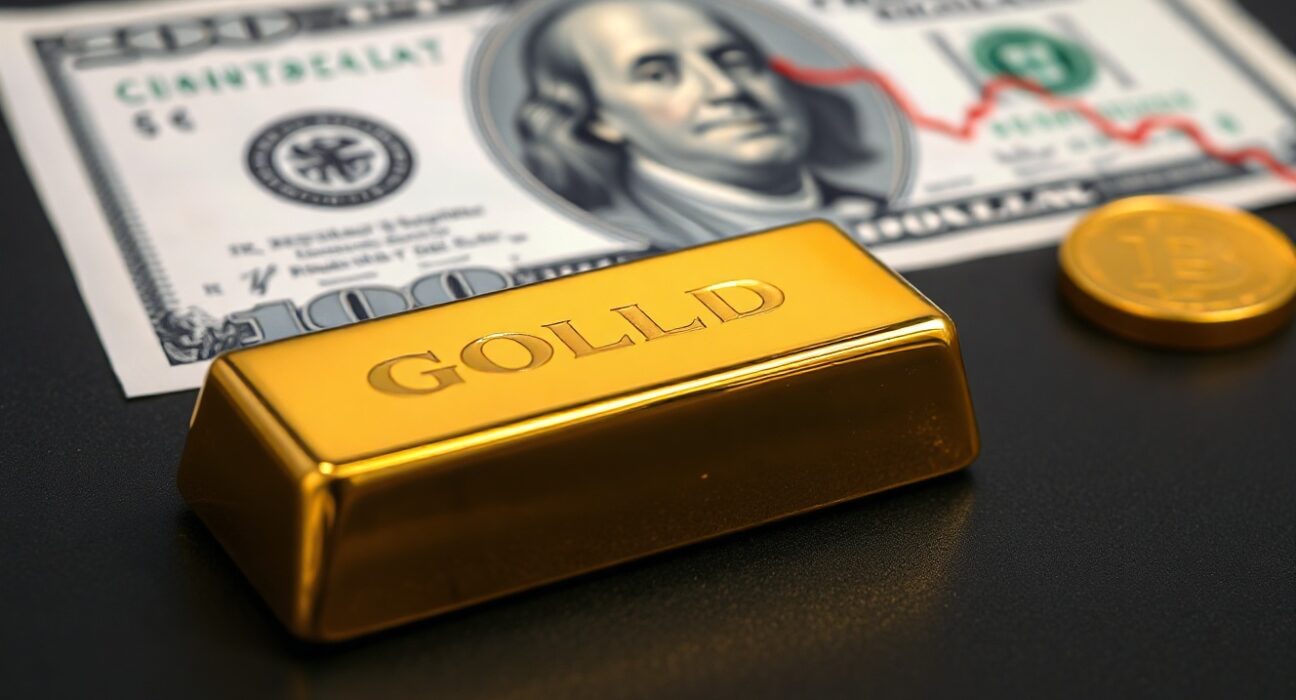
Gold prices are struggling to recover, hovering near a two-week low on Wednesday, as the US Dollar index surged to a fresh 13-month high. The rally in the greenback is fueled by growing market expectations that the Federal Reserve will continue its aggressive rate hiking cycle to combat persistent inflation.
Dollar Strength Weighs on Bullion
The US Dollar index (DXY) climbed above 105.50, its highest level since March 2023, as traders priced in a higher probability of another 25-basis-point rate hike at the Fed’s next meeting. A stronger dollar typically makes gold, which is priced in USD, more expensive for holders of other currencies, reducing demand for the safe-haven asset.
Spot gold was last seen trading around $1,920 per ounce, down significantly from its recent highs near $2,000. The metal has lost over 4% in the past two weeks as the dollar rally accelerated. Analysts point to the Federal Reserve’s recent hawkish commentary as the primary catalyst for the shift in sentiment.
Market Context and Implications
The recent sell-off in gold reflects a broader recalibration of interest rate expectations. Fed officials have repeatedly emphasized the need to keep monetary policy restrictive until inflation is firmly on a path back to the 2% target. This has pushed US Treasury yields higher, further reducing the appeal of non-yielding assets like gold.
Investors are now closely watching upcoming US economic data, including the Consumer Price Index (CPI) and Producer Price Index (PPI) releases, for clues on the future path of monetary policy. A hotter-than-expected inflation reading could accelerate the dollar’s rally and push gold prices even lower.
What This Means for Investors
For holders of gold and gold-related assets, the current environment presents a challenging landscape. The metal’s traditional role as a hedge against inflation is being overshadowed by the opportunity cost of holding a non-yielding asset in a high-interest-rate environment. Portfolio managers may need to reassess their exposure to precious metals in the near term.
However, some analysts argue that the sell-off may be overdone. They note that central bank buying remains strong, and geopolitical uncertainties continue to provide underlying support for gold prices. The key will be whether the dollar rally can sustain its momentum or if a correction is imminent.
Conclusion
Gold prices remain under pressure as the US Dollar continues its ascent on hawkish Federal Reserve expectations. The near-term outlook for bullion is heavily dependent on upcoming inflation data and the Fed’s subsequent policy signals. A break below the $1,900 support level could trigger further selling, while a dovish surprise from the Fed might spark a recovery.
FAQs
Q1: Why does a stronger US Dollar push gold prices lower?
Gold is priced in US Dollars. When the dollar strengthens, it takes fewer dollars to buy the same amount of gold, which typically drives the price down. Additionally, a stronger dollar makes gold more expensive for international buyers, reducing demand.
Q2: How do Federal Reserve rate hikes affect gold?
Rate hikes increase the opportunity cost of holding gold, which pays no interest or dividends. As yields on bonds and other interest-bearing assets rise, investors may sell gold in favor of higher-yielding investments.
Q3: What key levels should investors watch for gold?
The immediate support level is around $1,900 per ounce. A break below that could open the door to $1,850. On the upside, gold needs to reclaim $1,950 to signal a potential recovery, with a move above $1,980 needed to challenge the recent downtrend.
Disclaimer: The information provided is not trading advice, Bitcoinworld.co.in holds no liability for any investments made based on the information provided on this page. We strongly recommend independent research and/or consultation with a qualified professional before making any investment decisions.
