

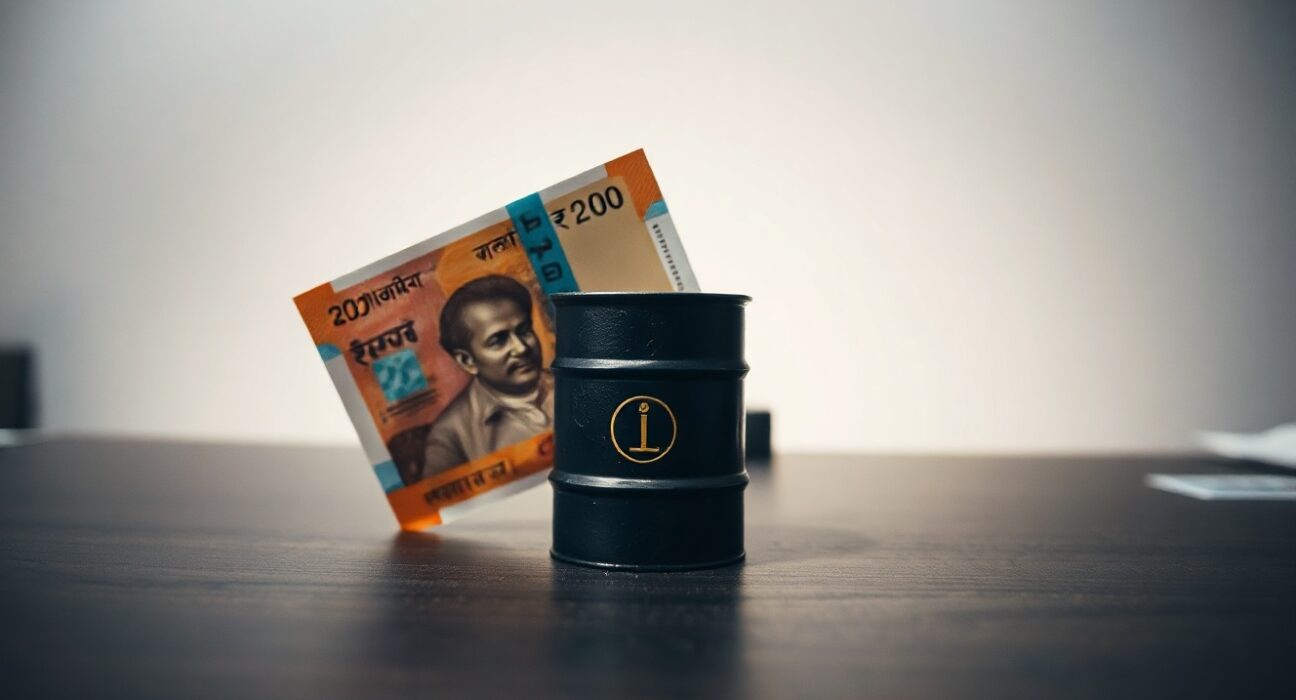
The Indian rupee extended its recent decline against the US dollar on Wednesday, pressured by a rebound in global crude oil prices and cautious positioning ahead of the release of the Federal Reserve’s January meeting minutes. The domestic currency slipped past the 83.20 mark against the greenback in early trade, tracking weaker Asian peers and a rise in the dollar index.
Oil Prices Rebound Add to Import Cost Concerns
Brent crude futures climbed above $82 per barrel during Asian trading hours, reversing some of the previous session’s losses. The uptick in oil prices is a key headwind for the rupee, as India imports roughly 85% of its crude oil requirements. A sustained rise in energy costs widens the country’s trade deficit and puts additional pressure on the currency by increasing dollar demand from refiners.
Analysts noted that the recent production cuts announced by OPEC+ members have provided a floor under oil prices, while geopolitical risks in the Middle East continue to inject volatility into the energy market. For the rupee, each $10 per barrel increase in crude oil prices typically adds around $15 billion to India’s annual import bill, according to historical trade data.
FOMC Minutes in Focus for Dollar Direction
Market participants are now awaiting the release of the Federal Open Market Committee (FOMC) minutes from the January policy meeting, scheduled for later today. The minutes are expected to offer deeper insights into the Fed’s thinking on interest rates, inflation, and the economic outlook. Any hawkish signals could reinforce expectations of prolonged higher US rates, boosting the dollar and weighing further on emerging market currencies like the rupee.
Federal Reserve Chair Jerome Powell had indicated in January that the central bank is in no rush to cut rates, emphasizing the need for more evidence that inflation is sustainably moving toward the 2% target. The minutes may reveal the degree of consensus among policymakers on this stance.
Impact on INR and Portfolio Flows
A stronger dollar environment typically leads to capital outflows from emerging markets, as investors chase higher yields in US assets. Foreign portfolio investors (FPIs) have been net sellers in Indian equities so far this month, adding to the rupee’s depreciation pressure. The Reserve Bank of India (RBI) is expected to intervene in the forex market through state-run banks to prevent excessive volatility, but the central bank’s ability to defend a specific level may be limited if global factors remain adverse.
Traders are also watching the domestic macroeconomic calendar, with India’s trade deficit data for January due later this week. A wider-than-expected deficit could further sour sentiment on the rupee.
Technical Levels to Watch
On the charts, the USD/INR pair has broken above its 50-day moving average, signaling near-term bullish momentum for the dollar. Immediate resistance is seen at 83.50, a level that has acted as a cap in recent months. On the downside, support is placed at 82.80, the pair’s 200-day moving average. A close above 83.30 could open the door for a test of the 83.70 zone, last seen in November 2024.
Conclusion
The Indian rupee faces a challenging near-term outlook as rising oil prices and a potentially hawkish Fed minutes release converge. While RBI intervention may provide a cushion, the currency’s trajectory will largely depend on global dollar dynamics and crude oil movements. Traders should brace for increased volatility in the USD/INR pair as key data points and central bank cues unfold.
FAQs
Q1: Why does a rise in oil prices affect the Indian rupee?
India imports most of its crude oil, so higher oil prices increase the country’s import bill, leading to greater demand for US dollars from refiners. This extra dollar demand typically weakens the rupee against the greenback.
Q2: How do the FOMC Minutes impact the rupee?
The FOMC Minutes provide clues about the US Federal Reserve’s future interest rate decisions. If the minutes signal a hawkish stance (higher rates for longer), the US dollar strengthens, which usually puts downward pressure on emerging market currencies like the rupee.
Q3: What is the RBI’s role in managing the rupee’s fall?
The Reserve Bank of India can intervene in the forex market by selling US dollars from its reserves through state-run banks. This helps reduce volatility and prevents the rupee from depreciating too sharply, but it cannot fully counter strong global trends.
Disclaimer: The information provided is not trading advice, Bitcoinworld.co.in holds no liability for any investments made based on the information provided on this page. We strongly recommend independent research and/or consultation with a qualified professional before making any investment decisions.
