

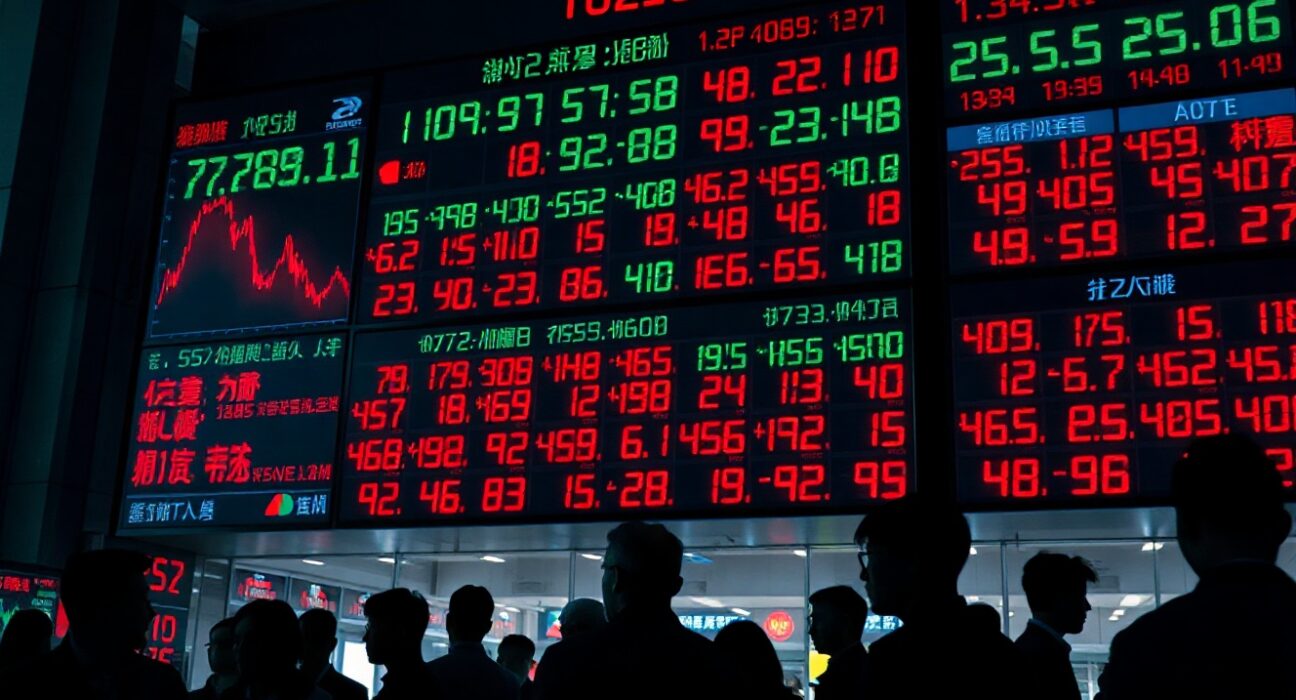
Asian stock markets staged a partial recovery on Wednesday, clawing back some of the steep losses recorded earlier in the week as escalating conflict in the Middle East continued to weigh heavily on investor sentiment. While benchmarks in Tokyo, Seoul, and Shanghai trimmed their declines, the mood remained cautious, with traders closely monitoring diplomatic efforts and the potential for further supply disruptions in global energy markets.
Geopolitical Fears Drive Early Selling Pressure
The week began with sharp sell-offs across the region after a series of escalations in the Middle East raised fears of a broader regional conflict. Investors fled risk assets, sending equity benchmarks lower and driving demand for safe-haven instruments such as gold, the U.S. dollar, and government bonds. The Nikkei 225 fell more than 2% on Monday, while the Kospi and Shanghai Composite also posted significant declines.
By midweek, however, some buying interest returned as traders assessed that the initial panic may have been overdone. Markets in Hong Kong and Australia also edged higher, though gains remained modest. Analysts attributed the partial rebound to short-covering and bargain hunting rather than a fundamental shift in risk appetite.
Oil Prices Remain Elevated
A key concern for Asian economies remains the trajectory of crude oil prices. Brent crude has hovered near multi-month highs, driven by fears of potential supply disruptions from the Middle East, a region that accounts for roughly a third of global oil output. Higher energy costs threaten to stoke inflationary pressures in import-dependent Asian nations, complicating central bank policy decisions.
South Korea and Japan, both major crude importers, have seen their currencies weaken against the dollar, adding to import costs. The Bank of Japan and the Bank of Korea have reiterated their vigilance on currency and inflation risks, but have so far refrained from direct intervention.
Investor Focus on Diplomatic Channels
Market participants are now closely watching diplomatic efforts aimed at de-escalation. Statements from global powers, including the United States, China, and European Union, have urged restraint, but concrete progress remains elusive. Any signs of a ceasefire or diplomatic breakthrough could trigger a more sustained recovery, while further escalation risks renewed sell-offs.
“The market is pricing in a higher geopolitical risk premium, but the direction will depend on whether the situation stabilizes or deteriorates,” said a senior market strategist at a Tokyo-based brokerage. “For now, it’s a wait-and-see environment.”
Broader Implications for Asian Economies
Beyond immediate market moves, the prolonged crisis carries significant implications for Asian economies. Trade routes through the Red Sea and Suez Canal have already faced disruptions, affecting shipping timelines and costs. Supply chain bottlenecks, particularly for electronics and automotive components, could worsen if the conflict widens.
Tourism-dependent economies in Southeast Asia are also vulnerable, as travel sentiment in the region may cool amid heightened uncertainty. Thailand, Vietnam, and Indonesia could see a slowdown in visitor arrivals if the crisis persists.
Conclusion
While Asian markets have partially recovered from the week’s early losses, the underlying risk from the Middle East crisis remains unresolved. Investors are balancing the potential for diplomatic solutions against the reality of ongoing hostilities. The coming days will be critical in determining whether the current rebound marks a turning point or merely a pause before further volatility. For now, caution remains the prevailing theme across regional trading floors.
FAQs
Q1: Why did Asian markets fall sharply at the start of the week?
Markets declined due to escalating conflict in the Middle East, which triggered a broad risk-off sentiment among investors. Fears of a wider regional war and potential disruptions to global energy supplies led to selling pressure across equities.
Q2: Are Asian markets expected to recover fully soon?
Recovery depends heavily on geopolitical developments. A de-escalation or ceasefire could support a sustained rebound, while further escalation may lead to renewed losses. Markets remain highly sensitive to news from the region.
Q3: How does the Middle East crisis affect Asian economies specifically?
Asian economies face higher oil import costs, currency depreciation, potential supply chain disruptions, and reduced tourism demand. These factors could weigh on economic growth and complicate central bank policy decisions.
Disclaimer: The information provided is not trading advice, Bitcoinworld.co.in holds no liability for any investments made based on the information provided on this page. We strongly recommend independent research and/or consultation with a qualified professional before making any investment decisions.
