

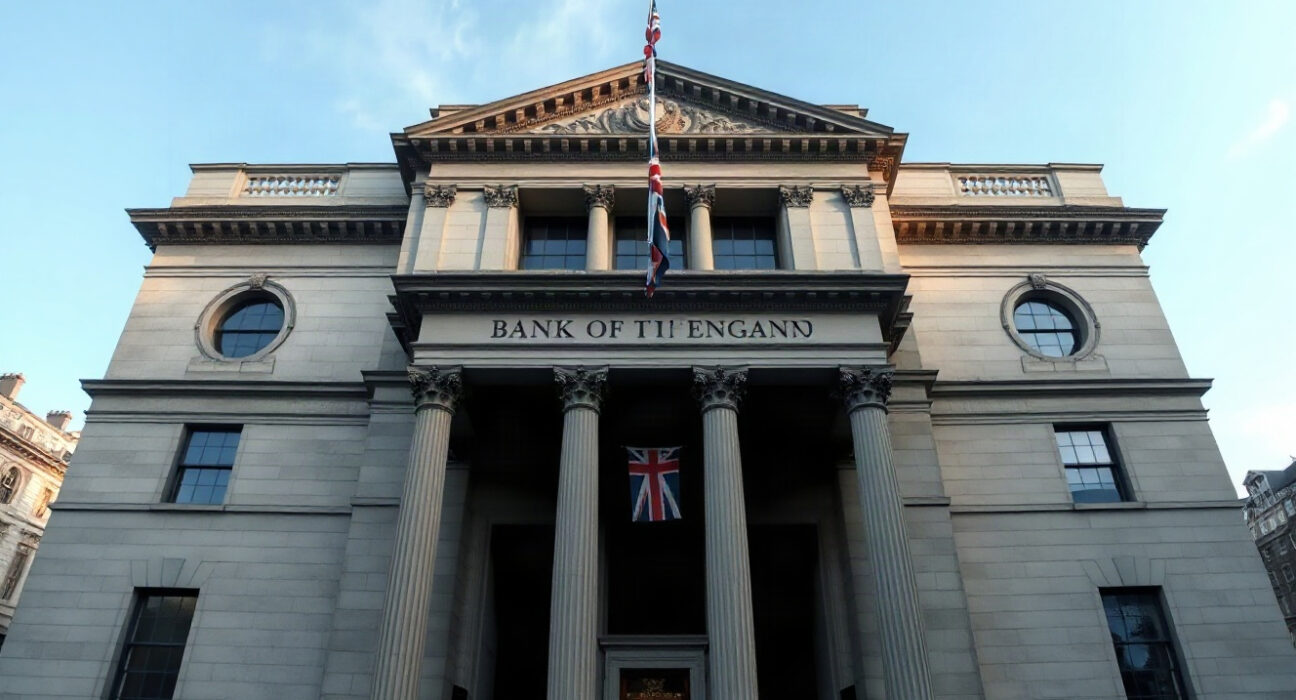
The Bank of England is expected to keep interest rates unchanged at its next meeting, according to Societe Generale, though escalating conflict risks could complicate the inflation outlook and force a reassessment.
Societe Generale’s baseline view
In a recent research note, Societe Generale analysts said a rate hold is the baseline scenario for the Bank of England’s upcoming policy decision. The central bank has been navigating a delicate balance between persistent inflationary pressures and a weakening economic backdrop. As of now, market expectations align with the view that the Monetary Policy Committee will leave the Bank Rate unchanged, pausing after a series of hikes that have lifted borrowing costs to their highest level in over a decade.
Conflict risks and inflation
The French bank flagged that geopolitical conflicts, particularly those affecting energy and commodity supplies, pose a significant upside risk to inflation. If these risks materialize, they could push price growth higher, forcing the Bank of England to maintain a tighter policy stance for longer. The bank’s analysts noted that while the current data suggests a pause, the situation remains fluid, and any escalation in conflicts could alter the trajectory.
Why this matters
For households and businesses, a rate hold offers some relief from the rapid rise in borrowing costs seen over the past two years. However, the persistent threat of conflict-driven inflation means that relief may be temporary. Mortgage holders, in particular, are watching closely, as any future rate hikes would directly impact monthly payments. The Bank of England’s decisions also influence the broader economy, affecting everything from consumer spending to business investment.
Market and expert reactions
Financial markets have largely priced in a hold, with the pound and UK gilt yields remaining stable following the note. Some economists, however, caution that the Bank of England’s path remains highly data-dependent. The upcoming inflation and wage data will be critical in determining whether the hold becomes a sustained pause or a temporary breather. Societe Generale’s analysis adds to a growing consensus that the BoE is at the peak of its tightening cycle, but the risk of further action cannot be entirely ruled out.
Conclusion
Societe Generale’s baseline of a rate hold reflects the current economic data, but the cloud of conflict risks looms large. The Bank of England’s next move will depend on how these risks evolve, making it a pivotal moment for UK monetary policy. For now, the message is one of caution, with the central bank likely to keep its options open.
FAQs
Q1: Why is the Bank of England expected to hold rates?
As of the latest analysis, the Bank of England is expected to hold rates due to easing inflation pressures and signs of economic slowdown, though conflict risks could change that outlook.
Q2: How could conflict risks affect UK inflation?
Conflicts, especially those affecting energy and commodity supplies, could push up prices, leading to higher inflation and potentially forcing the BoE to resume rate hikes.
Q3: What does a rate hold mean for borrowers?
A rate hold means borrowing costs remain stable in the near term, providing some relief for mortgage holders and businesses, but future hikes are still possible if inflation persists.
Disclaimer: The information provided is not trading advice, Bitcoinworld.co.in holds no liability for any investments made based on the information provided on this page. We strongly recommend independent research and/or consultation with a qualified professional before making any investment decisions.
