Bitcoin Below $60K: Fear Index at 19, Outflows at 10,000 BTC
In this article
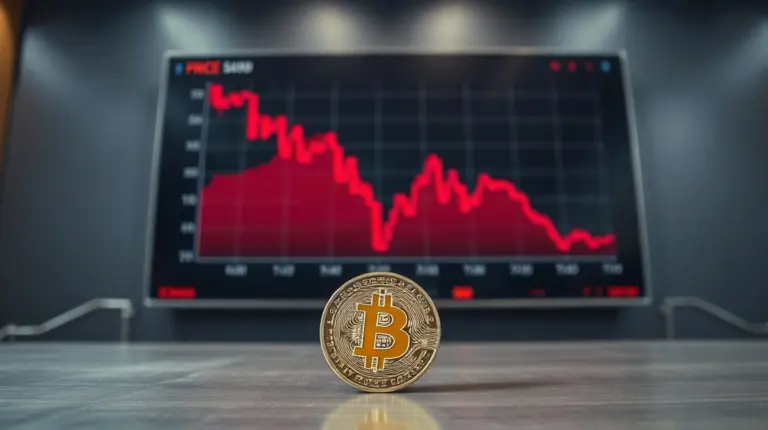
Bitcoin slipped under the $60,000 mark and the Crypto Fear & Greed Index read 19 at the time of publication, a level the gauge classifies as extreme fear, according to Ambcrypto. The same report, updated at 18:00 EST on November 28, 2026, notes that the market had been sitting in a fear state since November 5, 2026 — and that roughly 10,000 BTC left exchanges in net outflows as the price bottomed.
Fear on social media, withdrawals on-chain
The report’s useful distinction is between panic and apathy. Panic shows up as spikes in social volume, fearful language, liquidation clusters and urgent questions about selling. Apathy looks like the opposite: social volume quietly draining away, with Twitter either silent, resigned, or declaring the crypto market dead.
Ambcrypto argues the second is the harder problem. Panic arrives in bursts and fades; apathy, in its framing, is close to permanent, because an investor who has decided they are finished with the industry is difficult to win back.
Against that, the on-chain picture moves the other way. Nearly 10,000 BTC in net outflows from exchanges as price bottomed suggests coins were being pulled off trading venues rather than dumped onto them, which the report reads as quiet accumulation meeting very loud pessimism.
Why the $60K line is doing so much work
There is no protocol rule at $60,000 and no mechanism defending it. Ambcrypto’s observation is that the level matters purely as a psychological landmark — and that within hours of the break, discussion moved off macro liquidity and ETF flows and onto whether the cycle itself was finished.
That shift is the story. Sentiment measures where the crowd stands emotionally; positioning measures where the crowd stands financially. When those two diverge, the report argues, the gap between them is where the useful analysis sits.

Why it matters
Threshold stories like this one tend to get read as verdicts when they are better treated as tests of narrative. For holders, the practical value of the report is that it separates a measurable signal — coins leaving exchanges — from a noisy one, which is what a sentiment index built on social chatter is. Neither is a forecast, and the report is careful to say so. It also notes that long-term holders were accumulating even as the headline mood soured, a split that has shown up in earlier cycles before exhaustion rather than at the start of a drawn-out bear trend.
What to watch
The next test is whether exchange outflows persist or reverse, and whether funding rates stay neutral or swing decisively in either direction. Ambcrypto flags both as the data points that would show which side of the divergence is leading — the crowd’s mood or the crowd’s money.
Market snapshot
At the time of the verified snapshot (November 29, 2026, 05:46 UTC, CoinPaprika), Bitcoin was at $59,416, or ₹5,523,500, down 0.6% over 24 hours and up 0.8% over seven days, with a market cap of $1.20 trillion and 24-hour volume of $8.73 billion. Bitcoin’s move sat alongside Ethereum at $1,646 (₹153,031, -0.7% on 24 hours) and Solana at $70.54 (₹6,558, -1.2% on 24 hours).
This article is not financial advice. Crypto markets are volatile and unpredictable, and nothing in the sentiment or flow data described here guarantees a direction for price.
Frequently Asked Questions
What is the Crypto Fear & Greed Index reading for Bitcoin right now?
Ambcrypto reported the index stood at 19 at the time of its November 28, 2026 update, a level classified as extreme fear. The outlet noted the market had been in a fear state since November 5, 2026.
Does the report say Bitcoin has bottomed?
No. Ambcrypto explicitly warns that extreme fear can precede further declines just as easily as it can mark a reversal, and calls the assumption that an extreme reading means the move is over a contrarian trap.
What do Bitcoin exchange netflows show?
According to Sanbase data cited by Ambcrypto, Bitcoin recorded nearly 10,000 BTC in net exchange outflows as the price bottomed out, which the report reads as quiet accumulation alongside headline fear.
Why does the report say social volume matters?
Ambcrypto distinguishes panic, which appears in short-lived spikes, from apathy, which shows up as falling social volume. It argues apathy is harder to reverse because investors who have left the industry are difficult to bring back.
Source: AMBCrypto