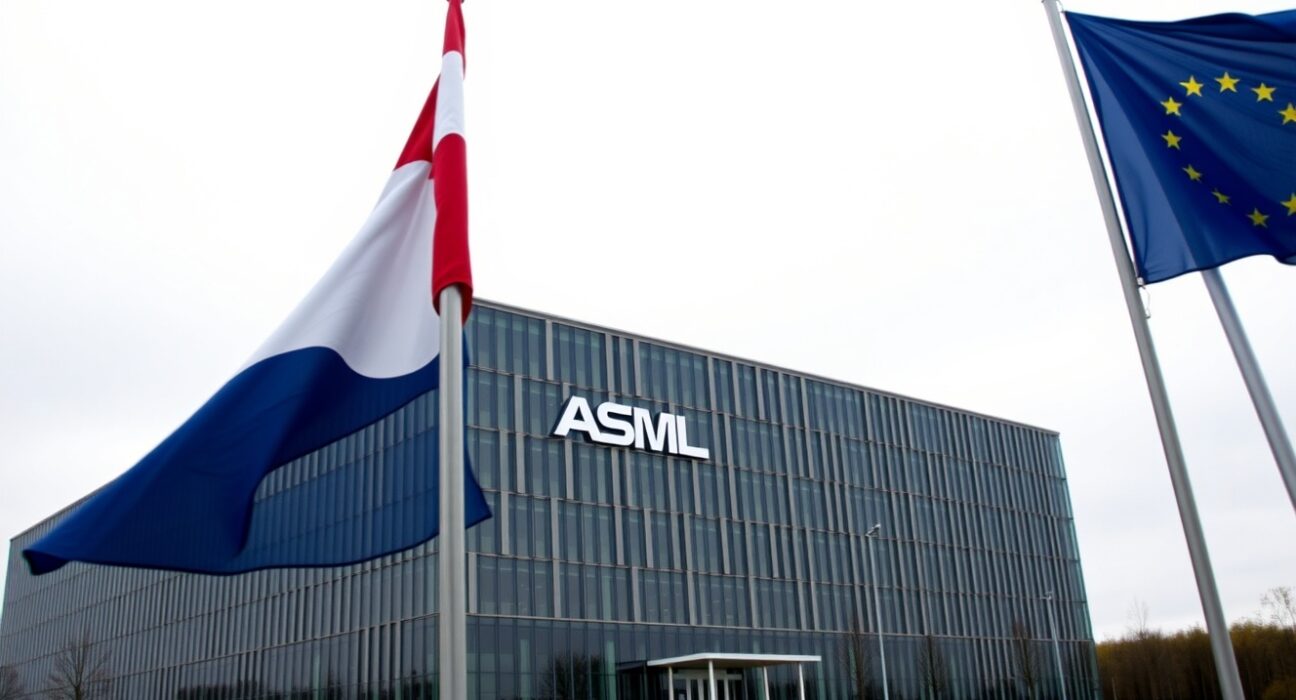
Dutch Trade Minister Sjoerd Sjoerdsma traveled to Washington this week to meet with Commerce Secretary Howard Lutnick and members of Congress, pushing back against a proposed U.S. law that would further restrict Chinese chipmakers’ access to Western semiconductor equipment. The visit underscores growing transatlantic tensions over the scope and pace of export controls aimed at China’s technology sector.
The MATCH Act and its implications for ASML
The legislation in question is the MATCH Act, introduced in April, which would bar Chinese companies from purchasing advanced semiconductor manufacturing tools from Western suppliers. The bill would extend existing restrictions to include ASML’s deep ultraviolet (DUV) immersion lithography machines — tools that are currently available to Chinese buyers under older-generation controls.
ASML, headquartered in Veldhoven, Netherlands, is Europe’s most valuable company and the world’s sole producer of the extreme ultraviolet (EUV) lithography systems required to manufacture cutting-edge AI chips. While China has long been barred from buying ASML’s most advanced EUV machines, the MATCH Act would close a loophole that allowed Chinese firms to purchase older DUV immersion tools — equipment first shipped about a decade ago.
“It’s exceptional that I’m coming here to broadly outline our concerns to Congress,” Sjoerdsma told Bloomberg after his meetings. “The stakes for the Netherlands may be very high.”
China accounts for nearly a fifth of ASML’s sales
According to ASML’s most recent financial disclosures, China represents approximately 19% of the company’s net system sales. A full ban on DUV immersion machine sales to China would directly impact a significant revenue stream for the Dutch firm, which has already seen demand from Chinese customers grow as they race to build domestic chip capacity.
ASML CEO Christophe Fouquet told Bitcoin World in May that the machines currently sold to China are older-generation DUV tools — gear that was first shipped about a decade ago. The MATCH Act would relegate even those machines off limits, potentially accelerating the decoupling of Chinese semiconductor manufacturing from Western supply chains.
What the MATCH Act would change
The bill has not yet faced a full House or Senate vote. Bloomberg reports that it would likely need to be folded into a larger legislative package to pass. However, the Dutch diplomatic push signals that European governments are increasingly concerned about the extraterritorial reach of U.S. export controls, which can affect companies like ASML that rely on American components and software.
The MATCH Act would go further than existing controls by extending curbs to ASML’s DUV immersion machines. Currently, the U.S. restricts only the most advanced EUV tools from reaching China. The new bill would effectively widen the net, capturing a broader range of semiconductor manufacturing equipment and potentially triggering retaliatory measures from Beijing.
Why this matters for the global chip industry
The outcome of this diplomatic standoff will have significant implications for the global semiconductor supply chain. ASML’s lithography machines are essential for producing everything from smartphone processors to AI accelerators. Any disruption to its sales in China could reshape the competitive landscape, pushing Chinese firms to accelerate domestic alternatives or seek technology from other sources.
For the Netherlands, the stakes are both economic and strategic. ASML is not only the country’s most valuable company but also a linchpin of European technological sovereignty. A U.S.-imposed ban that damages ASML’s business would likely strain the broader EU-U.S. trade relationship, particularly as Brussels seeks to strengthen its own semiconductor manufacturing capabilities under the European Chips Act.
Conclusion
The Dutch trade minister’s visit to Washington marks a rare and direct intervention by a European ally in U.S. semiconductor policy. While the MATCH Act remains in legislative limbo, the growing pushback from European capitals signals that Washington’s unilateral approach to export controls may face increasing resistance from partners who bear the economic cost. The coming months will be critical in determining whether the U.S. and Europe can align their semiconductor strategies or whether transatlantic tensions over China policy will deepen further.
FAQs
Q1: What is the MATCH Act?
The MATCH Act is a proposed U.S. law that would bar Chinese chipmakers from accessing Western semiconductor equipment, extending existing export controls to include older-generation deep ultraviolet (DUV) immersion machines from ASML.
Q2: Why is ASML so important in this dispute?
ASML is the world’s only manufacturer of extreme ultraviolet (EUV) lithography machines, which are essential for producing advanced AI chips. It also produces DUV immersion tools that are widely used in the semiconductor industry.
Q3: What does China currently buy from ASML?
China is currently allowed to purchase older-generation DUV immersion machines — equipment first shipped about a decade ago. The MATCH Act would ban these sales, cutting off a market that represents 19% of ASML’s net system sales.
Disclaimer: The information provided is not trading advice, Bitcoinworld.co.in holds no liability for any investments made based on the information provided on this page. We strongly recommend independent research and/or consultation with a qualified professional before making any investment decisions.