

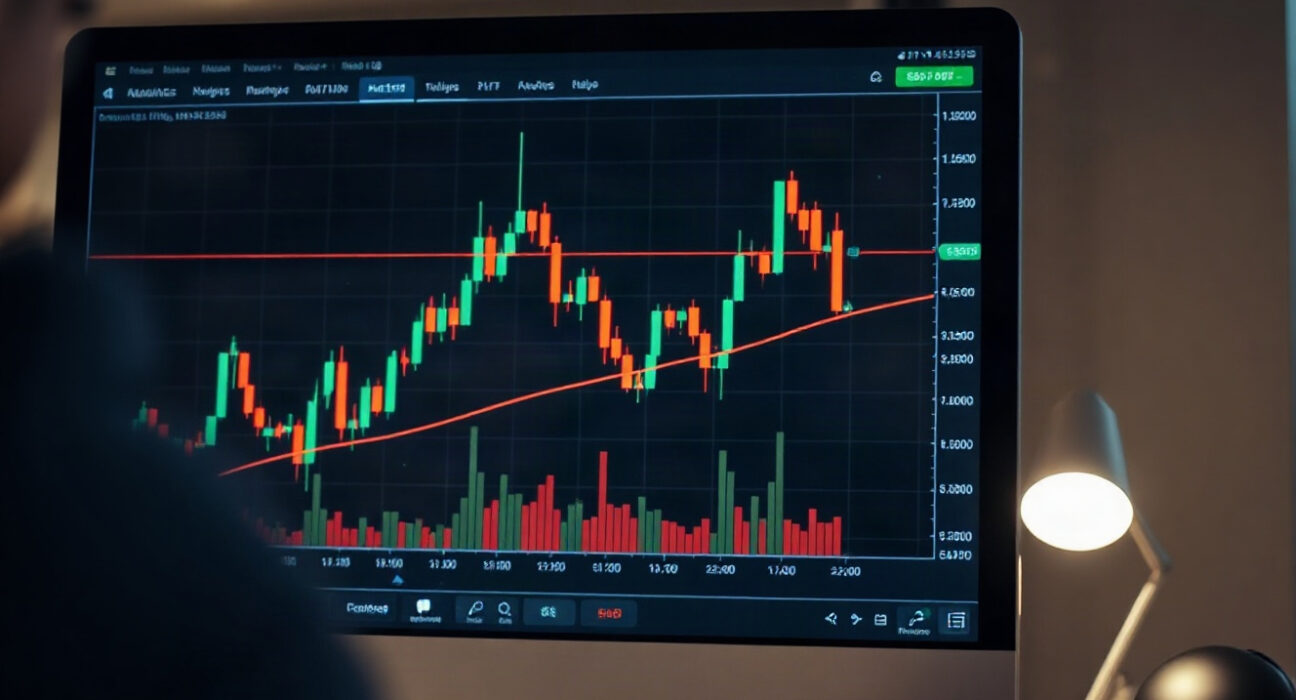
The British pound is trading just below its 20-day exponential moving average (EMA) against the US dollar, as of the latest session, with investors weighing a mix of UK economic data and expectations for Federal Reserve policy moves.
Technical Positioning: Key Levels and Moving Averages
The 20-day EMA is a widely watched short-term trend indicator, and GBP/USD’s inability to reclaim it suggests near-term bearish momentum. As of the most recent close, the pair is hovering near the 1.2700 handle, with immediate resistance at the 20-day EMA around 1.2750, followed by the 50-day EMA near 1.2800. On the downside, support is seen at the 1.2600 psychological level, with a break below that opening the door to the 200-day EMA around 1.2500.
Traders often view the 20-day EMA as a dynamic support/resistance level, and a sustained move above it could signal a shift in sentiment. However, the current price action indicates that sellers remain in control, with the pair failing to hold above this level in recent sessions.
Macro Backdrop: UK Data and Fed Expectations
The pound’s recent weakness comes despite stronger-than-expected UK GDP figures released earlier this month, which showed the economy expanded by 0.4% in the first quarter. However, inflation remains sticky, with the latest CPI print coming in at 3.9% year-on-year, well above the Bank of England’s 2% target. This has led to market speculation that the BoE may be forced to keep rates higher for longer, but the dollar has been supported by expectations that the Federal Reserve will maintain its hawkish stance.
Fed officials have repeatedly signaled that they are in no rush to cut rates, citing resilient US labor market data and persistent inflation. The CME FedWatch tool currently shows a 62% probability of a rate cut in September, but this could shift depending on upcoming economic releases, including the next non-farm payrolls report and CPI data.
Implications for Traders
For traders, the key takeaway is that GBP/USD is at a critical juncture. A break above the 20-day EMA could trigger a short-covering rally, while a failure to hold current support levels may accelerate downside momentum. The pair is also sensitive to broader risk sentiment, with any escalation in geopolitical tensions or unexpected economic data potentially causing sharp moves.
Conclusion
GBP/USD remains under pressure as it trades below the 20-day EMA, with technical indicators pointing to a bearish bias. However, the pair’s direction will likely be determined by upcoming economic data and central bank commentary. Traders should monitor the 1.2600 support and 1.2750 resistance levels closely, as a break in either direction could set the tone for the next move.
FAQs
Q1: What is the 20-day EMA and why is it important for GBP/USD?
The 20-day EMA is a short-term moving average that smooths price data over the past 20 days, giving more weight to recent prices. It is used by traders to gauge the short-term trend. For GBP/USD, trading below the 20-day EMA typically signals bearish momentum, while a move above it can indicate a potential trend reversal.
Q2: What are the key support and resistance levels for GBP/USD?
As of the latest analysis, immediate resistance is at the 20-day EMA around 1.2750, followed by the 50-day EMA near 1.2800. On the downside, support is at the 1.2600 psychological level, with a break below that potentially leading to the 200-day EMA around 1.2500.
Q3: How do Federal Reserve and Bank of England policies affect GBP/USD?
The GBP/USD exchange rate is highly sensitive to interest rate differentials between the US and UK. If the Fed keeps rates higher than the BoE, the dollar tends to strengthen against the pound, pushing GBP/USD lower. Conversely, if the BoE signals a more hawkish stance, the pound could gain. Traders closely watch central bank communications and economic data for clues on future policy moves.
Disclaimer: The information provided is not trading advice, Bitcoinworld.co.in holds no liability for any investments made based on the information provided on this page. We strongly recommend independent research and/or consultation with a qualified professional before making any investment decisions.
