

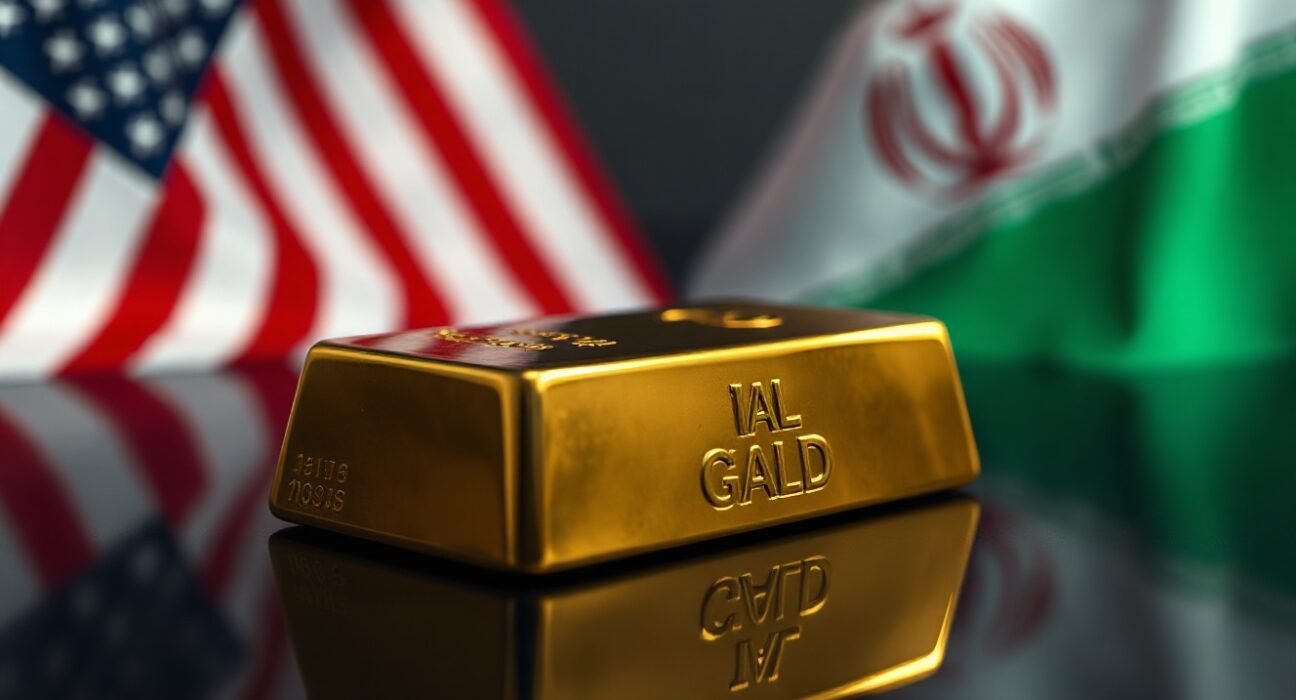
Gold prices extended their downward move on Tuesday, as market participants assessed the cautiously optimistic tone surrounding renewed nuclear negotiations between the United States and Iran. Despite the geopolitical uncertainty that typically supports safe-haven demand, bullion has struggled to find a footing in recent sessions.
Market Reaction to Diplomatic Signals
The precious metal slipped further during Asian and early European trading hours, with spot gold declining by approximately 0.4% to hover near the $2,320 per ounce mark. The move comes after reports emerged that both Washington and Tehran have signaled a willingness to resume talks on a new nuclear framework, raising hopes for a de-escalation in regional tensions that have simmered for months.
While geopolitical risks often drive investors toward gold as a store of value, the current market reaction suggests that traders are pricing in a reduced risk premium. The cautious optimism appears to be weighing on safe-haven flows, even as the broader outlook remains uncertain.
Broader Market Context
The decline in gold prices also reflects shifting expectations for U.S. monetary policy. Stronger-than-expected economic data in recent weeks has tempered hopes for early interest rate cuts by the Federal Reserve. Higher interest rates increase the opportunity cost of holding non-yielding assets like gold, adding further pressure on the metal.
Meanwhile, the U.S. dollar has held relatively firm against major currencies, making gold more expensive for overseas buyers. A stronger dollar typically acts as a headwind for dollar-denominated commodities.
What This Means for Investors
For investors, the current price action underscores the delicate balance between geopolitical developments and macroeconomic fundamentals. While a diplomatic breakthrough between the U.S. and Iran could reduce safe-haven demand further, any breakdown in talks could quickly reverse the trend. Analysts advise caution, noting that gold remains sensitive to both geopolitical headlines and shifting rate expectations.
The yellow metal has historically served as a hedge during periods of conflict and uncertainty. However, the current environment — where optimism over diplomacy coincides with a hawkish Fed stance — has created a complex trading landscape.
Conclusion
Gold’s extended decline reflects a market cautiously optimistic about US-Iran negotiations, even as the broader geopolitical picture remains fluid. With the Federal Reserve’s policy path also in focus, bullion may face further headwinds in the near term. Investors should monitor both diplomatic developments and economic data for clearer directional cues.
FAQs
Q1: Why is gold falling despite geopolitical tensions?
Gold is declining because markets are focusing on the cautiously optimistic tone surrounding US-Iran nuclear talks, which reduces the immediate safe-haven premium. Additionally, expectations of higher-for-longer U.S. interest rates are weighing on the metal.
Q2: Could gold prices rebound if US-Iran talks fail?
Yes, a breakdown in negotiations could quickly revive safe-haven demand, potentially driving gold prices higher. Geopolitical uncertainty remains a key support factor for bullion.
Q3: How does the Federal Reserve’s policy affect gold?
The Federal Reserve’s interest rate decisions directly impact gold. Higher rates increase the opportunity cost of holding gold, which yields no interest, making it less attractive compared to interest-bearing assets.
Disclaimer: The information provided is not trading advice, Bitcoinworld.co.in holds no liability for any investments made based on the information provided on this page. We strongly recommend independent research and/or consultation with a qualified professional before making any investment decisions.
