

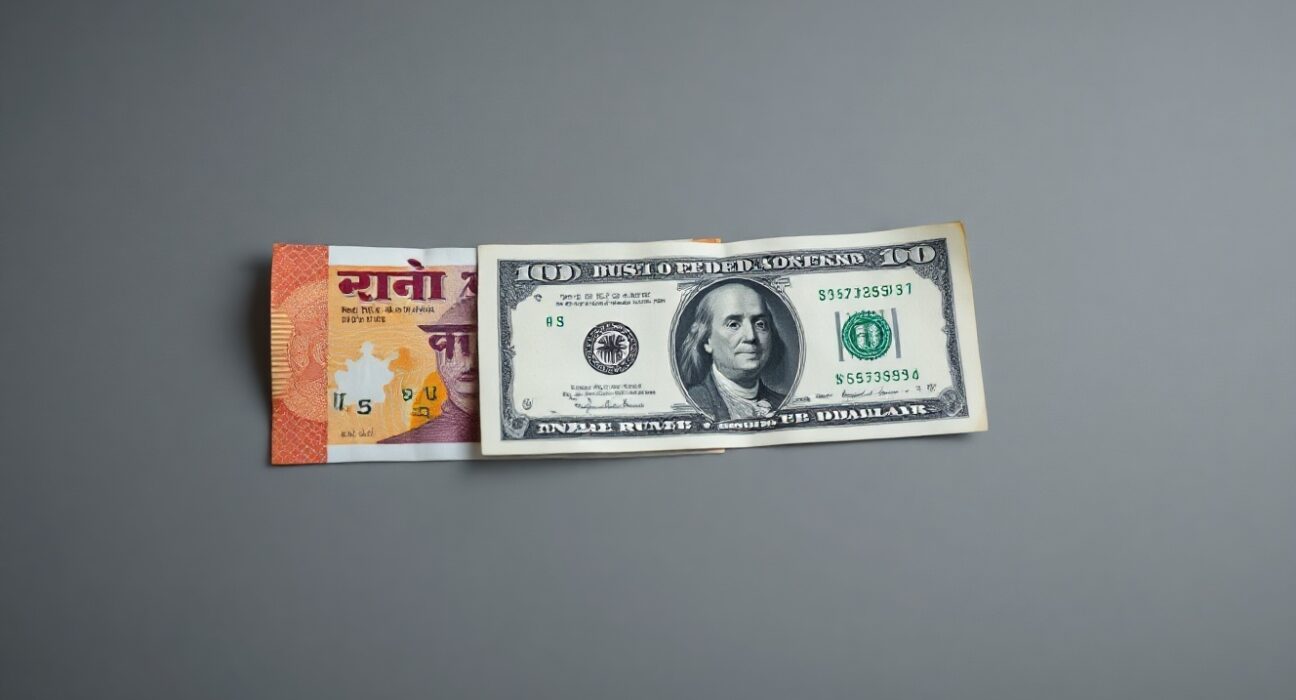
The Indian Rupee (INR) has been underperforming against the US Dollar (USD) in recent trading sessions, driven by growing expectations that the Federal Reserve will maintain a hawkish monetary policy stance. This development has placed renewed pressure on emerging market currencies, with the Rupee facing headwinds from both domestic and international factors.
Hawkish Fed Expectations Weigh on INR
Market participants are increasingly pricing in the possibility that the Federal Reserve will keep interest rates higher for longer, following stronger-than-expected US economic data. The US Dollar Index (DXY) has climbed to multi-month highs, reflecting broad-based dollar strength. For the Indian Rupee, this translates into sustained depreciation pressure, as capital flows shift toward dollar-denominated assets.
According to data from the Reserve Bank of India (RBI), the Rupee has weakened by approximately X% against the dollar over the past month, underperforming peers such as the Indonesian Rupiah and the Thai Baht. The currency is currently trading near the 83.50 mark against the greenback, a level that has historically prompted RBI intervention.
RBI Policy and Intervention Dynamics
The RBI has actively managed the Rupee’s volatility through direct market interventions, including selling dollars via state-run banks. However, the central bank’s ability to defend the currency is constrained by the need to maintain adequate foreign exchange reserves and manage inflation expectations.
India’s inflation trajectory remains a key concern. While headline inflation has moderated from its 2023 peaks, core inflation remains sticky, limiting the RBI’s room to cut rates. A weaker Rupee exacerbates imported inflation, particularly for crude oil and other commodities, creating a feedback loop that complicates monetary policy decisions.
Impact on Traders and Importers
For forex traders, the current environment presents both risks and opportunities. The INR’s underperformance against the USD has increased hedging costs for importers, particularly those in the energy and manufacturing sectors. Exporters, on the other hand, benefit from a weaker domestic currency, which improves their price competitiveness in global markets.
The widening interest rate differential between the US and India has also reduced the carry trade appeal of the Rupee. Foreign portfolio investors (FPIs) have been net sellers in Indian debt markets in recent weeks, adding to the currency’s downward pressure.
Global Context and Outlook
The Rupee’s weakness is part of a broader trend affecting emerging market currencies. The Federal Reserve’s hawkish stance, combined with geopolitical uncertainties and rising global bond yields, has triggered a risk-off sentiment across Asian markets. The Japanese Yen and Chinese Yuan have also faced depreciation pressures, though the Rupee’s decline has been more pronounced due to India’s current account deficit.
Looking ahead, the trajectory of the USD/INR pair will depend on several factors: the timing and pace of Fed rate cuts, RBI’s intervention strategy, and India’s trade balance data. Most analysts expect the Rupee to trade in a range of 83.00 to 84.00 against the dollar over the next quarter, with risks tilted toward further depreciation if global conditions worsen.
Conclusion
The Indian Rupee’s underperformance against the US Dollar reflects a confluence of hawkish Fed expectations, domestic inflation concerns, and capital flow dynamics. While the RBI has tools to manage volatility, sustained dollar strength could test the central bank’s resolve. For market participants, understanding these interlinked factors is essential for navigating the current forex landscape.
FAQs
Q1: Why is the Indian Rupee weakening against the US Dollar?
The Rupee is weakening due to expectations that the Federal Reserve will keep interest rates high, which strengthens the US Dollar. Additionally, India’s current account deficit and domestic inflation concerns have added to the pressure.
Q2: How does the RBI respond to Rupee depreciation?
The RBI typically intervenes by selling US Dollars from its foreign exchange reserves through state-run banks to stabilize the currency. It may also adjust policy rates or use other monetary tools to manage volatility.
Q3: What does a weaker Rupee mean for the Indian economy?
A weaker Rupee increases the cost of imports, particularly crude oil, which can fuel inflation. It benefits exporters by making their goods cheaper abroad. For consumers, it can lead to higher prices for imported goods and services.
Disclaimer: The information provided is not trading advice, Bitcoinworld.co.in holds no liability for any investments made based on the information provided on this page. We strongly recommend independent research and/or consultation with a qualified professional before making any investment decisions.
