

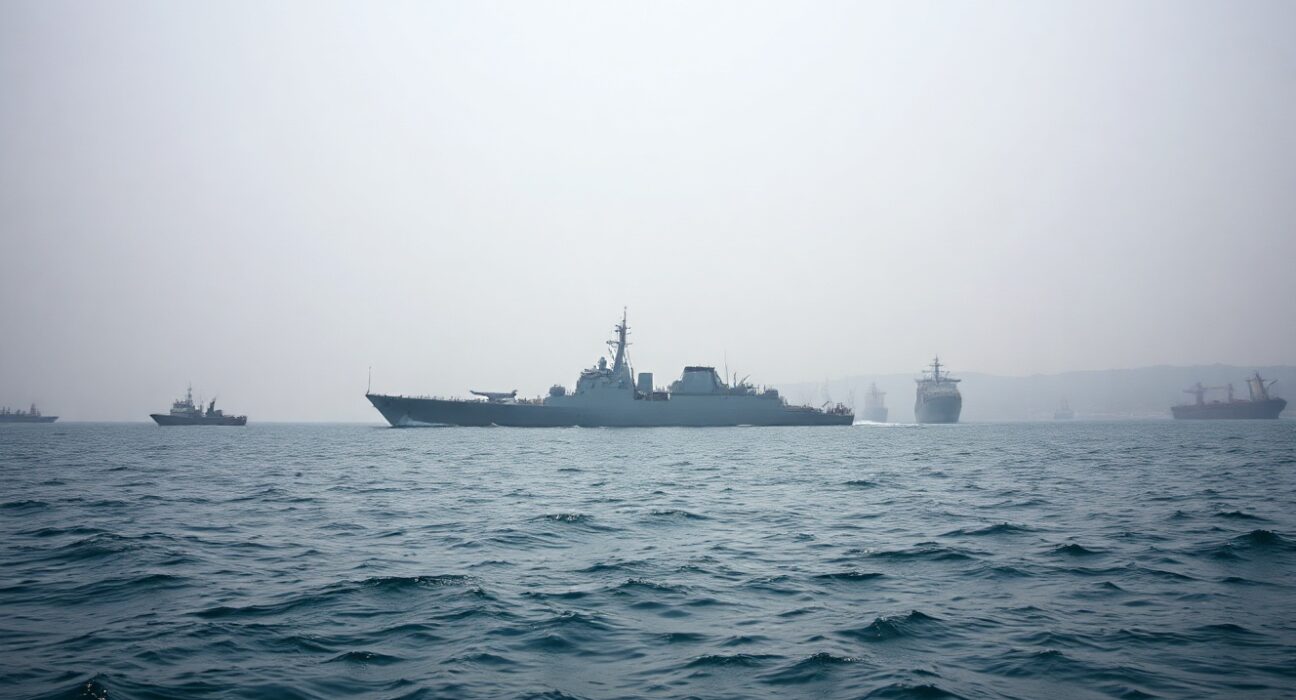
Iran’s Supreme Joint Military Command has ordered the closure of the Strait of Hormuz, a critical maritime chokepoint for global oil shipments, according to a report by the country’s Mehr News Agency. The command cited what it described as a ‘clear violation’ by the United States of its commitments under the first article of a previously signed memorandum of understanding (MOU), resulting in a loss of trust. The statement also referenced Israel’s continued violations of the ceasefire agreement in southern Lebanon as a contributing factor.
Context and Background
The Strait of Hormuz, located between Oman and Iran, connects the Persian Gulf with the Gulf of Oman and the Arabian Sea. Approximately 20% of the world’s petroleum passes through this narrow waterway, making it one of the most strategically important chokepoints in global energy markets. The closure, if enforced, would disrupt oil and liquefied natural gas (LNG) shipments from major producers including Saudi Arabia, Iraq, Kuwait, and the United Arab Emirates.
The MOU referenced by Iranian authorities is believed to relate to previous diplomatic agreements or informal understandings regarding maritime security and sanctions relief. Details of the specific article cited have not been independently verified, and the United States has not issued an immediate official response to the Iranian announcement.
Immediate Implications for Global Markets
News of the closure has already triggered volatility in crude oil futures markets. Analysts warn that a sustained blockade could push oil prices above $100 per barrel, depending on duration and the response from other regional actors. The International Energy Agency (IEA) has previously stated that it stands ready to coordinate emergency stockpile releases if necessary.
Insurance premiums for tankers transiting the region are expected to spike, and shipping companies may begin rerouting vessels around the Arabian Peninsula via the longer Bab el-Mandeb route, increasing transit times and costs.
Legal and Diplomatic Dimensions
International maritime law, including the United Nations Convention on the Law of the Sea (UNCLOS), guarantees the right of innocent passage through straits used for international navigation. Unilateral closure of the Strait of Hormuz could be challenged as a violation of these principles. Iran is not a signatory to UNCLOS but has historically argued that it retains the right to take defensive measures under national security provisions.
The United States Fifth Fleet, based in Bahrain, has conducted regular patrols in the region to ensure freedom of navigation. Any physical enforcement of the closure could lead to direct military confrontation, raising the stakes for all parties involved.
Conclusion
The closure of the Strait of Hormuz represents a significant escalation in regional tensions with immediate consequences for global energy security. While the Iranian announcement may be a negotiating tactic or a temporary measure, the potential for disruption remains high. Readers should monitor official statements from the U.S. State Department, the IEA, and maritime advisory agencies for real-time updates. The situation remains fluid, and verification of on-the-ground developments is ongoing.
FAQs
Q1: Why did Iran close the Strait of Hormuz?
Iran’s military command cited a U.S. violation of a memorandum of understanding and Israel’s breach of a ceasefire in southern Lebanon as reasons for the closure.
Q2: How will this affect oil prices?
Crude oil prices are expected to rise sharply due to supply disruption fears. A sustained blockade could push prices above $100 per barrel, depending on duration and alternative supply routes.
Q3: Is the closure legal under international law?
International law guarantees innocent passage through straits used for international navigation. Unilateral closure may be challenged as a violation, though Iran may cite national security exceptions.
Disclaimer: The information provided is not trading advice, Bitcoinworld.co.in holds no liability for any investments made based on the information provided on this page. We strongly recommend independent research and/or consultation with a qualified professional before making any investment decisions.
