

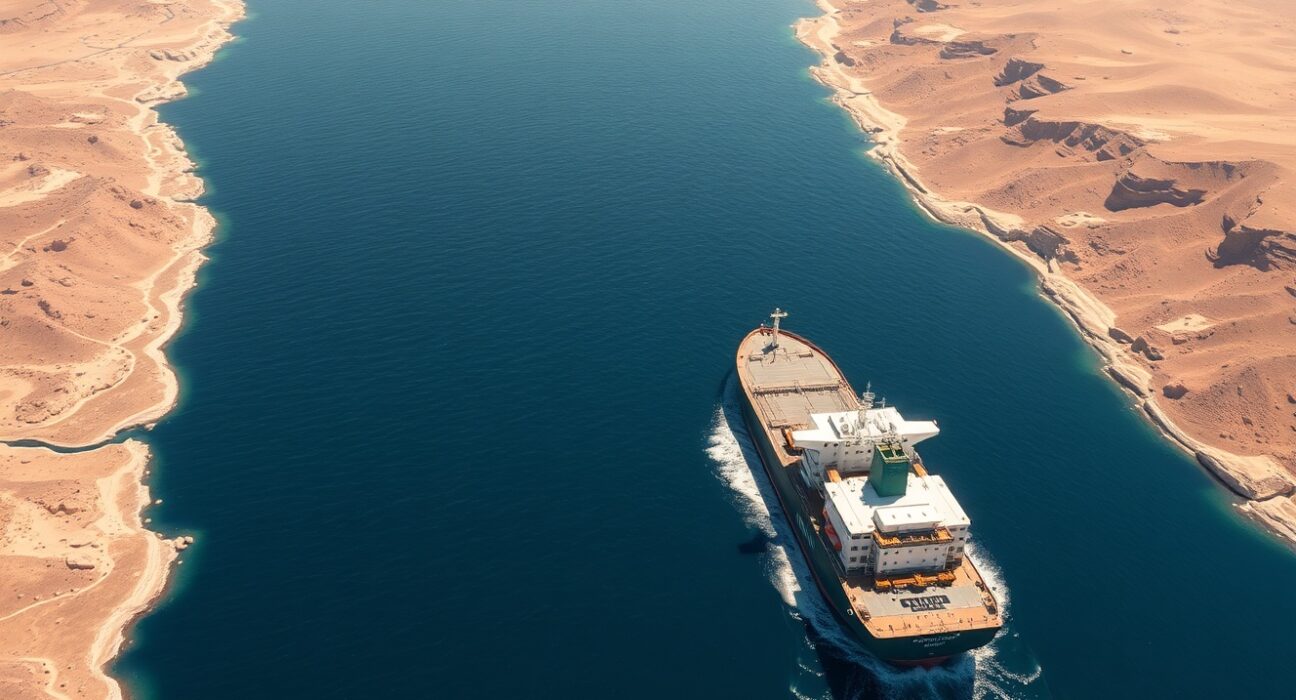
TEHRAN, Iran – March 2025: Iran’s First Vice President Mohammad Mokhber has issued a stark geopolitical ultimatum that could reshape global energy security. According to Iranian state media reports, Mokhber asserted Iran’s authority over the Strait of Hormuz while presenting the United States with a binary choice: recognize Iranian rights through diplomacy or face military confrontation. This declaration emerges amid escalating regional tensions and carries profound implications for international oil markets.
Strait of Hormuz: The World’s Most Critical Oil Chokepoint
The Strait of Hormuz represents arguably the most strategically significant maritime passage globally. This narrow waterway connects the Persian Gulf with the Gulf of Oman and ultimately the Arabian Sea. Approximately 21 million barrels of oil transit through this passage daily, representing about 21% of global petroleum consumption. Furthermore, the Strait handles one-third of the world’s liquefied natural gas trade. Consequently, any disruption would trigger immediate global economic consequences.
Iran controls the northern side of the Strait, while Oman occupies the southern coastline. The passage narrows to just 21 nautical miles at its smallest point, with shipping lanes reduced to only 2 miles in each direction separated by a 2-mile buffer zone. This geography gives Iran considerable natural leverage over maritime traffic. Historically, Iran has periodically threatened to close the Strait during periods of heightened tension with Western powers, particularly following sanctions or diplomatic confrontations.
Iran’s Legal and Historical Claims to Maritime Authority
Iranian officials consistently reference specific legal frameworks when asserting control over the Strait of Hormuz. The United Nations Convention on the Law of the Sea (UNCLOS) establishes that straits used for international navigation remain subject to specific transit passage regimes. However, Iran has not ratified UNCLOS, instead relying on customary international law and bilateral agreements with Oman.
Key historical incidents inform current tensions:
- 1980-1988: During the Iran-Iraq War, both nations attacked oil tankers in what became known as the “Tanker War”
- 2011-2012: Iran threatened Strait closure in response to U.S. and EU oil sanctions
- 2019: Multiple tanker attacks and seizures heightened regional tensions
- 2023: Increased Iranian naval exercises and drone deployments near the Strait
Iran maintains that its coastal state rights include authority over security, environmental protection, and navigation safety within its territorial waters. The country’s Revolutionary Guard Corps Navy possesses significant asymmetric warfare capabilities specifically designed for the Strait’s confined waters, including:
| Asset Type | Quantity | Primary Capability |
|---|---|---|
| Fast Attack Craft | 100+ | Swarm tactics, anti-ship missiles |
| Coastal Defense Batteries | Multiple sites | Anti-ship cruise missiles |
| Naval Mines | Extensive stockpiles | Sea denial capability |
| Submarines (midget class) | 20+ | Coastal operations, stealth |
Expert Analysis: The Geopolitical Calculus
Regional security analysts note that Vice President Mokhber’s statement follows established Iranian diplomatic patterns. “Iran typically escalates rhetoric regarding the Strait of Hormuz during periods of negotiation pressure or sanctions enforcement,” explains Dr. Leila Rahman, Middle East security specialist at the Gulf Studies Institute. “The ultimatum format—negotiating table versus battlefield—serves multiple purposes: demonstrating resolve to domestic audiences, signaling capability to international observers, and creating leverage for broader diplomatic discussions.”
Energy market experts simultaneously monitor these developments closely. “Approximately 20% of global oil supply passes within visual range of Iranian coastal defenses,” notes petroleum analyst Michael Chen. “Even temporary disruption would spike oil prices by 30-50% within days, potentially triggering global recessionary pressures. Market participants have developed contingency plans since previous crises, but physical supply chains remain vulnerable.”
U.S. Strategic Posture and Response Options
The United States maintains significant naval assets in the region through the Fifth Fleet, headquartered in Bahrain. Standard U.S. policy asserts that the Strait of Hormuz constitutes an international waterway where freedom of navigation must be preserved. The U.S. Navy regularly conducts freedom of navigation operations and partners with regional allies on maritime security initiatives.
Potential U.S. responses to Iranian threats include:
- Enhanced Naval Presence: Additional carrier strike groups or amphibious ready groups
- Alliance Coordination: Working with Gulf Cooperation Council partners on integrated defense
- Economic Measures: Additional sanctions targeting Iranian energy exports
- Diplomatic Channels: Multilateral discussions through the UN Security Council
However, military analysts caution that any conflict in the confined waters of the Strait would prove exceptionally complex. The shallow depths, heavy commercial traffic, and proximity to civilian infrastructure create significant challenges for conventional naval operations. Additionally, Iran’s extensive missile inventories could target U.S. bases throughout the region, potentially escalating conflicts beyond maritime boundaries.
Regional Perspectives and Alternative Viewpoints
Gulf Arab states maintain nuanced positions regarding the Strait of Hormuz. While sharing concerns about Iranian influence, countries like Saudi Arabia and the United Arab Emirates have simultaneously pursued diplomatic engagement with Tehran. Oman, which shares control of the Strait’s southern approaches, has historically served as a mediator between Iran and Western powers.
International shipping organizations emphasize the global economic stakes. “The Strait represents an irreplaceable artery for global energy supplies,” states the International Association of Independent Tanker Owners. “All parties must recognize their responsibility to maintain unimpeded passage. Political disputes should be resolved through established international legal mechanisms, not threats to commercial shipping.”
Legal scholars debate whether Iran’s claims find support in international law. Professor Elena Martinez, maritime law expert at the Hague Institute, explains: “Coastal states possess legitimate security interests in adjacent straits, but these must be balanced against the rights of transit passage. The International Court of Justice has previously ruled that security concerns cannot justify complete closure of international waterways. However, specific regulatory measures may be permissible under certain circumstances.”
Economic Implications and Global Energy Security
The global energy system has developed certain redundancies since previous Strait of Hormuz crises. Saudi Arabia and the UAE have constructed pipeline networks bypassing the Strait, though capacity remains limited relative to total Gulf exports. Strategic petroleum reserves in consuming countries provide temporary buffers, while alternative shipping routes around Africa add time and cost rather than replacing capacity.
Key vulnerabilities persist:
- Asian economies (China, India, Japan, South Korea) remain disproportionately dependent on Hormuz transit
- Global LNG markets face particular sensitivity due to limited alternative suppliers
- Insurance premiums for tankers transiting the Strait already reflect elevated risk assessments
- Energy-intensive industries would face immediate production disruptions
Conclusion
Vice President Mokhber’s statement regarding the Strait of Hormuz reflects longstanding Iranian strategic positioning rather than entirely new policy. However, the explicit framing as an ultimatum—diplomatic recognition versus military confrontation—signals potentially reduced flexibility in current negotiations. The international community faces complex balancing between respecting legitimate coastal state interests and preserving global commons access. As global energy demand continues evolving and regional power dynamics shift, the strategic significance of this narrow waterway only intensifies. Ultimately, sustainable solutions will require multilateral frameworks that address security concerns while guaranteeing the free flow of commerce essential to the global economy.
FAQs
Q1: Why is the Strait of Hormuz so strategically important?
The Strait handles approximately 21 million barrels of oil daily (21% of global consumption) and one-third of liquefied natural gas trade, making it the world’s most critical energy chokepoint. Its narrow geography gives coastal states natural leverage over shipping.
Q2: What legal basis does Iran cite for its claims?
Iran references customary international law and its status as a coastal state, though it hasn’t ratified the UN Convention on the Law of the Sea. The country asserts rights over security, environmental protection, and navigation safety within its territorial waters adjacent to the Strait.
Q3: How has the United States historically responded to Iranian threats?
The U.S. maintains that the Strait constitutes an international waterway, conducts freedom of navigation operations, stations naval assets in the region through the Fifth Fleet, and coordinates with regional allies on maritime security initiatives.
Q4: What would happen to global oil prices if the Strait closed?
Analysts estimate immediate price spikes of 30-50% with potential doubling if closure persisted. Such disruption could trigger global recession given the concentration of supply transiting this single chokepoint.
Q5: Are there alternative routes for Gulf oil exports?
Saudi Arabia and the UAE have built pipelines bypassing the Strait, but capacity remains limited. Shipping around Africa’s Cape of Good Hope adds 15 days transit time and significant cost, providing marginal relief rather than replacement capacity.
Q6: How do other regional states view Iranian claims?
Gulf Arab states balance concerns about Iranian influence with their own diplomatic engagements. Oman, which shares control of the southern approaches, often mediates. All regional economies depend on Strait stability for their own exports and imports.
Disclaimer: The information provided is not trading advice, Bitcoinworld.co.in holds no liability for any investments made based on the information provided on this page. We strongly recommend independent research and/or consultation with a qualified professional before making any investment decisions.
