

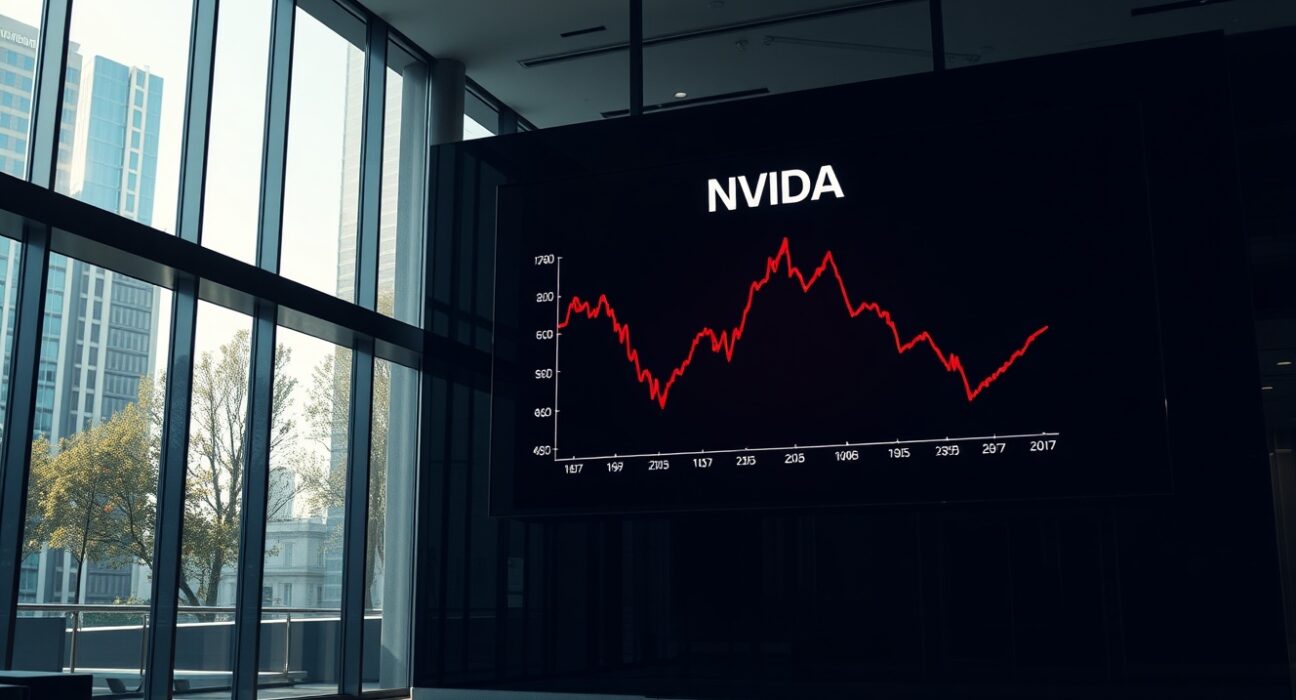
Nvidia’s meteoric rise has been one of the defining stories of the AI era, but recent chart patterns are prompting a critical question among analysts and investors: is the semiconductor giant finally topping out? After a rally that has seen its market capitalization surge past $3 trillion, technical indicators and valuation metrics are flashing warning signs that warrant close attention.
Chart Patterns Signal Potential Reversal
Technical analysts point to several bearish formations on Nvidia’s weekly and monthly charts. The stock has formed a potential double top pattern near its all-time highs, a classic reversal signal. Additionally, the Relative Strength Index (RSI) has been showing bearish divergence — meaning price made higher highs while momentum made lower highs — often a precursor to a downturn. Volume analysis also shows declining buying pressure on recent upswings, suggesting the rally is losing steam.
Valuation Concerns Mount
Beyond the charts, fundamental valuation metrics are stretched. Nvidia trades at over 30 times forward earnings, a premium that historically has been difficult to sustain even for high-growth companies. While the company’s dominance in AI chips is undeniable, competition from AMD, Intel, and custom chip designs from cloud giants like Amazon and Google is intensifying. Any slowdown in AI spending or a shift in market share could trigger a significant re-rating.
What This Means for Investors
For long-term investors, a topping pattern does not necessarily mean a crash, but it does suggest that the easy gains may be behind us. Pullbacks of 20% to 30% from peak levels are common even in strong bull markets. Investors should assess their risk tolerance and consider whether their portfolio is overexposed to a single stock, regardless of its past performance. The broader semiconductor sector is cyclical, and Nvidia is not immune to industry downturns.
Conclusion
The evidence from both technical charts and fundamental analysis suggests that Nvidia’s stock is at a critical juncture. While the company’s long-term prospects remain strong due to its leadership in AI and accelerated computing, the risk of a near-term correction has increased. Investors should monitor key support levels and earnings reports closely, and avoid chasing momentum at these elevated prices.
FAQs
Q1: What does it mean for a stock to ‘top out’?
A: Topping out refers to a stock reaching a peak price after a prolonged rally, after which it may enter a downtrend or sideways consolidation. It is identified through chart patterns like double tops, bearish divergence, and declining volume.
Q2: Is Nvidia still a good long-term investment?
A: Nvidia’s core business in AI chips remains highly competitive, and the company is well-positioned for future growth. However, valuation is elevated, and short-term volatility is likely. Long-term investors should focus on the company’s fundamentals rather than short-term price movements.
Q3: What should I do if I own Nvidia stock?
A: Consider reviewing your portfolio allocation and risk tolerance. Some investors may choose to take partial profits, set stop-loss orders, or hold through volatility. It is advisable to consult with a financial advisor for personalized advice.
Disclaimer: The information provided is not trading advice, Bitcoinworld.co.in holds no liability for any investments made based on the information provided on this page. We strongly recommend independent research and/or consultation with a qualified professional before making any investment decisions.
