

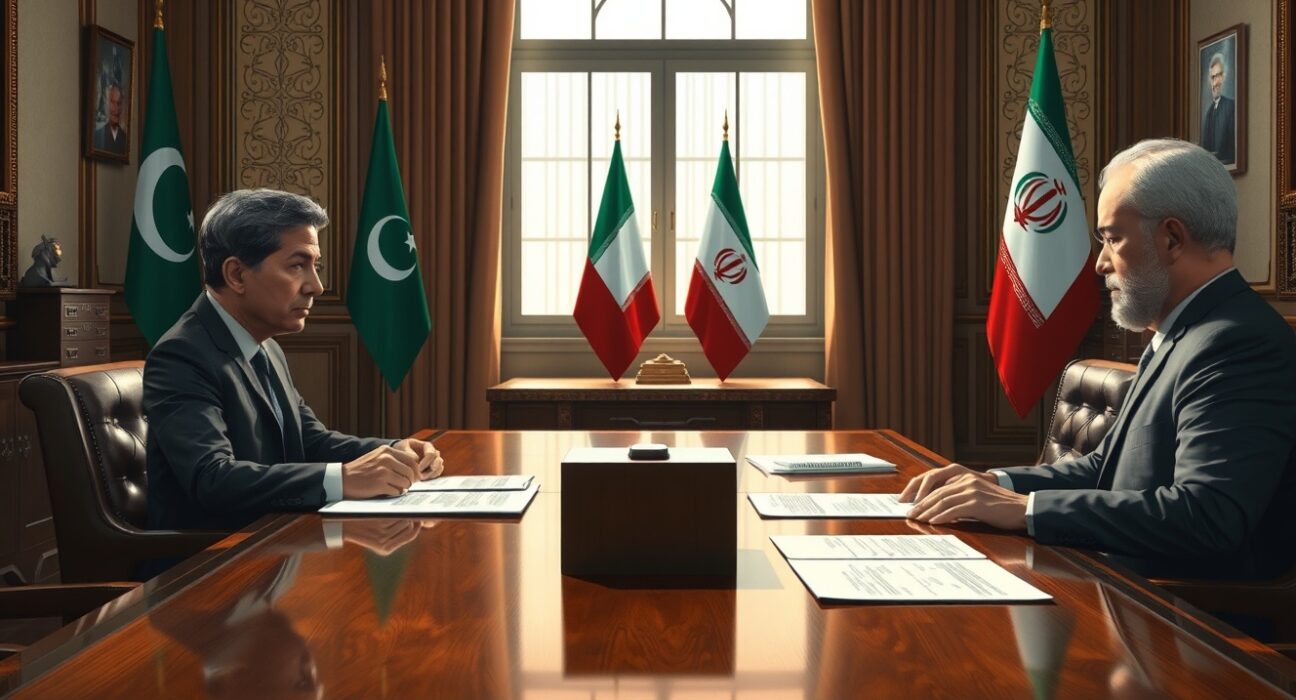
In a significant development for regional diplomacy, a Pakistani delegation has visited Iran to deliver a message from the United States, with plans for a second round of negotiations already underway according to Iranian state media reports from Tehran. This diplomatic maneuver represents a potentially pivotal moment in the complex geopolitical landscape of the Middle East and South Asia, highlighting Pakistan’s unique role as an intermediary between longstanding adversaries.
Pakistani Delegation Delivers Crucial US Message in Iran
A high-level Pakistani delegation arrived in Tehran this week with a specific diplomatic mandate. Their primary objective involved conveying a formal communication from the United States government to Iranian authorities. This development follows months of heightened tensions and indirect communications between Washington and Tehran. The Pakistani team, comprising senior foreign ministry officials, engaged in what sources describe as “substantive and lengthy” discussions with their Iranian counterparts. Consequently, both parties agreed to schedule a follow-up meeting, signaling that initial talks established a foundation for further dialogue. The choice of Pakistan as the messenger is particularly noteworthy given its historical relationships with both nations.
Historical Context of Pakistan-Iran-US Relations
Understanding this diplomatic event requires examining the triangular relationship between these three nations. Pakistan shares a 909-kilometer border with Iran, creating significant economic and security interdependencies. Meanwhile, Pakistan maintains a longstanding, though sometimes complicated, alliance with the United States. Iran and the United States, however, have had no formal diplomatic relations since 1980. This communication channel through Islamabad is not entirely unprecedented. For instance, Pakistan has occasionally facilitated messages during previous administrations. The current geopolitical climate, marked by stalled nuclear negotiations and regional proxy conflicts, makes this overture especially significant. Regional analysts suggest several potential topics for the US message, including security concerns, nuclear program limitations, or regional de-escalation proposals.
Expert Analysis on Diplomatic Significance
Dr. Anisa Rahman, a senior fellow at the Institute for Strategic Studies Islamabad, provides critical context. “Pakistan occupies a delicate position,” she explains. “It must balance its strategic partnership with Washington against its geographical and cultural ties with Tehran. Acting as an intermediary allows Islamabad to demonstrate its diplomatic value to both sides.” Furthermore, this move occurs against a backdrop of shifting regional alliances. Saudi Arabia and Iran recently restored diplomatic ties through Chinese mediation, altering the Middle Eastern power dynamic. The United States may now seek more direct, though still indirect, channels to engage Iran. The planned second round of talks indicates the message was received seriously enough to warrant continued discussion, rather than being dismissed outright.
Potential Content and Implications of the US Message
While the exact contents of the US communication remain confidential, several informed speculations exist based on recent events. The primary areas of likely discussion include:
- Nuclear Program (JCPOA): Efforts to revive the 2015 nuclear deal have stalled. The US may be exploring alternative pathways for dialogue.
- Regional Security: Addressing tensions involving proxy groups in Yemen, Syria, and Iraq, and ensuring freedom of navigation in the Strait of Hormuz.
- Bilateral Detainees: Potential discussions regarding American citizens detained in Iran.
- Ukraine Conflict: Concerns over Iranian drone transfers to Russia and their impact on the war.
The decision to use Pakistan suggests a preference for discreet, state-to-state communication over public statements. This method reduces the risk of immediate political backlash domestically in both the US and Iran. If the second round of negotiations proceeds, it could establish a new, albeit fragile, backchannel for managing one of the world’s most volatile relationships.
The Role of Iranian State Media in Reporting
The fact that Iranian state media broke this news is itself analytically important. State-controlled outlets like IRNA and Press TV serve as mouthpieces for the government’s preferred narrative. By announcing the Pakistani delegation’s visit and the planned follow-up, Iranian authorities accomplish several goals. First, they publicly acknowledge the diplomatic engagement without appearing to initiate it directly. Second, they can frame the talks as Iran responsibly listening to international messages. Third, it signals to domestic hardliners that the government is exploring all diplomatic avenues. The reporting was factual and brief, lacking the inflammatory rhetoric often directed at the US, which some analysts interpret as a cautiously positive signal.
Timeline of Recent Diplomatic Events
To contextualize this development, consider these key events from the past eighteen months:
| Date | Event | Significance |
|---|---|---|
| March 2023 | Saudi-Iran reconciliation brokered by China | Shifted regional diplomacy, reducing US influence |
| August 2023 | Informal US-Iran understandings on prisoner swaps & frozen assets | Showed potential for limited, transactional agreements |
| November 2023 | Houthi attacks in Red Sea escalate using Iranian-supplied weapons | Increased US-Iran tensions over regional security |
| January 2024 | Iran accelerates uranium enrichment to 60% purity | Nuclear program advances, increasing Western concern |
| Present | Pakistani delegation delivers US message in Tehran | New indirect channel opens amid ongoing crises |
This timeline illustrates the constant fluctuation between escalation and diplomacy that defines US-Iran relations. The Pakistani-mediated talks represent the latest attempt to find equilibrium.
Conclusion
The visit by a Pakistani delegation to Iran to deliver a US message, followed by planned second negotiations, marks a notable diplomatic development. It underscores Pakistan’s ongoing role as a potential bridge in a fractured geopolitical landscape. While substantial obstacles remain between Washington and Tehran, the establishment of any communication channel represents a preferable alternative to complete silence or escalation. The world will watch closely to see if this Pakistani-mediated dialogue yields tangible results or merely becomes another footnote in the long history of US-Iran estrangement. The success of the second round of talks may determine whether this becomes a sustained backchannel or a fleeting diplomatic gesture.
FAQs
Q1: What is the main purpose of the Pakistani delegation’s visit to Iran?
The primary purpose was to deliver a formal diplomatic message from the United States government to Iranian authorities, acting as an intermediary to facilitate communication between the two nations which lack direct diplomatic relations.
Q2: Why did the United States choose Pakistan to deliver this message?
Pakistan maintains diplomatic relations with both countries and has historically played an intermediary role at times. Its geographic position, shared border with Iran, and longstanding security partnership with the US make it a logical, discreet channel for communication.
Q3: What might the US message to Iran contain?
While unconfirmed, experts suggest likely topics include the Iranian nuclear program (JCPOA), regional security concerns in the Middle East, the status of detained US citizens, and Iran’s military support for Russia in the Ukraine conflict.
Q4: What does the planned second round of negotiations indicate?
The scheduling of follow-up talks suggests the initial message was received seriously and that both sides see value in continuing the dialogue. It indicates the discussions were substantive enough to warrant further engagement rather than a simple, one-time delivery.
Q5: How significant is this diplomatic development?
It is a significant development as it opens a new, state-mediated channel of communication at a time of high regional tension. However, its ultimate significance depends on whether it leads to concrete diplomatic outcomes or merely serves as a temporary talking point.
Disclaimer: The information provided is not trading advice, Bitcoinworld.co.in holds no liability for any investments made based on the information provided on this page. We strongly recommend independent research and/or consultation with a qualified professional before making any investment decisions.
