SEC panel to weigh tokenized US stocks on December 3
In this article
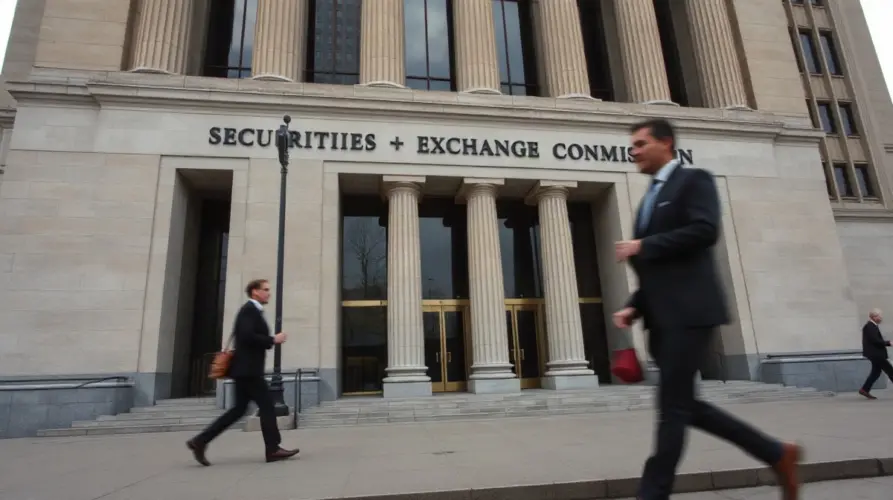
The US Securities and Exchange Commission’s Investor Advisory Committee has set a virtual public meeting for December 3 to examine how tokenized US stock trading is working under the regulator’s Innovation Exemption, a framework the SEC introduced on September 17, 2026. The agenda, published November 20, allocates 90 minutes to the topic beginning at 10 a.m. ET, according to Crypto.news.
What the December 3 session will cover
The committee has three panels on its agenda: securities tokenization, bankruptcy proceedings and accounting oversight. Only the first bears directly on the exemption. Members will consider what in the existing rulebook helps or hinders investors and listed companies, and how conventional equities might be moved onto blockchain networks by different routes.
The exemption places retail investors closer to trading than the current market structure allows, letting them transact through eligible venues without a broker-dealer. Volume caps tie each platform’s activity back to the conventional market, so a venue’s tokenized book cannot outgrow a fraction of the underlying stock’s real-world turnover.
Later in the day, members vote on recommendations concerning the proposed rescission of Rule 611 of Regulation NMS, the trade-through rule, which bars execution at prices worse than protected quotations available elsewhere. An afternoon session looks at the SEC’s role in Chapter 11 bankruptcies and at protecting investors holding securities from distressed issuers, the committee’s first panel devoted to bankruptcy casework. A separate discussion covers unrealized investment gains in corporate earnings and private-market valuation.
Issuer objections and rival tokenization models
Platforms listing shares tokenized by unaffiliated third parties must notify the underlying companies and allow 30 calendar days to object. Microsoft, Alphabet, JPMorgan Chase and Goldman Sachs objected to tokenization through OKXICE by late October. Nasdaq declined to run a venue under the exemption and is instead working with Kraken on a separate model aimed at the second quarter of 2027.
Other issuers have opted to sponsor tokenization of their own shares, which sidesteps the objection process. Canton Strategic Holdings, listed on Nasdaq, completed its first tokenized stock trades on the Canton Network on November 4, with Five North selling shares to DRW Cumberland and Flowdesk supplying liquidity through a permissioned pool run on the Tradecraft protocol, while SEC-registered transfer agent Fairmint kept the shareholder records.

Market snapshot
Canton Network’s CC, the token tied to the network used for the first issuer-sponsored tokenized stock trades, traded at $0.0784 (₹7.25) on November 26, 2026, up 6.2% over 24 hours and down 5.5% over seven days, per CoinPaprika data timestamped 05:20 UTC, with a market cap of $3.09 billion on $5.9 million in daily volume.
Why it matters
The committee’s advice does not bind the SEC, but its scrutiny lands while the exemption is still young and its terms can still be tightened. For issuers, the question is whether third parties can place their shares onchain over their objections; for brokers and venues, it is whether the caps and the broker-dealer workaround survive review. The exemption’s five-year clock has barely started, and the volume limits already tie tokenized trading to the conventional market’s depth.
What to watch
The December 3 votes on trade-through-rule recommendations and on a proposed SEC study of retail understanding of private-market assets will indicate where the committee thinks disclosure and market-structure rules are falling short. How the SEC responds to those recommendations, and whether it amends the Innovation Exemption before its five-year expiry, is the next step to track.
Frequently Asked Questions
What is the SEC’s Innovation Exemption for tokenized stocks?
It is a set of temporary exemptions introduced on September 17, 2026, allowing qualifying tokenized securities venues and certain liquidity providers to operate without registering as exchanges or dealers under the Securities Exchange Act of 1934. The relief expires five years after publication.
Who is speaking on the December 3 tokenization panel?
Scheduled participants include OKX deputy general counsel Andree Goldsmith, Securitize president and former SEC Trading and Markets director Brett Redfearn, former CFTC chairman Timothy Massad, and Better Markets policy director and COO Amanda Fischer.
How much tokenized stock trading does the exemption allow per venue?
For S&P 500 and Russell 1000 companies, trading on a single venue is capped at 0.25% of the underlying stock’s average daily trading volume. Other companies have a 2.5% threshold.
Did any companies object to third-party tokenization of their shares?
Yes. Companies including Microsoft, Alphabet, JPMorgan Chase and Goldman Sachs objected by late October, and roughly 90% of the firms originally targeted for OKXICE did so before the venue launched on November 23.
What does the committee vote on besides tokenization?
Members will vote on recommendations concerning the proposed rescission of Rule 611 of Regulation NMS, the trade-through rule, and on recommendations for an SEC study of retail investors’ understanding of private market assets.
Source: crypto.news