

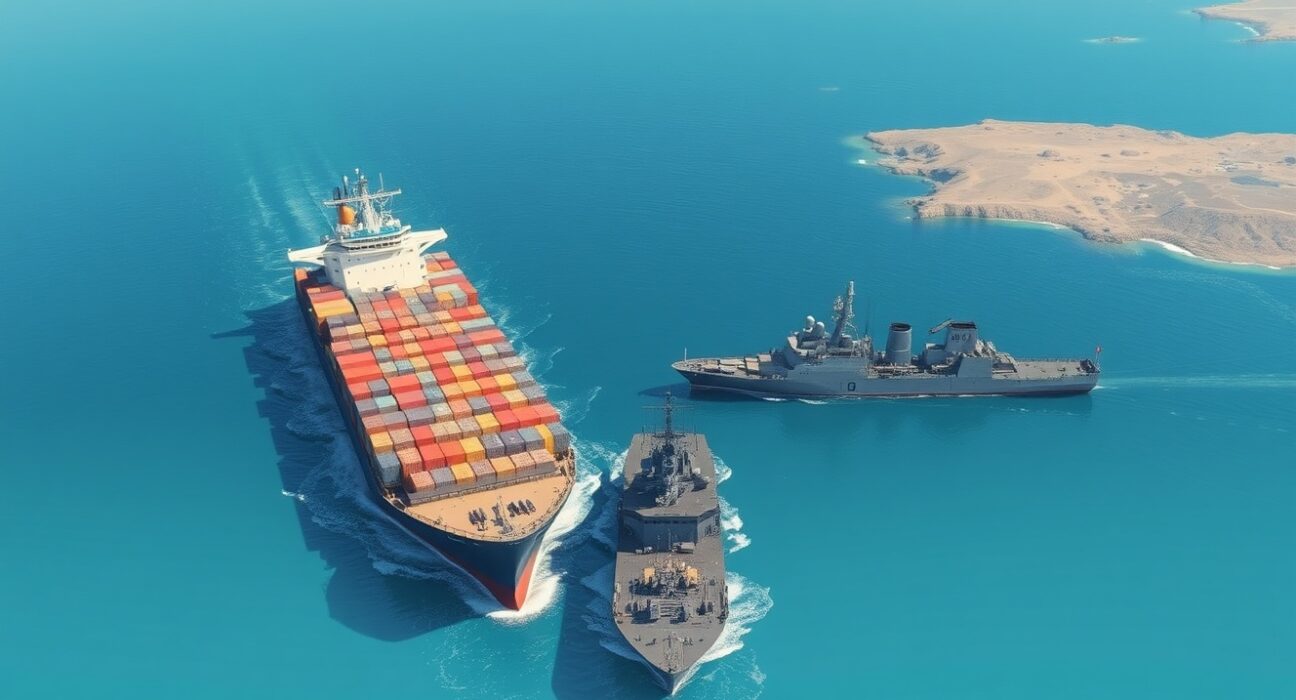
WASHINGTON, D.C. — In a decisive move with profound implications for global energy markets, former U.S. President Donald Trump has declared that the strategic blockade of the Strait of Hormuz will persist indefinitely. This critical maritime closure aims to pressure Iran into accepting a new comprehensive nuclear agreement. The announcement, reported by Reuters, immediately triggered volatility in international oil prices and heightened diplomatic tensions across the Middle East.
Understanding the Strait of Hormuz Blockade
The Strait of Hormuz represents the world’s most important oil transit chokepoint. Consequently, its closure disrupts a fundamental artery of global commerce. Approximately 21 million barrels of oil pass through this narrow seaway daily. This volume constitutes nearly one-third of all seaborne traded oil. Furthermore, it represents about 20% of total global petroleum consumption. The blockade, therefore, directly threatens energy security for dozens of nations.
President Trump’s statement links the blockade’s duration directly to diplomatic progress. “The blockade will continue until an agreement is reached with Iran,” he affirmed. This policy creates a clear cause-and-effect dynamic for international observers. The United States has mobilized a significant naval task force to enforce the maritime restriction. This task force includes assets from the U.S. Navy’s Fifth Fleet, based in Bahrain.
Historical Context and the Iran Deal
The current crisis stems from the collapse of the Joint Comprehensive Plan of Action (JCPOA). Negotiators originally finalized this multinational accord in 2015. The Trump administration unilaterally withdrew the United States from the deal in May 2018. Subsequently, it reinstated a stringent regime of economic sanctions against Tehran. Iran responded by gradually exceeding the JCPOA’s limits on its nuclear program.
Renewed negotiations have faced repeated stalemates over several key issues:
- Sanctions Relief: Iran demands the complete lifting of all U.S. sanctions as a precondition.
- Nuclear Caps: The U.S. seeks longer duration and stricter limits on uranium enrichment levels.
- Regional Activities: Washington insists the deal must address Iran’s ballistic missile program and support for proxy groups.
The blockade now serves as an unprecedented economic lever in these talks.
Expert Analysis on Maritime Strategy
Naval strategists and energy analysts view the blockade as a high-risk gambit. “Militarily, controlling the Strait is feasible for a limited time,” explains Dr. Anya Petrova, a senior fellow at the Center for Maritime Security. “However, the long-term sustainability is questionable. It requires constant naval patrols and invites potential asymmetric responses from Iran, such as mining or swarm attacks by fast boats.”
Historically, Iran has threatened to close the Strait in response to severe pressure. Now, the U.S. is executing that closure preemptively. This reversal of roles creates a novel and dangerous geopolitical scenario. The international legal justification for the blockade likely rests on United Nations Security Council resolutions concerning non-proliferation. Nevertheless, many U.S. allies have expressed deep concern over the escalation.
Immediate Global Economic Impact
The global oil market reacted with sharp instability following the announcement. Brent crude futures surged by over 8% in early trading. Energy analysts predict sustained high prices if the blockade continues for more than a week. The impact varies significantly by region:
| Region | Primary Impact | Alternative Routes |
|---|---|---|
| East Asia (China, Japan, S. Korea) | Severe oil import disruption | Limited; increased costs via longer voyages |
| European Union | Major price spike and supply anxiety | Increased reliance on Russian, U.S., and African crude |
| United States | Higher gasoline prices domestically | Minimal direct supply impact due to shale production |
Major oil companies have already begun rerouting tankers around the Cape of Good Hope. This alternative adds roughly 15 days to transit time and significantly increases shipping costs. These costs will inevitably pass on to consumers worldwide. The disruption also affects liquefied natural gas (LNG) shipments from Qatar, further straining global energy supplies.
Regional Security and Diplomatic Fallout
Within the Middle East, reactions to the Strait of Hormuz blockade are deeply divided. Gulf Cooperation Council (GCC) states like Saudi Arabia and the United Arab Emirates have quietly supported the pressure on Iran. Conversely, they also fear regional conflict and disruption to their own export economies. Oman, which shares governance of the Strait, has called for immediate de-escalation and dialogue.
Iran’s response has been characteristically defiant. Military commanders of the Islamic Revolutionary Guard Corps (IRGC) have vowed to “break any blockade.” They conducted naval exercises near the Strait within hours of Trump’s announcement. The situation creates a tinderbox environment where a minor incident could spark a major military confrontation. U.S. Central Command has elevated its force protection condition (FPCON) level for all personnel in the region.
Diplomatically, European signatories to the JCPOA—France, Germany, and the United Kingdom (the E3)—have urgently called for a pause. They argue that the blockade undermines the very diplomatic process it seeks to enable. Meanwhile, Russia and China have condemned the action as “illegal coercion” and a threat to international peace. The UN Security Council is scheduled to hold an emergency session.
The Human and Environmental Dimension
Beyond geopolitics, the blockade severely impacts local communities. Fishing and trade for coastal towns in Iran and Oman have halted entirely. Environmental risks are also elevated. The congested waters around the blockade increase the chance of a maritime accident. A spill in the confined, ecologically sensitive Strait would be catastrophic. Insurance premiums for vessels in the region have skyrocketed, making commerce prohibitively expensive for non-oil goods.
Pathways to Resolution and Future Scenarios
The immediate future hinges on negotiations currently stalled in Vienna. U.S. envoys have presented the blockade as a temporary measure to incentivize a deal. Several potential outcomes are now on the table. A swift diplomatic breakthrough could see the Strait reopened within days. A prolonged stalemate, however, risks normalizing the blockade and reshaping global energy logistics permanently.
Energy experts are accelerating plans for redundancy. These plans include expanding pipeline capacity from the Gulf to bypass the Strait. For example, the UAE has operational pipelines from Habshan to Fujairah. Saudi Arabia could expand its East-West Petroline. These projects take years and billions of dollars, highlighting the world’s acute vulnerability to this single chokepoint.
Conclusion
The Strait of Hormuz blockade represents a pivotal moment in geopolitics and energy security. President Trump’s ultimatum ties the world’s most critical oil passage directly to the fate of the Iran nuclear deal. This strategy carries enormous economic and military risks. The global community now watches closely. The resolution of this crisis will either reinforce the efficacy of hardline pressure tactics or demonstrate its severe limitations and perils. The flow of oil—and the shadow of conflict—waits on the outcome of diplomacy.
FAQs
Q1: What is the Strait of Hormuz and why is it so important?
The Strait of Hormuz is a narrow channel between Oman and Iran. It connects the Persian Gulf with the Gulf of Oman and the Arabian Sea. It is the world’s most important oil transit chokepoint, with about 21 million barrels of oil passing through daily, supplying markets globally.
Q2: What legal authority does the U.S. have to blockade the Strait?
The U.S. justification likely cites UN Security Council resolutions on preventing nuclear proliferation. However, the legality is contested. Many nations and international law experts argue a blockade is an act of war or illegal coercion unless authorized by the UN Security Council itself, which has not occurred.
Q3: How long can the global economy withstand a Hormuz blockade?
Analysts suggest the global system has strategic petroleum reserves to cushion short-term disruptions (30-90 days for most OECD nations). However, sustained blockade beyond a few weeks would cause severe price spikes, recessionary pressures, and force a painful and costly restructuring of global energy supply chains.
Q4: How is Iran likely to respond militarily?
Iran’s likely asymmetric responses include harassing naval maneuvers, deploying sea mines, or using swarms of fast-attack craft. A direct naval confrontation with U.S. forces is less likely due to the mismatch in conventional power. Iran may also accelerate its nuclear program or attack U.S. interests via proxies in Iraq or Syria.
Q5: Are there any viable alternative routes for Gulf oil?
Yes, but they are limited and more expensive. The UAE operates the Habshan-Fujairah pipeline, bypassing the Strait. Saudi Arabia has the East-West Petroline to the Red Sea. Both have limited capacity. The only other option is rerouting tankers around the southern tip of Africa, adding thousands of miles and weeks to journeys.
Disclaimer: The information provided is not trading advice, Bitcoinworld.co.in holds no liability for any investments made based on the information provided on this page. We strongly recommend independent research and/or consultation with a qualified professional before making any investment decisions.
