

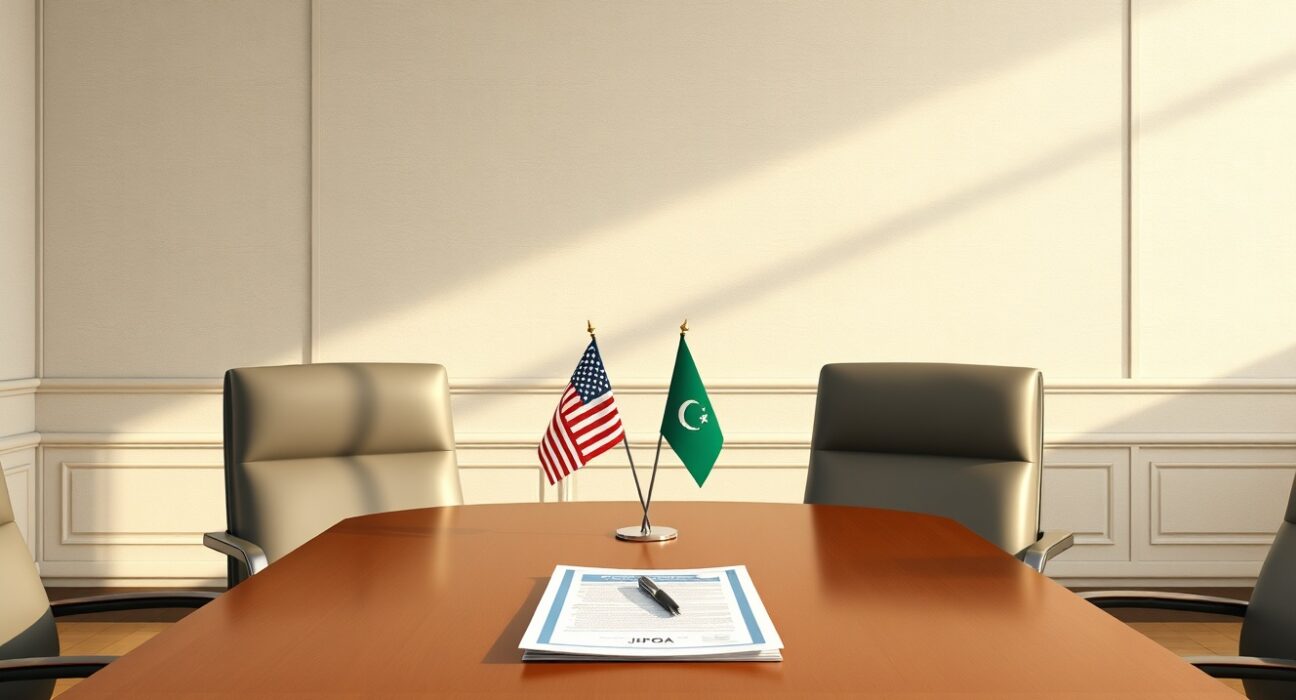
WASHINGTON, D.C. — In a significant development for international diplomacy, President Donald Trump has indicated a potential visit to Islamabad could materialize if progress occurs on the Iran nuclear agreement, though he emphasized no final decision has been reached. According to Reuters reports, the President suggested further negotiations on the Joint Comprehensive Plan of Action (JCPOA) might resume this weekend, potentially creating conditions for enhanced U.S.-Pakistan engagement. This statement arrives during a particularly delicate phase in Middle Eastern geopolitics and represents a notable shift in diplomatic signaling toward South Asia.
Trump’s Islamabad Visit Contingent on Nuclear Deal Progress
President Trump’s conditional openness to visiting Pakistan marks a potentially strategic recalibration of American foreign policy in the region. Historically, U.S. presidential visits to Islamabad have served as important barometers for bilateral relations, often coinciding with major security or diplomatic initiatives. The explicit linkage to Iran deal negotiations introduces a complex multilateral dimension to what would typically be a bilateral engagement. Consequently, analysts are examining this statement through multiple lenses: as genuine diplomatic signaling, as leverage in nuclear negotiations, and as part of broader regional strategy.
Furthermore, the timing of this announcement carries substantial weight. The United States and Pakistan have navigated a relationship characterized by both cooperation and tension, particularly regarding counterterrorism efforts and regional stability. A presidential visit, therefore, would represent more than ceremonial diplomacy; it would signal a deliberate investment in the partnership. However, by making the visit contingent upon another diplomatic process—the Iran nuclear talks—the administration creates interconnected diplomatic tracks that could either reinforce or complicate both initiatives.
Iran Nuclear Deal Negotiations Enter Critical Phase
The Joint Comprehensive Plan of Action, commonly called the Iran nuclear deal, has remained a central and contentious element of U.S. foreign policy since its inception in 2015. President Trump withdrew the United States from the agreement in 2018, reinstating stringent sanctions against Iran. However, subsequent administrations have engaged in sporadic efforts to revive or renegotiate aspects of the pact. The President’s mention of potential weekend negotiations suggests diplomatic channels remain active, even if publicly visible progress appears limited.
Several key issues typically dominate these discussions:
- Nuclear Enrichment Limits: Restrictions on Iran’s uranium enrichment levels and stockpiles
- Sanctions Relief: The scope and sequencing of economic sanctions removal
- Verification Mechanisms: International Atomic Energy Agency (IAEA) access and monitoring protocols
- Regional Security Concerns: Addressing activities by Iranian proxy groups
Progress on any of these fronts could create the diplomatic momentum the President referenced. Importantly, Pakistan maintains its own complex relationship with Iran, sharing a border and significant economic ties, while also balancing its strategic partnership with Saudi Arabia and other Gulf states. Therefore, movement on the Iran deal inevitably affects regional dynamics in ways that directly impact Pakistani foreign policy calculations.
Expert Analysis of Diplomatic Linkage Strategy
Foreign policy specialists note that linking a Pakistan visit to Iran deal progress represents a classic diplomatic strategy of creating interconnected incentives. “By publicly connecting these two diplomatic tracks, the administration creates a scenario where progress in one area can facilitate movement in another,” explains Dr. Anya Sharma, Senior Fellow at the Center for Strategic and International Studies. “This approach can build momentum but also introduces risk—if one track stalls, it can hamper the other.”
Historical precedent shows that major power diplomacy often employs such linkages. For instance, during the Cold War, U.S.-Soviet summits frequently addressed multiple, seemingly separate issues simultaneously. The current situation differs in context but follows similar strategic logic. For Pakistan, the potential visit carries significant symbolic and practical importance, possibly enhancing its diplomatic standing and providing opportunities to discuss bilateral issues like trade, security cooperation, and Afghanistan.
Regional Implications for South Asia and the Middle East
The intersection of U.S.-Pakistan relations and Iran nuclear diplomacy occurs within a volatile regional landscape. South Asia continues to experience geopolitical tensions, particularly between India and Pakistan, while the Middle East grapples with shifting alliances and security challenges. A U.S. presidential visit to Islamabad would inevitably be interpreted by regional actors through their own strategic lenses.
| President | Year | Primary Context |
|---|---|---|
| George W. Bush | 2006 | Counterterrorism cooperation post-9/11 |
| Barack Obama | 2010 | Strategic dialogue and Afghanistan war |
| Donald Trump | Potential | Linked to Iran nuclear deal progress |
India would likely monitor such a visit closely, assessing implications for its own relationship with Washington and regional balance of power. Meanwhile, Iran would perceive the connection between the visit and nuclear talks as either positive leverage or concerning pressure, depending on the negotiation dynamics. Gulf Cooperation Council (GCC) states, particularly Saudi Arabia and the United Arab Emirates, which have strengthened ties with Pakistan in recent years, would also analyze the visit’s impact on their strategic interests.
Potential Outcomes and Diplomatic Pathways
The President’s statement outlines a conditional possibility rather than a confirmed plan, leaving multiple pathways open. One scenario involves successful weekend negotiations on the Iran deal creating sufficient positive momentum to schedule a Pakistan visit in the coming months. Another possibility sees the Iran talks stalling, thereby deferring or canceling the visit prospect. A third, more complex scenario could involve the visit proceeding regardless of nuclear deal progress, but with the diplomatic linkage used to encourage flexibility from various parties.
Key factors that will influence developments include:
- The substance and outcome of any weekend negotiations on the JCPOA
- Internal deliberations within the Pakistani government regarding the visit’s timing and agenda
- Broader U.S. foreign policy priorities and scheduling constraints
- Regional security developments that could alter diplomatic calculations
Diplomatic sources suggest that preparatory work for a potential visit would require several weeks of advance planning, involving security coordination, agenda setting, and logistical arrangements. Therefore, while the President’s statement opens a diplomatic door, practical implementation would follow a separate, detailed process.
Conclusion
President Trump’s conditional openness to an Islamabad visit, tied to progress on the Iran nuclear deal, represents a nuanced diplomatic maneuver with implications extending beyond U.S.-Pakistan bilateral relations. This linkage strategy connects two significant foreign policy challenges, potentially creating synergistic momentum or compounded obstacles. As weekend negotiations on the JCPOA approach, diplomatic observers will monitor whether tangible progress emerges to transform this conditional possibility into a scheduled reality. The potential Trump visit to Islamabad therefore remains a developing story, contingent upon broader diplomatic movements whose outcomes will shape not only Middle Eastern nuclear diplomacy but also South Asian geopolitical alignments.
FAQs
Q1: What exactly did President Trump say about visiting Islamabad?
President Trump stated he might visit Islamabad if an agreement is reached on the Iran nuclear deal, but clarified he has not yet made a final decision. He added that further negotiations on the deal could occur this weekend.
Q2: Why would a U.S. presidential visit to Pakistan be linked to the Iran nuclear deal?
Linking the visit creates diplomatic interconnection, where progress in one area (nuclear negotiations) can facilitate movement in another (bilateral engagement). This strategy can build momentum across multiple foreign policy objectives and reflects the complex regional relationships between Pakistan, Iran, and other Middle Eastern states.
Q3: When was the last time a U.S. president visited Pakistan?
President Barack Obama visited Pakistan in 2010. President George W. Bush visited in 2006. Presidential visits are relatively infrequent and typically signal significant diplomatic engagement or strategic priorities.
Q4: What is the current status of the Iran nuclear deal (JCPOA)?
The United States withdrew from the JCPOA in 2018 under President Trump. Efforts to revive or renegotiate the deal have occurred intermittently since then, with negotiations addressing enrichment limits, sanctions relief, and verification mechanisms. The President’s mention of potential weekend talks suggests diplomatic efforts continue.
Q5: How might regional countries react to a potential Trump visit to Islamabad?
Reactions would vary: India would analyze implications for regional balance; Iran would assess linkage to nuclear talks; Gulf allies like Saudi Arabia would consider impacts on their strategic relationships with Pakistan. Each country would interpret the visit through its own security and diplomatic interests.
Disclaimer: The information provided is not trading advice, Bitcoinworld.co.in holds no liability for any investments made based on the information provided on this page. We strongly recommend independent research and/or consultation with a qualified professional before making any investment decisions.
