

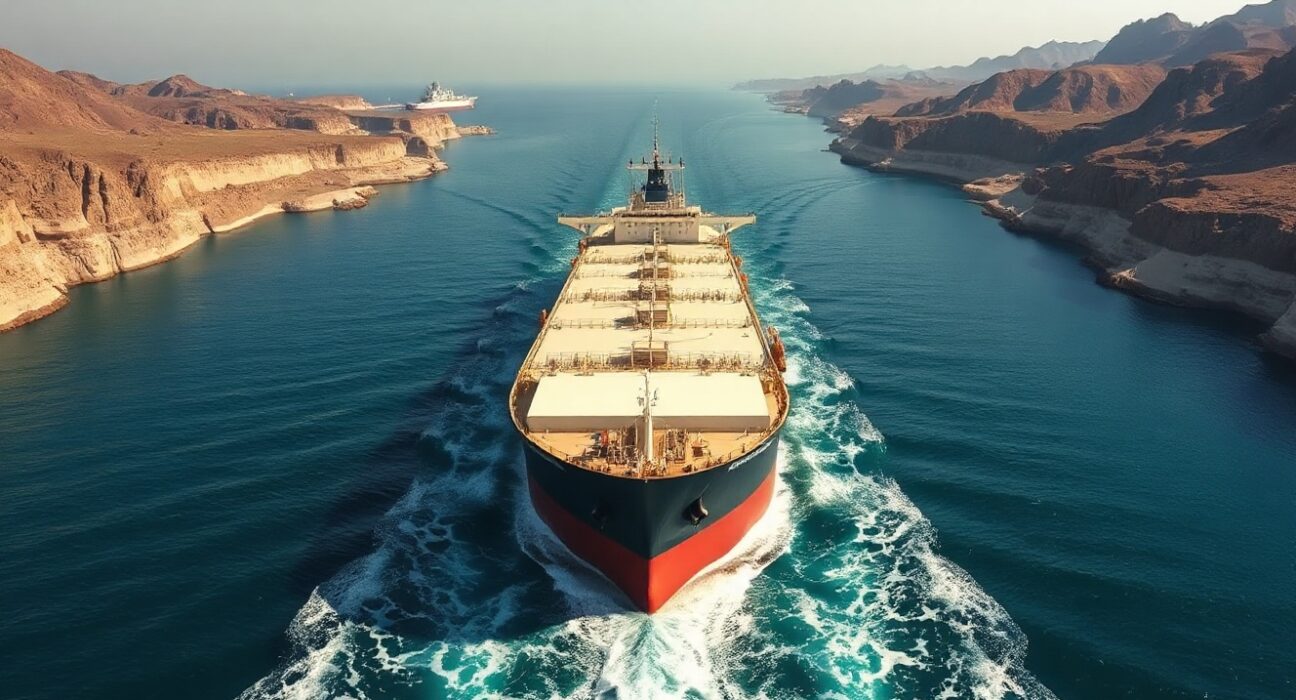
Analysts at BNY have highlighted that ongoing geopolitical risks surrounding the Strait of Hormuz continue to provide a floor under global oil prices, even as broader macroeconomic concerns weigh on demand outlooks. The assessment, published in a recent market note, underscores the persistent threat of supply disruptions through one of the world’s most critical energy chokepoints.
The Strait of Hormuz and Global Oil Flows
The Strait of Hormuz, a narrow waterway between Oman and Iran, is a vital artery for global crude oil and liquefied natural gas (LNG) shipments. According to the U.S. Energy Information Administration (EIA), approximately 21 million barrels of oil and petroleum products pass through the strait daily, representing about 21% of global petroleum consumption. Any disruption to this flow—whether from military conflict, sabotage, or political brinkmanship—can rapidly tighten global supply and spike prices.
Recent months have seen heightened tensions in the region, including periodic seizures of commercial vessels by Iranian forces and increased naval patrols by both Western and regional powers. These developments have kept the risk premium embedded in oil futures, preventing prices from falling further despite softer demand signals from major economies like China and the European Union.
BNY’s Analysis: A Persistent Risk Premium
In their note, BNY strategists argued that the Strait of Hormuz risk is not a transient factor but a structural feature of the current oil market. They pointed to the lack of a credible alternative route for the volumes transiting the strait, as well as the limited spare capacity among OPEC+ producers to quickly compensate for a major outage.
The analysts noted that while diplomatic efforts to de-escalate tensions have occasionally succeeded, the underlying political dynamics—particularly involving Iran and its regional proxies—remain volatile. This unpredictability means that traders must continuously price in the possibility of a sudden supply interruption, which effectively sets a higher floor for crude benchmarks like Brent and West Texas Intermediate (WTI).
Market Implications for Investors
For energy investors and traders, the BNY analysis suggests that simply betting on lower oil prices based on demand weakness alone may be risky. The geopolitical premium tied to the Strait of Hormuz acts as a buffer against sharp declines. Conversely, any actual disruption could trigger a rapid and severe price spike, similar to the aftermath of the 2019 attacks on Saudi Aramco facilities.
The analysis also carries implications for broader financial markets. Higher oil prices can stoke inflationary pressures, complicate central bank policy decisions, and weigh on consumer spending in import-dependent economies. As such, the Strait of Hormuz risk is a factor that extends beyond the energy sector into macro strategy.
Conclusion
BNY’s assessment reinforces the view that the Strait of Hormuz remains a central variable in the oil price equation. While demand-side concerns are real, the supply-side risk emanating from this narrow waterway continues to provide meaningful price support. Investors and policymakers alike must remain attentive to developments in the region, as even a temporary closure could have outsized consequences for global energy markets and economic stability.
FAQs
Q1: Why is the Strait of Hormuz so important for oil prices?
Approximately 21 million barrels of oil and petroleum products pass through the strait daily, making it the world’s most important oil transit chokepoint. Any disruption can quickly reduce global supply and push prices higher.
Q2: What specific risks are currently affecting the Strait of Hormuz?
Risks include potential military conflict between Iran and Western powers, vessel seizures, mine-laying, or sabotage. Political instability in the region also contributes to a persistent risk premium in oil prices.
Q3: How does the Strait of Hormuz risk affect everyday consumers?
If oil prices spike due to a disruption, consumers face higher gasoline and heating oil costs. This can also lead to broader inflation, affecting the cost of goods and services that rely on transportation and energy inputs.
Disclaimer: The information provided is not trading advice, Bitcoinworld.co.in holds no liability for any investments made based on the information provided on this page. We strongly recommend independent research and/or consultation with a qualified professional before making any investment decisions.
