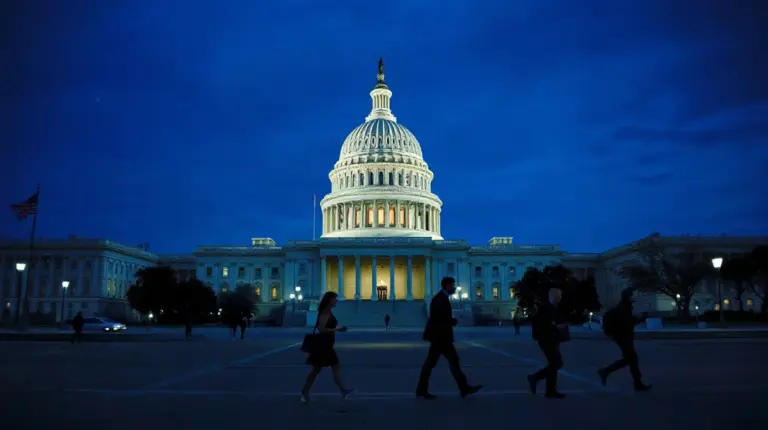
House Panel Sends Bitcoin Reserve Bill to Floor With 20-Year Lockup
In this article
The American Reserve Modernization Act of 2026, H.R. 8957, was formally reported to the full House on Nov. 24 and placed on the Union Calendar, clearing the way for a floor vote, as reported by Ambcrypto. The bill, filed as House Report 119-894, is intended to give the U.S. Strategic Bitcoin Reserve a statutory foundation rather than relying on the executive order that created it.
What the lockup and the stockpile would do
Under the reported text, the Treasury secretary would have 180 days from enactment to stand up two structures: a Strategic Bitcoin Reserve for Bitcoin the federal government owns and a Digital Asset Stockpile for other digital assets. Bitcoin acquired through criminal or civil forfeitures and other qualifying sources would move into the reserve.
The centerpiece is a holding requirement of at least 20 years. During that window, reserve Bitcoin could not be sold, swapped, auctioned, encumbered or otherwise disposed of for any purpose, according to Bitcoin Magazine. After the 20 years, the Treasury secretary could recommend selling up to 10% of the reserve in any two-year period, and Treasury would have to send Congress recommendations two years before the holding period ends.
Other provisions add oversight machinery. Federal agencies would get 60 days after enactment to give Treasury a full accounting of the coins and assets they hold or have seized, and until the reserve is set up they could not sell those coins except for national security, when law or a court requires it, or to return assets to crime victims. Treasury would publish an annual Proof of Reserve report on total holdings, transactions and control of private keys, checked by an independent auditor with cryptographic expertise, with GAO oversight. States could store their own bitcoin in segregated accounts inside the federal reserve, retaining title and the right to withdraw.
Where the two reports part ways
The outlets describe the acquisition study differently, and the difference is material. Ambcrypto says the bill lets Treasury explore budget-neutral ways of acquiring additional Bitcoin without increasing the national debt. Bitcoin Magazine reports that the committee’s amended study looks at swapping digital assets in the stockpile, forfeitures and settlements, and partnerships with states or private entities, and that it explicitly states nothing in the study authorizes borrowing, pledging government assets as collateral, new taxes or deficit spending to buy bitcoin.
The two accounts also diverge on the bill’s path. Begich introduced the original text, which asked Treasury and Commerce to study funding purchases with surplus Federal Reserve remittances, a revaluation of the Fed’s gold certificates, tax payments, tariff revenue and gifts. Those options are gone from the amended version. The committee also dropped a reference to offsetting costs with Federal Reserve resources from the title and removed a section requiring the Exchange Stabilization Fund to report its bitcoin holdings.

Why it matters
The reserve already exists under Executive Order 14233, signed in March 2025, but an executive order can be reversed by a future president. Writing it into law would make the policy harder for a later administration to undo unilaterally, which is the stated aim of Begich and his cosponsors. BitcoinWorld has reported separately on the political pressure around the effort, including Senate Democrats pressing the SEC as the Bitcoin reserve bill advanced.
Execution has been slow. A July report said Treasury and Commerce were competing over who would control the reserve. The bill has not received a floor vote, and if it passes the House the Senate would still need to act before it reaches the president’s desk.
Market snapshot
Bitcoin traded at $60,773 (about ₹5,624,317) at the time of the verified snapshot, up 5.4% over 24 hours and down 4.9% over seven days, with a market cap of $1.22 trillion and 24-hour volume of $23.01 billion, according to CoinPaprika data timestamped 26 Nov 2026 13:38 UTC. Ambcrypto’s own report put BTC at $60,355.92 at its press time.
What to watch
The immediate test is whether House leadership schedules a floor vote. From there, all three steps — House passage, Senate action and presidential approval — would have to fit before the 119th Congress ends on Jan. 3, 2027. Prediction market traders on Polymarket assigned only a 4% probability to the U.S. establishing a national Bitcoin reserve through legislation before that date, Ambcrypto reported. This is not financial advice; crypto markets are volatile and legislative outcomes are uncertain.
Frequently Asked Questions
What does the 20-year lockup in H.R. 8957 actually prohibit?
Reserve Bitcoin could not be sold, swapped, auctioned, encumbered or otherwise disposed of for any purpose during the 20-year period. After that, the Treasury secretary could recommend selling up to 10% of the reserve in any two-year period, according to Bitcoin Magazine.
How much Bitcoin does the U.S. government hold?
Ambcrypto reported the government holds around 328,000 BTC, largely from seizures and forfeitures, while governments globally hold about 435,000 BTC.
Can states keep their own Bitcoin inside the federal reserve?
Yes. As reported by Bitcoin Magazine, states could hold their own bitcoin in segregated accounts inside the reserve, keeping title to the coins and the right to withdraw them.
What has to happen before the bill becomes law?
It needs a House floor vote, Senate action and presidential approval before the 119th Congress ends on Jan. 3, 2027. It has not yet received a floor vote.
Does the bill allow the government to buy more Bitcoin?
The reported text directs a study of acquisitions, not purchases. Ambcrypto says Treasury could explore budget-neutral ways to acquire Bitcoin without adding to the national debt, while Bitcoin Magazine notes the amended study rules out borrowing, pledging assets as collateral, new taxes or deficit spending.
Sources: AMBCrypto, Bitcoin Magazine