UK Grid Bottlenecks to Cost £4 Billion; Bitcoin Mining Eyed
In this article
The UK’s National Energy System Operator (NESO) on Nov. 12 forecast roughly £4 billion in thermal constraint costs for 2027, according to Cryptoslate. The figure highlights a persistent grid problem: transmission lines cannot carry all available electricity, forcing the operator to pay generators to reduce output and secure replacement power elsewhere.
Why the grid bill is not a mining payout
NESO’s cost breakdown shows that most constraint spending goes toward replacement energy, not payments to wind farms. In 2025/26, about 75% of thermal constraint costs covered replacement supply, mainly gas. That limits the savings that could be claimed from using curtailed wind: reducing wind turn-down does not automatically cut gas generation, consumer bills, or emissions.
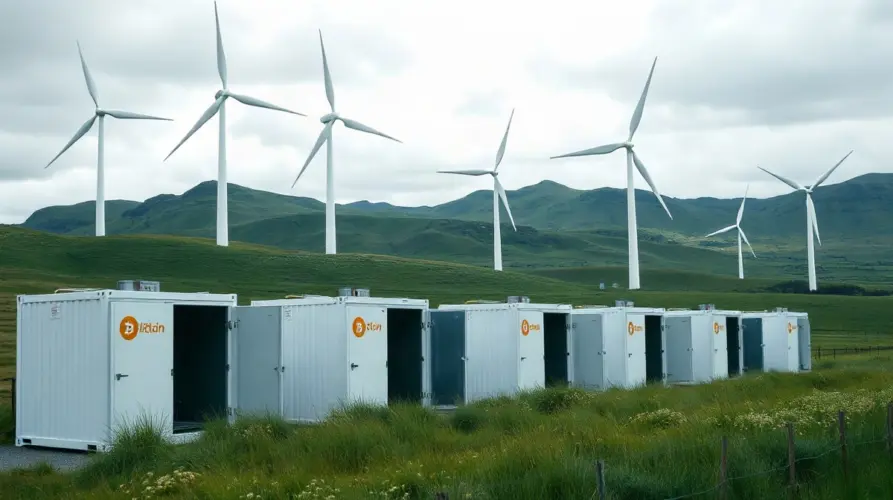
Scotland presents a clear use case. NESO says 28% of wind above the B6 boundary was curtailed in 2025/26, more than double the GB average. A flexible mine could consume otherwise curtailed electricity at a connection and time that helps manage the bottleneck. But adding northern demand does not deliver more power south. While the boundary remains binding and southern demand is unchanged, replacement supply is still needed there.
The Bitcoin Policy Institute report, covered by PANews, argues that Bitcoin mining can be deployed quickly, is mobile, and can fully curtail its power use at any time, making it suited to consuming low-cost or curtailed electricity. The report acknowledges that the more than £1 billion curtailment bill does not equal the amount mining could save, and that any project would need modeling of actual savings, emissions, and infrastructure costs.
NESO’s March 5 proposed Demand for Constraints design focused on Scottish boundaries. It contemplated registration and dispatch through the Balancing Mechanism, with routes for both new connections and existing assets creating additional flexible demand. The design proposed service deliveries from 2028, after the year covered by the forecast. It did not establish a Bitcoin-specific approval or payment entitlement.
What miners and policymakers need to weigh
For a mining operator, a usable grid connection, qualification for the demand service, and enough operating hours to cover costs would all matter. The Cambridge Centre for Alternative Finance’s mining survey, which covered 49 firms representing 48% of Bitcoin’s network hashrate, found that respondents curtailed 888 GWh of electrical load during 2023. That measures demand turned down, while absorbing surplus Scottish wind would require demand to turn up at the right location and time. The survey does not establish profitable intermittent mining in Britain; electricity accounted for more than 80% of surveyed miners’ cash-based operating expenses.

For consumers, the relevant comparison is the expense actually avoided after accounting for the costs the project adds. NESO’s test is overall system cost. The roughly £4 billion forecast identifies the scale of a grid problem; it does not price a mining solution.
Why it matters
The debate over using curtailed wind for Bitcoin mining comes as the UK grapples with rising grid costs and the need to integrate more renewable energy. If flexible mining could reduce constraint payments without increasing overall system costs, it could offer a new tool for grid management. However, the physical limits of transmission and the dominance of replacement energy costs mean that mining alone is unlikely to solve the bottleneck problem.
What to watch
NESO’s proposed Demand for Constraints service, with deliveries contemplated from 2028, will be a key test for whether flexible demand like Bitcoin mining can participate in grid balancing. Any update to the service design or the 2027 cost forecast will shape the business case for miners.
Frequently Asked Questions
What are thermal constraints in the UK electricity grid?
Thermal constraints occur when transmission lines cannot safely carry all available electricity, forcing the grid operator to pay generators to reduce output and secure replacement supply elsewhere.
How much did the UK pay wind farms to turn down in 2025/26?
NESO reported that a little under £500 million was paid to wind farms to curtail output in 2025/26.
What is the Bitcoin Policy Institute proposing?
The BPI report suggests deploying Bitcoin mining facilities behind transmission bottlenecks, particularly at the Scotland-England border, to absorb surplus wind and reduce curtailment payments.
When could a demand service for constraints start?
NESO’s March proposal for a Demand for Constraints service contemplated deliveries starting in 2028.
Sources: CryptoSlate, PANews