

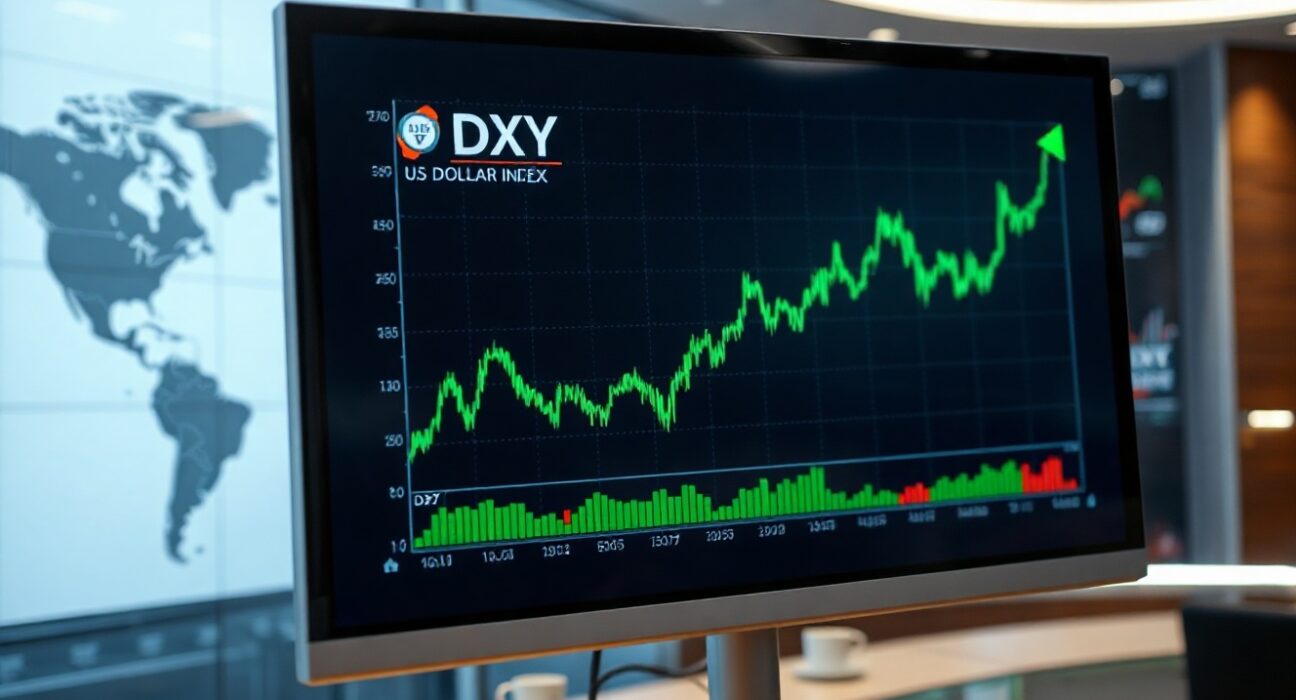
The US Dollar Index (DXY) staged a modest recovery during Wednesday’s trading session, erasing earlier intraday losses as ongoing geopolitical uncertainty in the Middle East continued to drive safe-haven demand. The index, which measures the greenback against a basket of six major currencies, edged higher after dipping in early European hours, reflecting renewed investor caution amid unconfirmed reports of heightened military activity in the region.
Geopolitical Risk Fuels Dollar Bids
Market participants turned to the US dollar as a defensive play following fresh headlines regarding potential escalations in the Middle East. While no official confirmation has been released by major governments, traders reacted swiftly, pushing the DXY back toward the 104.00 handle. The euro and British pound both retreated against the dollar, while the Japanese yen also gained ground, underscoring broad risk aversion.
The recovery comes after a two-day losing streak for the dollar, which had been pressured by softer-than-expected US economic data earlier this week. However, the shift in sentiment highlights how quickly geopolitical developments can override domestic fundamentals in currency markets.
Market Implications and Broader Context
For forex traders, the dollar’s rebound signals that safe-haven flows remain dominant in the current environment. Analysts note that if Middle East tensions continue to simmer without a clear resolution, the DXY could test resistance levels near 104.50 in the coming sessions. Conversely, any diplomatic breakthroughs could trigger a sharp reversal, as the dollar’s safe-haven premium unwinds.
Beyond the immediate trading impact, the persistent uncertainty is also influencing bond markets, with US Treasury yields edging lower as investors seek refuge in government debt. This dynamic further supports the dollar by narrowing yield differentials with other major currencies.
What This Means for Investors
For retail and institutional investors alike, the current environment underscores the importance of monitoring geopolitical headlines alongside traditional economic indicators. The dollar’s resilience in the face of mixed domestic data suggests that external risks are now the primary driver of short-term direction. Portfolio diversification, particularly toward safe-haven assets, remains prudent until the geopolitical picture becomes clearer.
Conclusion
The US Dollar Index’s intraday recovery reflects the market’s ongoing sensitivity to Middle East developments. While the dollar has regained some ground, the trajectory remains highly dependent on news flow from the region. Traders should brace for continued volatility as the situation evolves, with the DXY likely to remain a key barometer of risk sentiment in the days ahead.
FAQs
Q1: What is the US Dollar Index (DXY)?
The US Dollar Index (DXY) measures the value of the US dollar relative to a basket of six major foreign currencies: the euro, Japanese yen, British pound, Canadian dollar, Swedish krona, and Swiss franc. It is widely used as a benchmark for the dollar’s overall strength in global forex markets.
Q2: Why does Middle East uncertainty affect the dollar?
Geopolitical tensions often drive investors toward safe-haven assets, including the US dollar, US Treasuries, and gold. The dollar benefits because it is the world’s primary reserve currency and is perceived as a stable store of value during periods of global instability.
Q3: How long could the dollar’s recovery last?
The duration of the dollar’s recovery depends largely on how the Middle East situation develops. If tensions de-escalate quickly, the dollar could give back gains. However, if uncertainty persists or escalates, the DXY may continue to rise, potentially testing higher resistance levels in the coming weeks.
Disclaimer: The information provided is not trading advice, Bitcoinworld.co.in holds no liability for any investments made based on the information provided on this page. We strongly recommend independent research and/or consultation with a qualified professional before making any investment decisions.
