

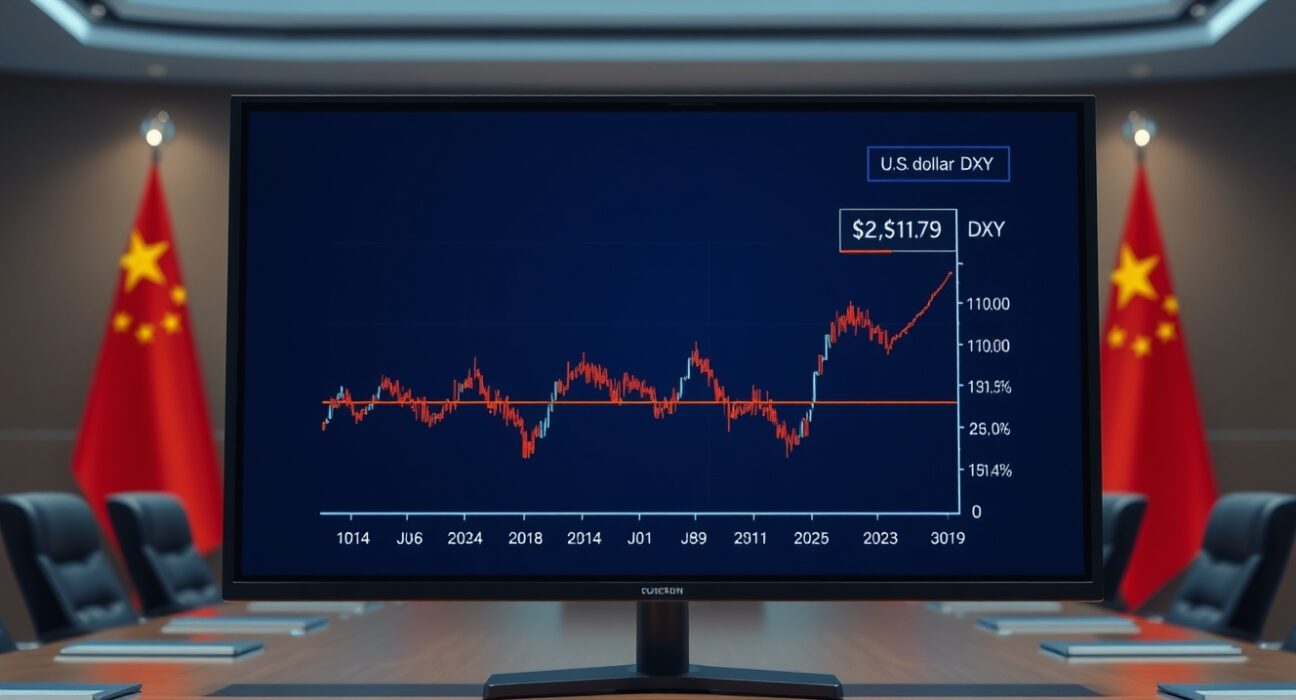
The U.S. dollar remained broadly stable in early trading on Tuesday as currency markets adopted a cautious stance ahead of a highly anticipated summit between former President Donald Trump and Chinese President Xi Jinping. Investors are closely watching for any signs of progress or escalation in trade discussions, which could have significant implications for global currency flows and economic policy.
Market Context and the Dollar’s Position
The greenback has been trading in a narrow range over the past week, reflecting a wait-and-see approach among traders. The dollar index, which measures the currency against a basket of six major peers, hovered near 104.2, little changed from the previous session. Analysts attribute the steadiness to a lack of fresh catalysts and the market’s focus on geopolitical developments rather than economic data.
Currency strategists note that the dollar has been supported by relatively resilient U.S. economic indicators, including steady employment data and moderate inflation readings. However, the prospect of renewed trade tensions or a diplomatic breakthrough could shift sentiment quickly. A more confrontational outcome from the Trump-Xi meeting might boost demand for safe-haven currencies like the yen or Swiss franc, while a cooperative tone could lift risk-sensitive currencies such as the Australian dollar and emerging market currencies.
The Trump-Xi Summit: What’s at Stake
The meeting between Trump and Xi, held at a neutral venue, is seen as a critical juncture for bilateral relations. Trade imbalances, technology transfer policies, and tariff structures are expected to dominate discussions. Previous encounters between the two leaders have produced both breakthroughs and stalemates, making this summit particularly unpredictable.
For currency markets, the key variable is whether the summit yields concrete commitments or merely reaffirms existing positions. Any announcement of new tariffs or trade barriers would likely strengthen the dollar temporarily as a haven, but prolonged uncertainty could erode confidence in global trade and weigh on the currency over the medium term. Conversely, a deal that reduces trade friction could weaken the dollar as investors rotate into higher-yielding assets.
Implications for Global Trade and Investors
The outcome of the summit extends beyond currency pairs. Global supply chains, corporate earnings, and central bank policies are all sensitive to the direction of U.S.-China trade relations. A deterioration in relations could prompt the Federal Reserve to adopt a more cautious stance on interest rate cuts, while a thaw might allow the People’s Bank of China to manage the yuan more flexibly.
For readers, the immediate takeaway is that the dollar’s stability is fragile. Portfolio managers and businesses with cross-border exposure should prepare for potential volatility. Hedging strategies, such as forward contracts or options on currency pairs like USD/CNY or EUR/USD, may become more relevant depending on the summit’s outcome.
Conclusion
The U.S. dollar’s current steadiness reflects a market in pause mode, awaiting clarity from the Trump-Xi summit. While the currency remains supported by domestic fundamentals, the political dimension introduces significant uncertainty. Traders and analysts will be parsing every statement from the meeting for cues on trade policy, which could define the dollar’s trajectory for weeks to come.
FAQs
Q1: Why is the U.S. dollar steady ahead of the Trump-Xi summit?
The dollar is steady because traders are reluctant to make large bets before the summit’s outcome is known. The market is in a holding pattern, waiting for clarity on trade policy that could affect currency demand.
Q2: How could the summit affect the dollar?
If the summit leads to trade tensions or new tariffs, the dollar could strengthen as a safe haven. If it produces a cooperative agreement, the dollar might weaken as investors shift to riskier assets.
Q3: What should investors do given the uncertainty?
Investors should monitor the summit’s outcomes closely and consider hedging currency exposure through forward contracts or options. Diversifying across currencies and asset classes can also help manage risk during volatile periods.
Disclaimer: The information provided is not trading advice, Bitcoinworld.co.in holds no liability for any investments made based on the information provided on this page. We strongly recommend independent research and/or consultation with a qualified professional before making any investment decisions.
