

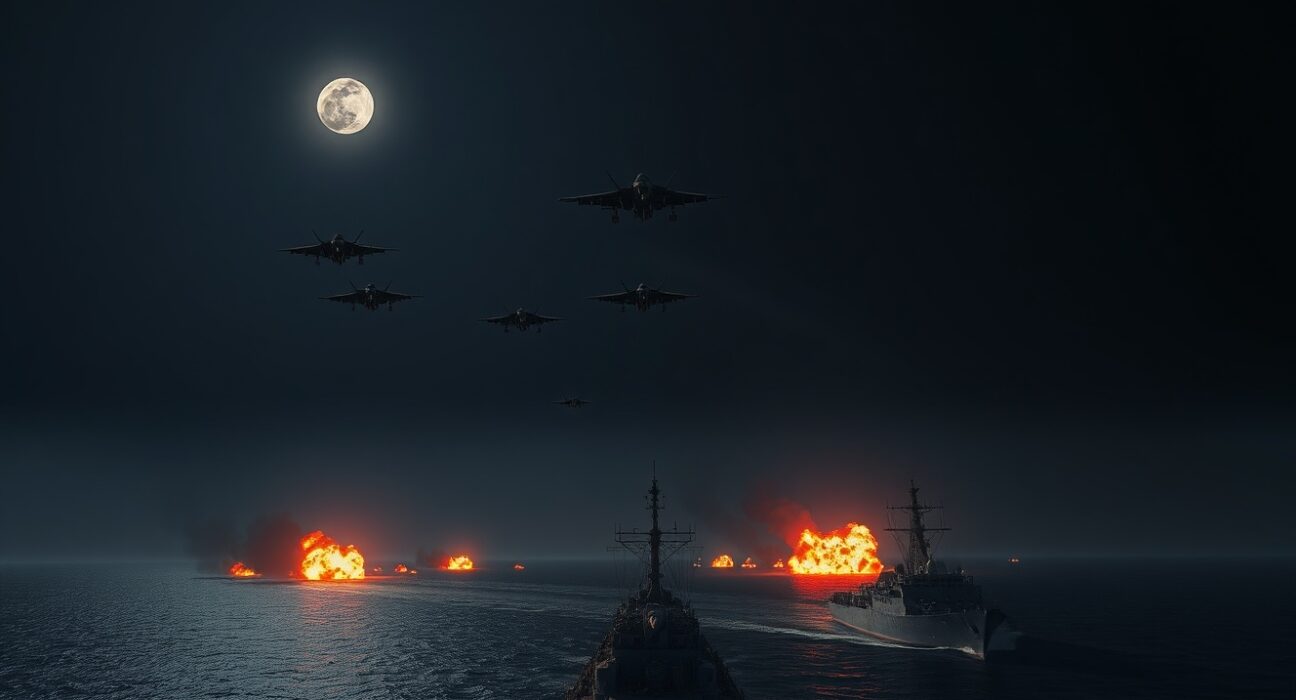
The fragile state of US-Iran ceasefire negotiations was laid bare this week after U.S. Central Command confirmed that American and Israeli fighter jets carried out airstrikes on multiple Iranian vessels in the strategically vital Strait of Hormuz. The strikes came just hours after President Donald Trump indicated progress in talks for a provisional agreement, underscoring the volatile dynamic between diplomatic efforts and military action.
Timing and Strategic Implications
The airstrikes targeted Iranian naval assets in one of the world’s most critical chokepoints for oil transit. According to U.S. Central Command, the operation was conducted jointly with Israeli forces and aimed at neutralizing what was described as an imminent threat to commercial shipping in the region. The Strait of Hormuz, connecting the Persian Gulf to the Gulf of Oman, handles roughly one-fifth of global oil consumption, making any military engagement there a matter of international economic security.
The timing of the operation is particularly significant. President Trump had earlier noted that negotiations with Iran were showing signs of progress, with a provisional agreement reportedly on the table. The airstrikes, however, suggest that diplomatic channels remain deeply strained and that military posturing continues to overshadow talks.
Domestic Political Pressure on Trump
President Trump is facing mounting pressure from hardliners within his own party, including Republican Senator Lindsey Graham, who have argued that any proposed deal with Iran is overly lenient. Critics contend that the administration’s willingness to negotiate sends a signal of weakness, while supporters of the talks warn that a breakdown could lead to broader regional conflict.
Senator Graham has publicly stated that Iran cannot be trusted and that any agreement must include strict verification measures and a clear path to ending its nuclear and missile programs. This internal Republican divide complicates Trump’s ability to pursue a diplomatic solution while maintaining domestic political support.
Why This Matters for Global Markets and Security
The Strait of Hormuz is not just a strategic waterway; it is a linchpin of global energy security. Any sustained disruption in the region can lead to spikes in oil prices, affecting consumers and economies worldwide. The airstrikes have already raised concerns among market analysts, who are closely watching for signs of escalation that could disrupt supply chains.
For readers, the key takeaway is that the US-Iran conflict remains highly unpredictable. The juxtaposition of diplomatic progress and military action suggests that both sides are employing a dual-track strategy of negotiation and coercion. This approach, while not uncommon in international relations, carries significant risks of miscalculation.
Conclusion
The renewed engagement between US-Israeli forces and Iranian vessels in the Strait of Hormuz highlights the precarious nature of ongoing ceasefire talks. While President Trump has expressed optimism about a provisional agreement, the airstrikes demonstrate that hardline positions on both sides remain entrenched. The coming weeks will be critical in determining whether diplomacy can prevail over military confrontation, with global economic stability hanging in the balance.
FAQs
Q1: Why did the US and Israel conduct airstrikes on Iranian vessels?
The operation was described as a response to an imminent threat to commercial shipping in the Strait of Hormuz, according to U.S. Central Command.
Q2: How does this affect the ceasefire negotiations?
The airstrikes highlight the fragility of the talks, occurring just after President Trump noted progress. They suggest that military action and diplomacy are running in parallel, increasing the risk of escalation.
Q3: What is the Strait of Hormuz’s significance?
It is a critical maritime chokepoint through which about 20% of global oil passes. Any disruption there can have major effects on global energy prices and economic stability.
Disclaimer: The information provided is not trading advice, Bitcoinworld.co.in holds no liability for any investments made based on the information provided on this page. We strongly recommend independent research and/or consultation with a qualified professional before making any investment decisions.
