

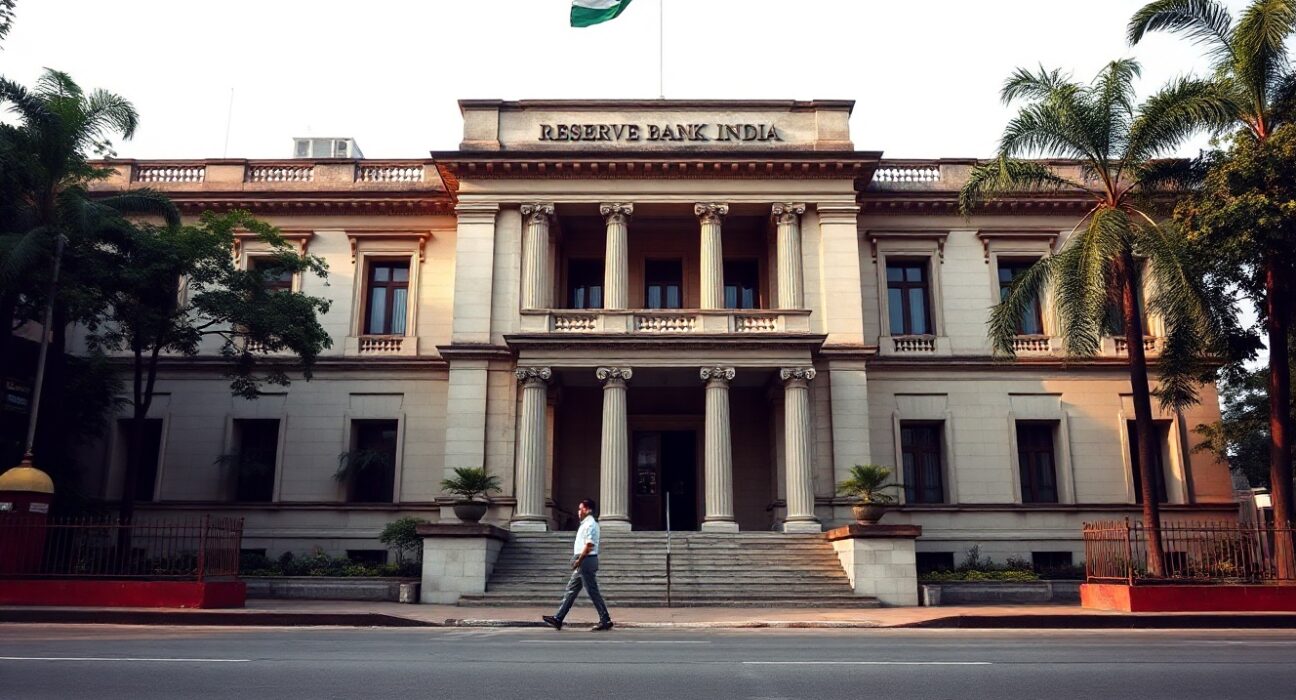
The Indian rupee traded in a narrow range against the U.S. dollar on Wednesday, reflecting a cautious market mood as traders and investors await the Reserve Bank of India’s (RBI) upcoming monetary policy decision. The currency remained largely unchanged, holding near its recent levels, with limited volatility across the session.
Market Sentiment Hinges on RBI Decision
The RBI’s Monetary Policy Committee (MPC) is scheduled to announce its decision on February 7, 2026. Market participants are widely expecting the central bank to hold the repo rate steady at 6.50%, given the persistent focus on controlling inflation. However, some analysts have not ruled out a potential rate cut, especially if the central bank prioritizes supporting economic growth amid a global slowdown.
The rupee’s subdued movement reflects the uncertainty surrounding the policy outcome. Traders are refraining from building large positions ahead of the announcement, a common pattern in currency markets before major central bank decisions.
Global Cues and Dollar Dynamics
On the global front, the U.S. dollar index (DXY) remained relatively stable, providing no strong directional trigger for the rupee. The dollar’s movement was influenced by mixed U.S. economic data and evolving expectations around the Federal Reserve’s own rate path. A weaker dollar globally tends to support emerging market currencies like the rupee, but the local currency’s gains have been capped by domestic factors, including concerns over the trade deficit and capital outflows.
Foreign portfolio investors (FPIs) have shown mixed activity in Indian equities and debt markets in recent weeks, adding to the cautious tone. While some inflows have been recorded, they have not been strong enough to drive a significant appreciation in the rupee.
Impact on Importers and Exporters
A stable rupee provides some relief to Indian importers, particularly those dealing in oil and other commodities priced in dollars. For exporters, however, a lack of depreciation can be a headwind, as it makes Indian goods relatively more expensive in global markets. The RBI’s policy stance will be closely watched for any commentary on the currency’s fair value or intervention strategy.
Conclusion
The Indian rupee’s calm trading session underscores the market’s wait-and-see approach ahead of the RBI’s policy decision. The outcome will likely set the near-term direction for the currency, with any surprise in the rate decision or policy tone potentially triggering a breakout from the current narrow range. Investors should monitor the MPC’s commentary on inflation, growth, and global risks for clearer signals.
FAQs
Q1: Why is the Indian rupee stable ahead of the RBI policy decision?
Traders are cautious and avoiding large positions until the RBI announces its interest rate decision and policy stance, leading to low volatility and a narrow trading range.
Q2: What is the market expectation for the RBI’s February 2026 policy?
The majority of analysts expect the RBI to hold the repo rate at 6.50%, focusing on inflation control. However, some anticipate a possible rate cut to support growth.
Q3: How does the U.S. dollar index affect the Indian rupee?
A weaker U.S. dollar generally supports the rupee and other emerging market currencies, while a stronger dollar puts depreciation pressure on them. The current stability in the dollar index has contributed to the rupee’s subdued movement.
Disclaimer: The information provided is not trading advice, Bitcoinworld.co.in holds no liability for any investments made based on the information provided on this page. We strongly recommend independent research and/or consultation with a qualified professional before making any investment decisions.
