

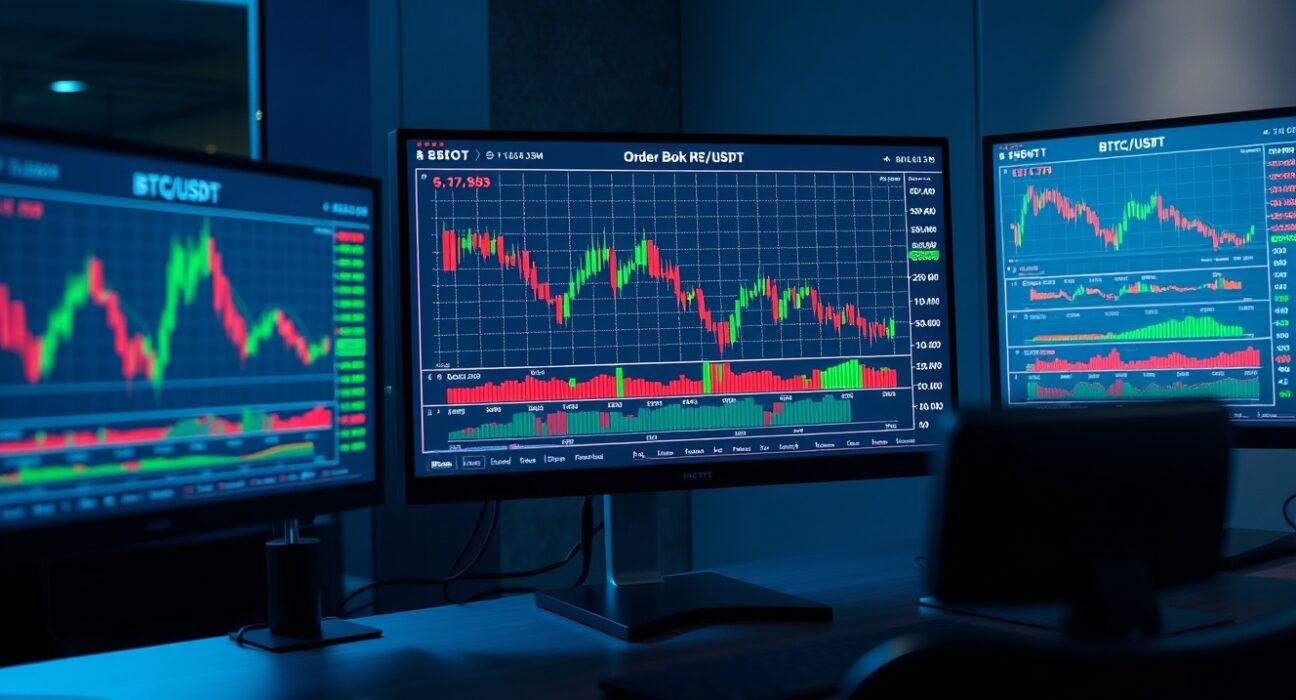
Traders monitoring the Bitcoin spot market have a fresh data point to consider this morning. A detailed analysis of the BTC/USDT order book, captured at 5:00 a.m. UTC on May 13, reveals significant trading activity concentrated at specific price levels, as shown by the Cumulative Volume Delta (CVD) and Volume Heatmap indicators.
Understanding the Volume Heatmap and CVD
The Volume Heatmap provides a visual representation of trading volume intensity across different price points. When the background color becomes brighter, it indicates that the price has either remained within a certain range for an extended period or has made a notable directional move. These brighter zones often act as potential support or resistance levels, as they represent areas where significant buying or selling has occurred.
Below the heatmap, the Cumulative Volume Delta (CVD) indicator tracks the net difference between buy and sell orders, categorized by trade size. This metric offers a granular view of market participation, distinguishing between retail and institutional activity. The CVD line rises as buy orders accumulate, providing a real-time measure of buying pressure.
Key Order Size Categories in Focus
The CVD chart categorizes trades into several size brackets, each represented by a different colored line. Two categories are particularly noteworthy in this morning’s analysis:
- Yellow line: Represents orders between $100 and $1,000. This category typically reflects retail trader activity and can indicate broader market sentiment.
- Brown line: Represents large orders between $1 million and $10 million. This is a critical metric for institutional activity and often signals where major players are placing their bets.
The divergence or convergence of these lines can offer clues about the market’s directional bias. For instance, a rising brown line alongside a flat yellow line might suggest that institutional accumulation is driving the price, while retail interest remains subdued.
Implications for BTC/USDT Traders
For traders, the combination of the Volume Heatmap and CVD provides a more complete picture of market depth. The bright zones on the heatmap serve as visual anchors for potential price reactions, while the CVD helps confirm whether the volume behind a move is genuine or superficial. A price break above a high-volume zone accompanied by a rising CVD is generally considered a stronger signal than one with declining CVD.
This morning’s data suggests that traders should pay close attention to the price levels where the heatmap shows the highest intensity. These levels may act as magnets for price action or as barriers that require significant volume to break through.
Conclusion
The BTC/USDT spot CVD chart for 5:00 a.m. UTC on May 13 offers a data-driven snapshot of current market structure. By analyzing the Volume Heatmap and CVD together, traders can better assess where liquidity is concentrated and whether buying or selling pressure is dominant. As always, these indicators are most effective when used in conjunction with broader market analysis and risk management strategies.
FAQs
Q1: What does a bright area on the Volume Heatmap indicate?
A bright area on the Volume Heatmap indicates that the price has spent a significant amount of time in that range or has made a large move through it. These zones often act as future support or resistance levels.
Q2: How is the Cumulative Volume Delta (CVD) different from regular volume?
Regular volume shows the total number of trades, while CVD shows the net difference between buy and sell orders. A rising CVD indicates that buying pressure is stronger than selling pressure.
Q3: Why is the brown line (orders $1M–$10M) important?
The brown line tracks large institutional-sized orders. Significant activity in this category can signal that major market participants are accumulating or distributing positions, which can influence price direction.
Disclaimer: The information provided is not trading advice, Bitcoinworld.co.in holds no liability for any investments made based on the information provided on this page. We strongly recommend independent research and/or consultation with a qualified professional before making any investment decisions.
