

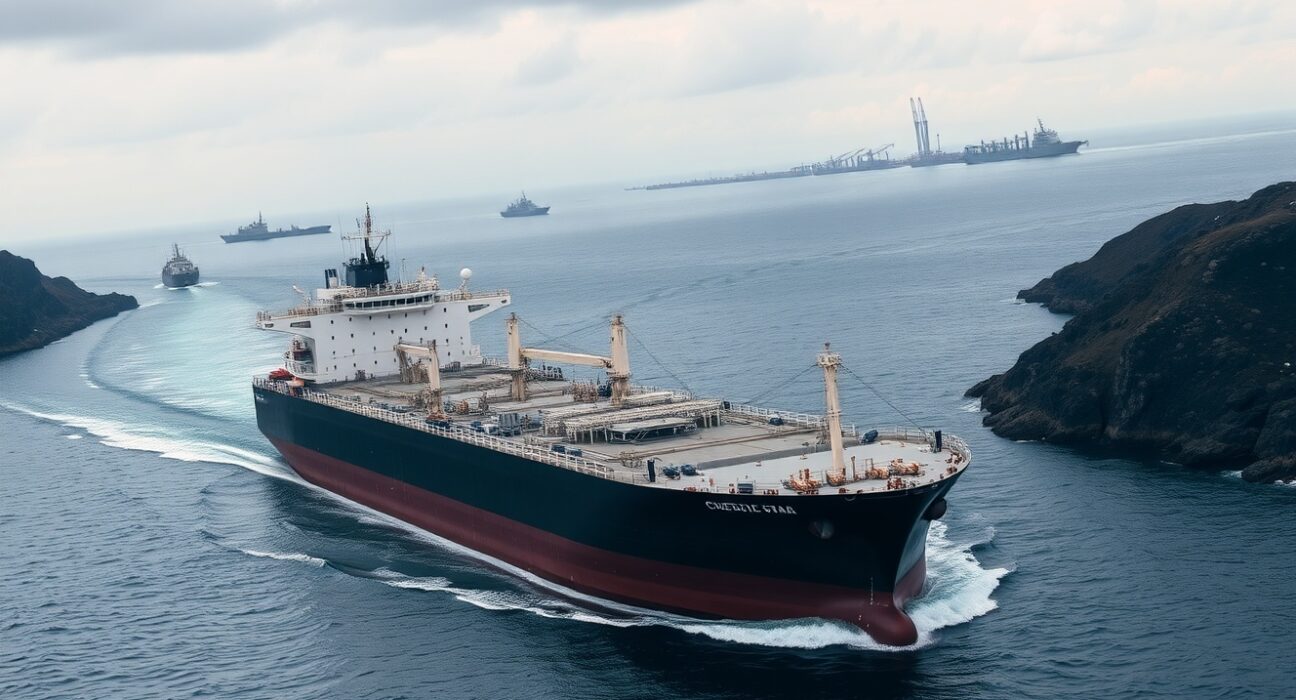
Goldman Sachs has issued a stark warning that the world is rapidly running out of safe and reliable routes for transporting oil, as geopolitical tensions, aging infrastructure, and climate-related disruptions converge to create unprecedented bottlenecks in global energy trade. The investment bank’s analysis, based on shipping data and geopolitical risk assessments as of early 2026, highlights that critical chokepoints such as the Strait of Hormuz, the Malacca Strait, and the Suez Canal are becoming increasingly vulnerable to disruption, with no viable alternatives available at scale.
Why Oil Trade Routes Are Becoming More Dangerous
The core of Goldman’s warning rests on the fact that global oil supply chains have become dangerously concentrated. Over 60% of the world’s seaborne crude oil passes through just three major chokepoints. Any prolonged closure of one of these routes—due to conflict, piracy, or even a single tanker accident—could send oil prices soaring and destabilize energy markets worldwide. The report notes that recent attacks on commercial vessels in the Red Sea and ongoing tensions in the Persian Gulf have already forced some tankers to take longer, costlier detours, effectively reducing the world’s available shipping capacity.
The Geopolitical and Infrastructure Factors
Goldman’s analysis points to several compounding factors. First, the Russia-Ukraine conflict has fundamentally redrawn energy trade maps, with Europe scrambling to replace Russian pipeline gas with seaborne LNG and crude from more distant suppliers. Second, aging port infrastructure in key transit hubs, particularly in Africa and Southeast Asia, cannot handle the increased traffic without significant delays. Third, climate change is contributing to more frequent extreme weather events, such as hurricanes in the Gulf of Mexico and droughts that reduce water levels in the Panama Canal, further squeezing capacity.
What This Means for Consumers and Markets
For everyday consumers, the implications are clear: higher and more volatile fuel prices. Goldman Sachs projects that a sustained disruption at any single major chokepoint could add $10 to $20 per barrel to global crude prices within weeks. For importing nations, particularly in Asia and Europe, energy security is now a more urgent policy priority than at any point since the 1970s oil shocks. The report urges governments to accelerate investments in strategic petroleum reserves, alternative pipeline routes, and renewable energy infrastructure to reduce dependence on these fragile maritime corridors.
Conclusion
Goldman Sachs’ warning is not a prediction of imminent catastrophe, but a data-driven assessment that the global oil transport system is operating with dangerously thin margins. The world’s dependence on a handful of narrow, contested waterways represents a systemic risk that policymakers and energy companies can no longer afford to ignore. Without significant investment in alternative routes and diversified supply chains, the global economy remains vulnerable to a single point of failure.
FAQs
Q1: What are the most critical oil chokepoints identified by Goldman Sachs?
The Strait of Hormuz (between the Persian Gulf and the Gulf of Oman), the Strait of Malacca (between Indonesia and Malaysia), and the Suez Canal/SUMED pipeline system are the three most critical. Together, they handle the majority of global seaborne oil trade.
Q2: How quickly could a chokepoint disruption affect oil prices?
Goldman Sachs estimates that a full closure of the Strait of Hormuz could push oil prices above $150 per barrel within days, while a partial disruption could add $10 to $20 per barrel within weeks, depending on the duration and available spare capacity elsewhere.
Q3: Are there any alternatives to these dangerous routes?
Limited alternatives exist, such as overland pipelines (e.g., the Trans-Arabian Pipeline or the Baku-Tbilisi-Ceyhan pipeline), but they have finite capacity and face their own geopolitical risks. The most effective long-term solution is reducing global oil demand through energy efficiency and renewable energy adoption.
Disclaimer: The information provided is not trading advice, Bitcoinworld.co.in holds no liability for any investments made based on the information provided on this page. We strongly recommend independent research and/or consultation with a qualified professional before making any investment decisions.
